
Anti-wrinkle face cream: what it does and how to choose one
By Emanuela Silvi, founder of Eligenda Roma.
An anti-wrinkle face cream is designed to hydrate and nourish skin, with active ingredients aimed at the appearance of wrinkles, tone and elasticity. Start by considering your skin type and the concern you want to address.
This guide explains what a cream does, which ingredients to look for and how to use it alongside serum and sun protection.
In this guide
What is a face cream?
A face cream is generally an emulsion of water and fatty substances, designed to hydrate skin and keep it soft. Humectants and emollients perform complementary roles: they help retain water and limit dryness.
Anti-ageing formulas may include ingredients studied for certain signs of ageing, such as peptides, retinol or antioxidants. Effects depend on the complete formula and available evidence.
A cream may be enough as a moisturising treatment or complement other steps. Apply it after cleansing and any face serum; in the morning, pair it with adequate sun protection.
Face cream: what it does
A cream can perform several functions, depending on its formulation:
- Hydrates and plumps. It retains water in the surface layers and softens fine dehydration lines, leaving skin looking smoother and more radiant.
- Supports the skin barrier. The film it forms at the surface limits water loss and helps maintain comfort when cold and wind contribute to dryness.
- Addresses signs of ageing. Some formulas aim to make wrinkles and lines less noticeable; results should be assessed through evidence for the specific product.
- May contain antioxidants. Their role in the formula does not, on its own, demonstrate clinical protection from environmental skin damage.
- Provides comfort. A texture suited to your needs can offer softness without feeling too heavy.
It also helps to know what a face cream does not do. Unless it is specifically a cream with SPF, it does not replace sunscreen, which remains a separate morning step. Regular use helps you assess its effects without making a routine with numerous products necessary.
Anti-wrinkle face cream: how it acts on signs of ageing
A moisturising cream can make fine lines caused by dryness less visible. Results for other signs of ageing depend on the ingredients, formula and use.
Some active ingredients have specific clinical studies. A trial of 0.4% retinol found an improvement in fine wrinkles after 24 weeks: it concerned the arm skin of older people, not every face cream. Evidence on cell renewal and collagen should be read in the same way, distinguishing the substance studied from the product you buy.
Ingredients that matter in an anti-wrinkle cream
Reading the INCI list helps identify ingredient functions; it does not measure effectiveness. Even a premium cosmetic needs clear, consistent information about its formula and testing.
Hyaluronic acid. A humectant that helps surface hydration. Our guide to hyaluronic acid distinguishes molecular weights from results actually demonstrated.
Peptides. A broad family of ingredients: different molecules have different studies. The same effect on collagen cannot be attributed to all of them.
Antioxidants. Vitamin E, vitamin C and plant extracts may have a role in formulation, but their presence does not replace sunscreen.
Retinol. Studied for certain signs of ageing, but may cause irritation. Introduce it gradually, following instructions. Retinoids should be avoided during pregnancy; ask your doctor for advice during breastfeeding or for specific skin conditions.
Tone-evening ingredients. Some formulas with niacinamide, vitamin C, arbutin or kojic acid are designed for uneven tone: tolerance and evidence depend on the product.
Humectants and emollients. Glycerine, shea butter and oils perform different, complementary functions for hydration and softness.
How to choose the right face cream for your skin
There is no single best cream: there is one suited to your skin type and aim. Before choosing, identify the need you want to address first, then check that the texture and active ingredients suit your skin.
| Aim | Ingredients to consider in the formula |
|---|---|
| Hydrate and plump | Hyaluronic acid, glycerine, shea butter |
| Soften the appearance of wrinkles | Peptides, retinol, antioxidants |
| Improve the appearance of tone and firmness | Peptides, hyaluronic acid |
| Reduce the appearance of uneven tone | Arbutin, kojic acid, vitamin C |
| Include antioxidant ingredients | Vitamin E, vitamin C, plant extracts |
Then consider your skin type. For dry or mature skin, look towards a rich, nourishing cream with emollients and ingredients that support skin structure. For oily or combination skin, prefer a lighter, quickly absorbed texture that hydrates without feeling heavy. For sensitive skin, choose simple, fragrance-free formulas with soothing ingredients and introduce only one new product at a time.
If you are unsure of your skin type or which ingredients you need, you can start with skin analysis before choosing. Needs can change after 40: find tailored advice in our guide to skin after 40.
How to use face cream: when, how much and how
A few simple habits help you use a cream well, starting with the instructions on the packaging.
Order. Apply cream as the last treatment step, on clean skin and after any serum. The general rule is to move from the lightest to the richest texture, keeping the steps you need. Toner, serum and eye cream are optional; finish with sunscreen in the morning.
Timing. Most creams are used morning and evening. In the morning, cream prepares and protects the skin for the day and should be followed by sunscreen. In the evening, it contributes to comfort and hydration overnight.
Amount. Follow the recommended quantity and apply a comfortable layer to the indicated areas. Too much does not improve results and may simply leave skin greasy.
Application. Spread the cream with small movements, from the centre outwards and upwards, without pulling the skin. Remember the neck and décolletage if the product’s directions permit use in these areas.
Cream or serum? Why use them together?
Cream and serum can complement each other, but do not always need to be used together. ‘Serum’ does not automatically mean a higher concentration or deeper penetration.
If a cream already meets your needs, adding another product may be unnecessary. If you also choose a serum, it usually goes before cream, following the instructions and checking tolerance. Our guide to face serum explores the differences.
How long does it take to see results?
Comfort and softness may change from the first applications, making skin look smoother and more radiant. For wrinkles or uneven tone, there is no deadline that applies to every cream: timing depends on the formula, aim and starting condition.
Regularly assess your skin’s response and the product’s directions. Do not continue an irritating treatment simply to complete a set number of weeks.
Common mistakes to avoid
Some habits reduce a cream’s effectiveness. Using too much does not speed up results and can feel heavy. Changing several products together makes it harder to tell which suits your skin. Cleansing should remove residue and make-up without leaving irritation. Remember the neck and décolletage if included in the directions. Finally, a common mistake is relying on cream alone in the morning and skipping sunscreen, the first line of defence against wrinkles and dark spots.
Eligenda Roma’s face cream
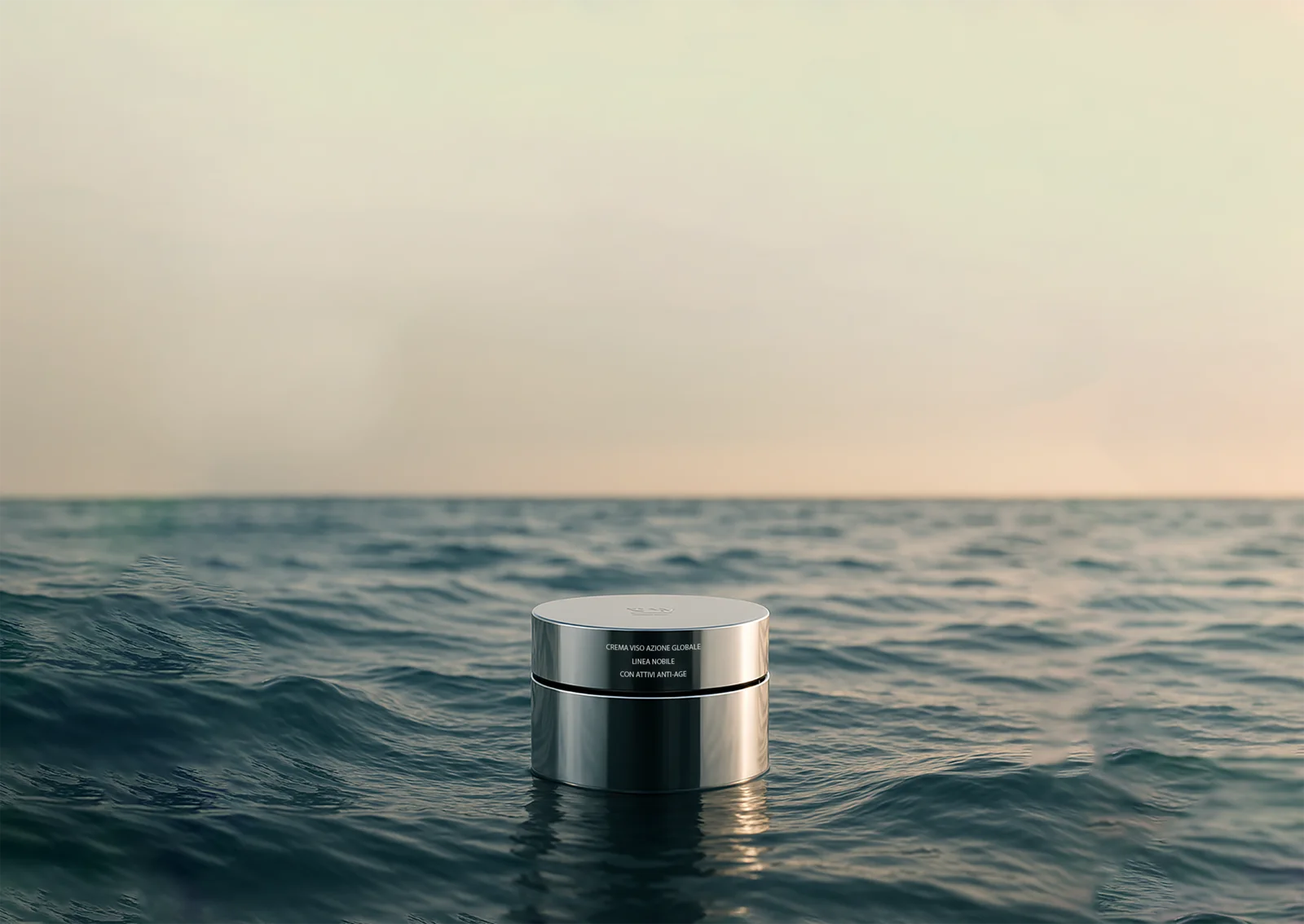
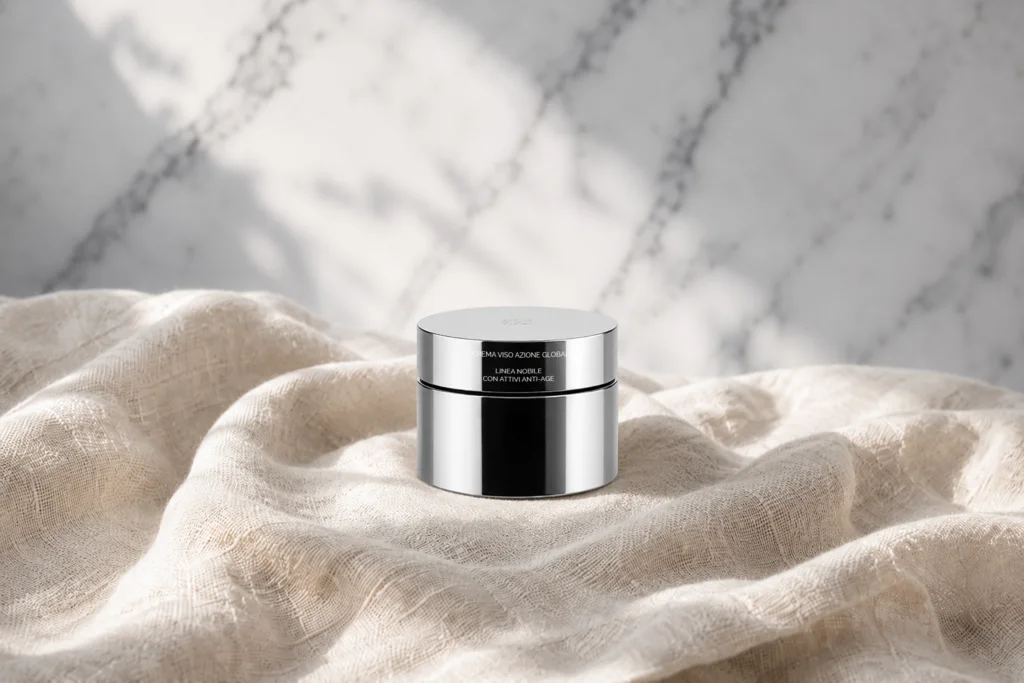
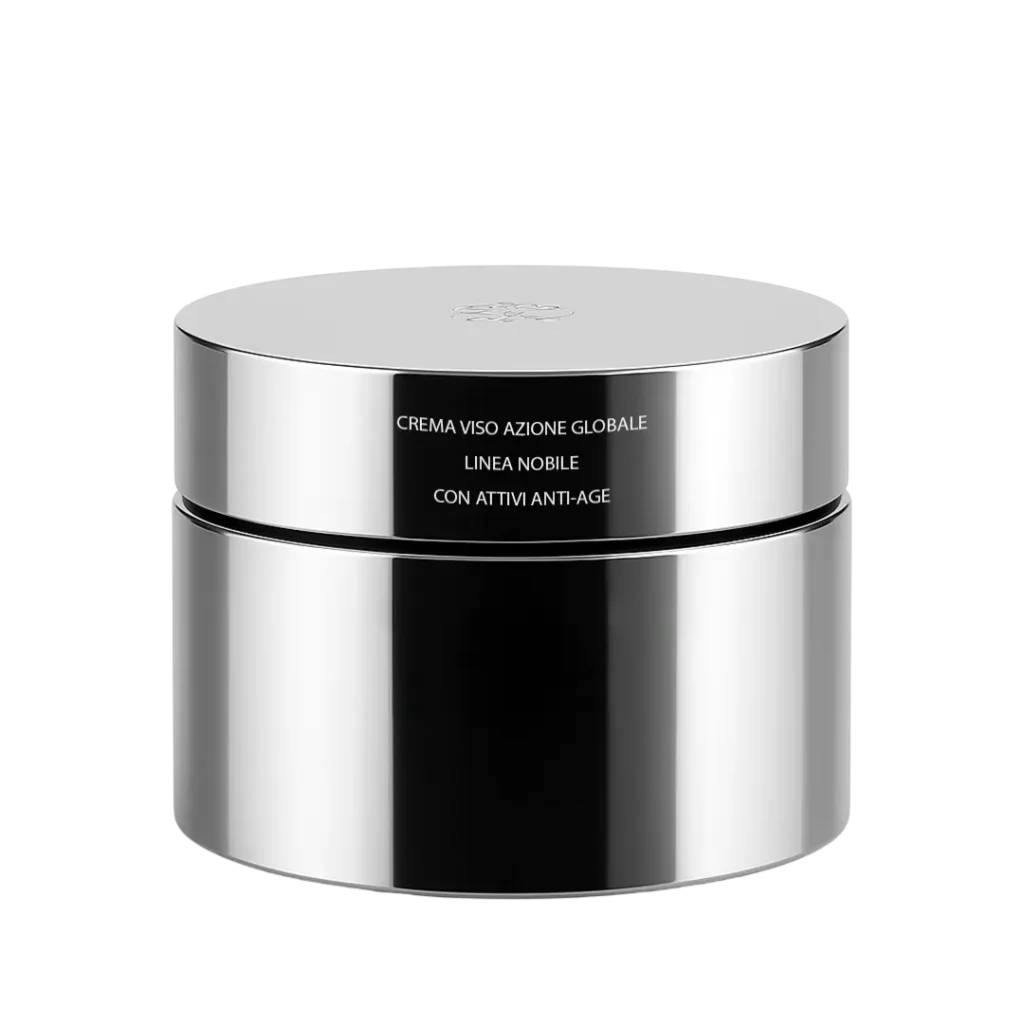
Global Action Cream is the Linea Nobile product for the moisturising stage of the routine, used morning and evening according to the leaflet.
The documentation lists sodium hyaluronate in three molecular weights, biomimetic peptides, Kigelia and Quillaja extracts, a marine-derived exopolysaccharide, hydrolysed silk, shea butter, plant oils and vitamin E. It also describes a complex of orange, rice, caper and olive extracts.
This information identifies the ingredients and intended use. Numerical results in the Eligenda Roma catalogue concern active ingredients and experimental preparations: without corresponding evidence for the finished cream, they do not become promises of wrinkle reduction, increased elasticity or lasting hydration. Consult the official technical sheets and leaflets for instructions.
The cream’s spatula reflects the brand’s attention to detail. Made by a Roman silversmith, it is described in the Eligenda Roma catalogue as silver plated and nickel-free. Once its use as a spatula is complete, it can be transformed into a pendant.
Our guide to cosmetic expiry dates and PAO explains how to read shelf-life information on packaging.
To complete your routine, you can pair the cream with a face serum, applied beforehand, and eye cream for the eye area. If your skin looks dull during tense periods, stress may be among the causes, as we explain in our guide to how stress affects the skin.
Frequently asked questions about face cream
What is the difference between day cream and night cream? Day and night labels indicate the intended use and sometimes a different texture. A day cream does not necessarily contain sunscreen filters; check the label. Some formulas can be used at both times.
Does cream go before or after serum? Usually after, if you choose to use both. Follow each product’s directions and check that the combination feels comfortable. Serum remains optional.
At what age should you start using anti-wrinkle cream? There is no compulsory age: your skin’s needs matter. Moisturising and sun protection provide a useful foundation; choose any targeted ingredients according to tolerance and your aim.
Is anti-wrinkle cream useful for oily skin too? Yes. Oily skin also needs hydration and can develop wrinkles. The difference lies in texture: oily or combination skin is better suited to a lighter, quickly absorbed cream that hydrates without feeling heavy.
How much face cream should you use? The amount depends on the formula and indicated areas. Follow the instructions: more product does not mean greater effectiveness.
Does anti-wrinkle cream protect against the sun? No, unless it is specifically a cream with a protection factor stated on the label. Sunscreen remains a separate morning step and the most important defence against wrinkles and dark spots.
How long does anti-wrinkle cream take to work? Hydration may bring a noticeable change quickly, while other results depend on the formula and aim. There is no universal four- or eight-week period for every cream.
Can face cream also be used on the neck and décolletage? Yes, if the instructions allow it and your skin tolerates it. Hydration may provide comfort and make some surface lines less visible, without being equivalent to a lifting effect.
Is a natural face cream as effective as a conventional one? Natural origin demonstrates neither greater nor lesser effectiveness. The formula, tolerance and available product evidence matter. Natural does not automatically mean safer or more suitable for sensitive skin.
At a glance
Face cream mainly helps hydrate skin and maintain comfort. For other benefits, consider the formula and the evidence available for the product.
Choose according to your skin’s needs, follow the instructions and assess tolerance. Serum is optional; adequate sun protection remains necessary when you are exposed.
Further reading
Find more information in our facial routine guides.