
Eye care: how to choose a product for dark circles, puffiness and wrinkles
By Emanuela Silvi, founder of Eligenda Roma.
Eye cream can help hydrate the eye area and improve the appearance of fine lines and signs of tiredness. To choose well, however, it helps to distinguish dark circles, puffiness and wrinkles: they can occur together, but do not all have the same origin or respond to cosmetics in the same way.
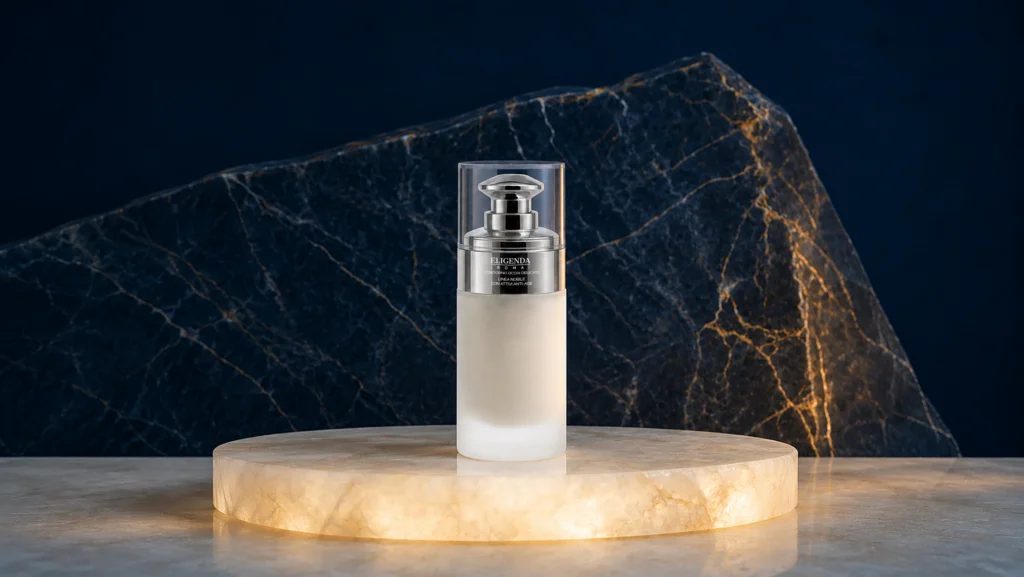
Our Delicate Eye Contour Cream brings together hyaluronic acid, biomimetic peptides, caffeine and emollients in a daily treatment. It is designed for everyday care of the skin in this area. If swelling or other changes concern you, a doctor can help clarify their causes.
In this guide
- Why the eye area needs gentle care
- Dark circles, puffiness and wrinkles: the differences
- Which eye cream should you choose?
- Ingredients: what they can offer
- How to apply eye cream
- Habits and simple measures for puffiness
- Eligenda Roma’s Delicate Eye Contour Cream
- When to seek medical advice
- Frequently asked questions about eye care
- Sources and further reading
Why the eye area needs gentle care
Eyelid skin is particularly thin and close to a very sensitive area. Facial expressions, rubbing and sun exposure contribute to visible signs of ageing and changes in appearance.
Gentleness matters both when choosing a product and when applying it. A serum that feels pleasant on the cheeks may be uncomfortable near the eyes. Likewise, vigorous rubbing to remove make-up can irritate even when the cleanser is suitable.
A dedicated product offers instructions designed for that area, but does not automatically guarantee better tolerability than every face cream. The scientific review of eye-cream ingredients also highlights a limitation in the evidence: many studies concern particular ingredients or formulas, with few direct product comparisons.
Dark circles, puffiness and wrinkles: the differences
Dark circles: colour and shadow can overlap
‘Dark circles’ describes a dark appearance under the eyes, not a single diagnosis. There may be pigmentation, greater visibility of blood vessels through the skin, a shadow caused by the shape of the area or a combination of factors.
Brown colour may suggest pigmentation; blue or purple can accompany a vascular component. A hollow can create a shadow that changes with the lighting. Colour and appearance offer clues, but are not enough for diagnosis, even when you observe how they change as the skin is stretched. The classification is described in the review of periorbital pigmentation.
Moisturising can improve the skin’s appearance, but does not fill a hollow; similarly, a brightening cosmetic does not eliminate every dark circle. A professional assessment can help identify the predominant component and the results you can expect.
Under-eye bags: variable puffiness or a structural component
Bags are raised areas. They may be more noticeable on waking and vary through the day, or remain relatively stable. Both fluid accumulation and changes in the tissues supporting the area can contribute.
According to the Mayo Clinic, age, predisposition, sleep and allergies are among the factors involved. Not all under-eye bags indicate disease: they are often a cosmetic concern.
A cosmetic can improve comfort and surface appearance. It does not remove orbital fat or reposition tissues. Understanding this avoids expecting a cream to change something determined by anatomy.
Wrinkles: fine lines and expression lines
Small lines can look more noticeable when the surface is dry. A moisturising product may soften their appearance without erasing the natural movement of a smile.
Crow’s feet and wrinkles visible at rest have a different history from dehydration alone. When choosing an anti-wrinkle eye cream, distinguish the benefit of softer skin from the expectation of eliminating a deep line. Photographs with different lighting, expressions and make-up do not allow a reliable comparison.
Which eye cream should you choose?
The first question is what you want to improve. Then consider texture, directions and tolerance.
| Main concern | What to consider | A limitation to remember |
|---|---|---|
| Dryness and fine lines | Humectants, emollients and comfort after application | Moisturising does not erase every wrinkle |
| A tired appearance and variable puffiness | A dedicated formula, possibly with caffeine | Results differ according to the cause of puffiness |
| Pigmented dark circles | A product suitable for the area and assessment of the cause | A brightening formula does not guarantee the colour will disappear |
| Shadows caused by hollows | Realistic expectations and medical advice if desired | A cosmetic cannot restore anatomical volume |
| Persistent, pronounced under-eye bags | Skin comfort; specialist advice on further options | Cream does not remove the structural component |
One product may address several needs. Choose it according to the most realistic benefit for your skin.
Eye cream, gel or serum?
Texture mainly affects comfort and ease of application. A cream may feel comfortable on dry skin; a lighter texture may be preferable under make-up. There is no automatic link, however, between gel and reduced puffiness, or between a rich cream and greater anti-wrinkle effectiveness.
Consider whether the product spreads without pulling the skin, leaves residue or sits well beneath concealer. Too much can make application less pleasant without adding benefit.
Ingredients: what they can offer
Hyaluronic acid and emollients
Hyaluronic acid is used for hydration; oils and butters help soften the surface. In a well-tolerated formula, these components can help an area that looks dry or shows fine lines.
The hydrating effect of hyaluronic acid, including formulas with several molecular weights, remains different from a filler. Follow the instructions for the amount to apply: a rich formula may need only a small quantity.
Caffeine
This ingredient appears in various products intended for the appearance of puffiness and dark circles. Results depend on the formula studied and the cause of puffiness. Caffeine may contribute to cosmetic improvement, but does not resolve every type of under-eye bag.
Peptides, collagen and elastin
Peptides are used in cosmetics aimed at the appearance of lines and firmness, with evidence varying by sequence and formula. They do not all have the same function. Our guide to facial peptides explains this distinction.
In cosmetics, collagen and elastin help form a film on the surface and maintain hydration. They do not replace the fibres in deeper tissues.
Brightening and botanical ingredients
Niacinamide and vitamin C appear in some formulas for skin tone; plant extracts and antioxidants can feature in products for comfort and appearance. Their presence does not, however, make every serum suitable for the eye area.
Near the eyes, it is particularly important to check that a product is intended for that area. A plant extract is not automatically harmless to someone with an individual sensitivity. Check the complete INCI list, especially if you have known allergies.
How to apply eye cream
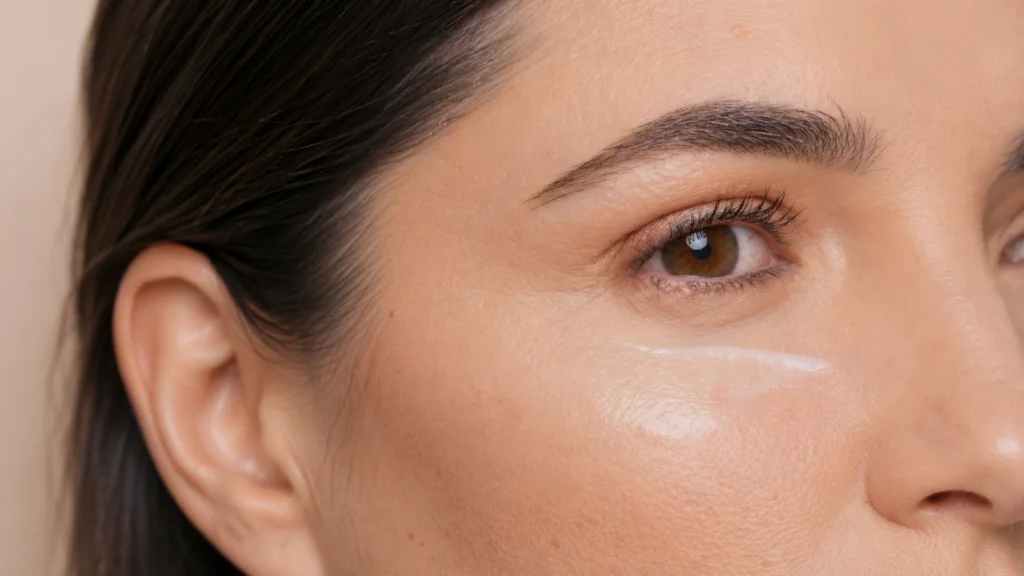
Start with clean hands and cleansed skin. The directions for Delicate Eye Contour Cream specify a small amount morning and evening, gently spread from the inner to the outer corner until absorbed.
- Take a small amount, following the product’s instructions.
- Apply with light touches around the eye area, avoiding contact with the eye itself.
- Keep pressure light, without pulling the skin.
- Do not apply to the lash line or moving part of the upper eyelid unless the product is intended for that use.
- Let it settle before adding concealer or other cosmetics.
You can use your ring finger if it helps you control pressure and keep your touch light. The usual sequence places eye care after any serum and before face cream, each applied to its own area. Our guide to skincare order also covers sun protection.
If the product enters your eye or causes discomfort, stop applying it and follow the packaging warnings. Do not persist in the belief that burning proves the ingredients are working.
Habits and simple measures for puffiness
For occasional puffiness, a clean cloth dampened with cool water and gently held in place for a few minutes may bring relief. Avoid direct ice and strong pressure. The Mayo Clinic includes cool compresses, sufficient sleep and slightly raising the head while resting among measures that may help.
A clean cloth avoids exposing the area to ingredients in herbal teas or foods that could irritate it. Cooling may ease occasional puffiness; it does not treat pigmentation or the structural component of under-eye bags.
Protect the eye area from the sun with suitable sunglasses and a sunscreen compatible with the area, following its instructions and avoiding contact with the eyes. An eye cream without a stated SPF does not replace sunscreen. The AAD highlights the combined role of sunscreen, shade and protective clothing.
Eligenda Roma’s Delicate Eye Contour Cream
The 15 ml formula combines hyaluronic acid in three molecular weights, biomimetic peptides, collagen and elastin. It contains caffeine, vitamin E, Myrothamnus flabellifolia, centella, ginkgo and witch hazel water, alongside emollients such as sweet almond and jojoba oils and shea butter.
It also contains plant extract complexes, including orange, rice, caper and olive. Studies of individual ingredients do not automatically demonstrate the same results in the finished formula.
The treatment is designed to provide hydration and softness for a smoother-looking eye area, and is used morning and evening with light movements. The benefit remains cosmetic: it does not permanently correct dark circles or bags, and tolerance needs to be assessed on your own skin.
The wording ‘dermatologically tested’ also needs to be understood correctly: it does not guarantee freedom from reactions and is not, by itself, equivalent to ophthalmological testing.

When to seek medical advice
If swelling is new, persistent, very different from usual or associated with irritation, it is reasonable to seek advice. For visual problems, pain or significant redness, contact a doctor.
For structural bags or dark circles that concern you, a doctor can clarify the causes and discuss possible options. Not all require a procedure, and the choice cannot be made from a photograph or the colour of the area alone. Cream can continue to support skin comfort, according to the advice you receive.
Frequently asked questions about eye care
What is the best eye cream for dark circles and puffiness?
One that suits your needs and is well tolerated. Start with the main concern: colour, shadow, dryness or puffiness. This helps you assess a product beyond the name of its best-known ingredient.
Is it really necessary, or is face cream enough?
A separate product is not essential for everyone. Only use a face cream near the eyes if it is indicated for that area and well tolerated. A dedicated product is useful when you want a formula and instructions specifically for the eye area.
At what age should you start?
Start when there is a specific need, even if it is simply comfort. There is no age threshold that applies to everyone, and no need to add another product if your skin already feels comfortable.
Does eye cream eliminate dark circles?
It may improve their appearance, depending on the formula and cause. It does not eliminate every pigmentary, vascular or anatomical component. Assess results without changing the lighting or make-up between comparisons.
How long should you use it before assessing the result?
Comfort may be noticeable quickly; cosmetic changes need more observation and depend on the product. There is no number of weeks that applies to every formula. Stop sooner if persistent discomfort develops.
Can I use it with contact lenses or during pregnancy?
The word ‘delicate’ does not provide specific guidance for these circumstances. Check the instructions and formula; for particular eye concerns, ask an ophthalmologist, and during pregnancy or breastfeeding discuss your cosmetic choice with the professional caring for you.
Sources and further reading
- Sarkar and colleagues, Periorbital Hyperpigmentation: A Comprehensive Review, 2016: components of dark circles and the limits of cosmetic assessment.
- Hamie and colleagues, A review of the efficacy of popular eye cream ingredients, 2024: ingredients studied and limitations of the evidence.
- Mayo Clinic, bags under the eyes: causes and management.
- AAD, sunscreen and complementary protective measures.