
Face serum: what it does, how to choose it and how to use it
By Emanuela Silvi, founder of Eligenda Roma.
A face serum adds a targeted treatment to your routine: it may help improve hydration, radiance and the appearance of fine lines, depending on the formula. It is generally applied after cleansing and before cream. It is especially useful when you want to address a specific skin need; if your routine already works well, you can do without it.
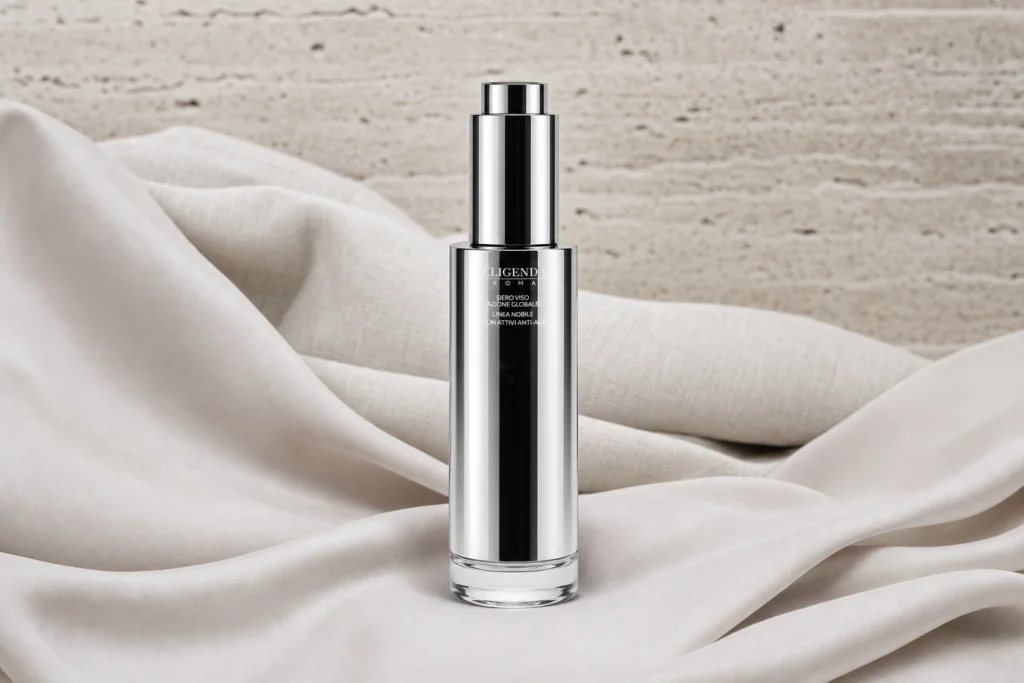
For example, our Global Action Serum combines hyaluronic acid in three molecular weights, biomimetic peptides and plant extracts in a daily treatment for the face, neck and décolletage. Your choice starts with the result you want and the products you already use.
In this guide
- What is a face serum?
- Face serum: what it does in practice
- Face serum or cream: what is the difference?
- Which ingredients to look for
- How to choose a serum for your skin
- How to use face serum
- Global Action Serum in the Eligenda routine
- How long does it take to see results?
- Common mistakes
- Frequently asked questions about face serum
- Sources and further reading
What is a face serum?
A serum is a cosmetic with a generally fluid texture, available as a water-based formula, gel, light emulsion or oil preparation. Active ingredient concentrations vary between products: the word ‘serum’ does not, on its own, indicate greater effectiveness.
A serum may contain moisturising or antioxidant ingredients, or ingredients intended to improve visible signs of ageing. A cream can also perform these functions. To compare them, look at their composition and directions.
A light texture often makes serum pleasant to apply beneath other products. How deeply ingredients reach depends instead on the molecules’ characteristics, the vehicle and the preparation’s stability. Harvard Health also emphasises the role of formulation in a serum’s results.
Face serum: what it does in practice
Depending on its composition, a serum may address different needs.
Hydration. A serum with humectants such as glycerine and hyaluronic acid can help skin retain water and look smoother. It may be useful when skin feels tight or fine lines become more noticeable during dry periods. ‘Plumping’, in this context, describes a cosmetic effect linked to hydration: it is not the same as changing facial volume.
Improving the appearance of wrinkles. Some formulas combine hydration with ingredients studied for fine lines and apparent firmness. Results depend on the product and regular use; adding a serum does not make a deep wrinkle disappear.
A more even complexion. Some serums target dullness and uneven skin tone, using ingredients such as vitamin C or niacinamide. A new dark spot or one that changes appearance needs medical assessment before it is treated as a purely cosmetic concern.
Caring for combination skin with a light texture. The texture may appeal to people who dislike layering rich products. This does not mean every serum suits oily skin or can treat acne.
Finally, an antioxidant serum does not replace sunscreen. Hydration, cosmetic treatment and UV protection meet different needs.
Face serum or cream: what is the difference?
The most useful distinction concerns texture and what each product contributes to the routine.
| Aspect | Face serum | Face cream |
|---|---|---|
| Typical texture | Fluid or gel, sometimes oil-based | An emulsion of varying richness |
| Function | A treatment chosen for a specific aim | Hydration, softness and comfort, also with targeted active ingredients |
| Active ingredient concentration | Varies between formulas | Varies between formulas |
| Usual application | After cleansing and optional toner | After serum, if used |
| Basis for choosing | Your main concern and how the product fits your routine | Skin comfort and preferred texture |
Moisturising creams can combine humectants with emollient components and substances that help limit water loss. If skin still feels tight after serum, a cream can help keep it hydrated and soft.
Can serum replace cream? That depends on the formula and your skin. A light serum may not be enough for dry skin; in other routines, an existing moisturising product may already meet that need. Follow product directions and add only the steps you feel you need. In the Eligenda routine, the serum is designed to precede Global Action Cream.
Which ingredients to look for
Ingredients help explain how a product is designed. Assessing effectiveness also requires information about the complete formula.
Hyaluronic acid and glycerine for hydration
These humectants are widely used in facial formulas. Hyaluronic acid, often present as Sodium Hyaluronate, helps retain water. Different molecular weights have different characteristics. Their presence does not imply uniform penetration into skin layers or an effect equivalent to an injectable treatment.
Vitamin C and niacinamide for specific aims
Vitamin C is used for antioxidant activity and the appearance of skin tone. Niacinamide, a form of vitamin B3, is used in formulas aimed at hydration, the skin barrier and evenness. Ingredient form, concentration and tolerance matter as much as the name. Cleveland Clinic’s information on vitamin C and niacinamide explores these uses.
These are examples of ingredients available in serums on the market, not a list of the active ingredients in Eligenda’s serum. Always consult the INCI list to check a specific formula.
Peptides and botanical complexes
Cosmetic peptides are a broad family: data for one peptide do not automatically apply to all the others. Similarly, two extracts of the same plant may differ in preparation and composition. When assessing product claims, check whether cited studies concern the individual ingredient or the finished formula.
Why INCI position is not enough
An ingredient near the end of a list is not necessarily useless. Some substances are used at low doses, and the label does not state every percentage. Do not choose a serum by counting how many active ingredients appear near the top. Our guide to reading INCI explains how to use the list without assuming it contains information it does not.
How to choose a serum for your skin
Before comparing two products, identify your main need: tight-feeling skin, a dull complexion or a rough surface. This helps you choose a useful treatment and assess its result.
| Need | What to consider | What not to expect |
|---|---|---|
| Tight-feeling skin | Humectants paired with a comfortable cream | That a watery texture will always be enough alone |
| Fine lines | A moisturising formula and targeted cosmetic treatment | Erasing deep wrinkles |
| Uneven skin tone | A dedicated formula and sun protection | Identical results for every kind of dark spot |
| Combination or shiny skin | Pleasant texture, amount used and individual response | That ‘light’ automatically means acne treatment |
| Reactive skin | The complete INCI list, fragrance and previous reactions | Guaranteed tolerance from the active ingredient’s name alone |
If your skin is sensitive, introduce one product at a time: changing cleanser, serum and cream together makes it difficult to understand what works. ‘Dermatologically tested’ does not guarantee the absence of individual reactions.
Trying a product on a small area before wider use may help reveal an obvious reaction, but is not equivalent to allergy testing. If burning, itching or persistent redness develops, stop using the new product and seek professional advice. The American Academy of Dermatology offers practical guidance on trying cosmetics at home.
How to use face serum
Before or after cream?
For many fluid serums, the sequence is cleansing, optional toner, serum and cream. In the morning, sunscreen follows before make-up. The formula’s directions take precedence over the general rule, especially for oil-based preparations or prescribed treatments. See the full sequence in our guide to skincare order.
How much serum should you apply?
Use the amount recommended by the manufacturer. ‘Three drops’ and ‘two pumps’ are not equivalent measures: droppers, dispensers and textures vary. Increasing the amount can leave residue without improving the result.
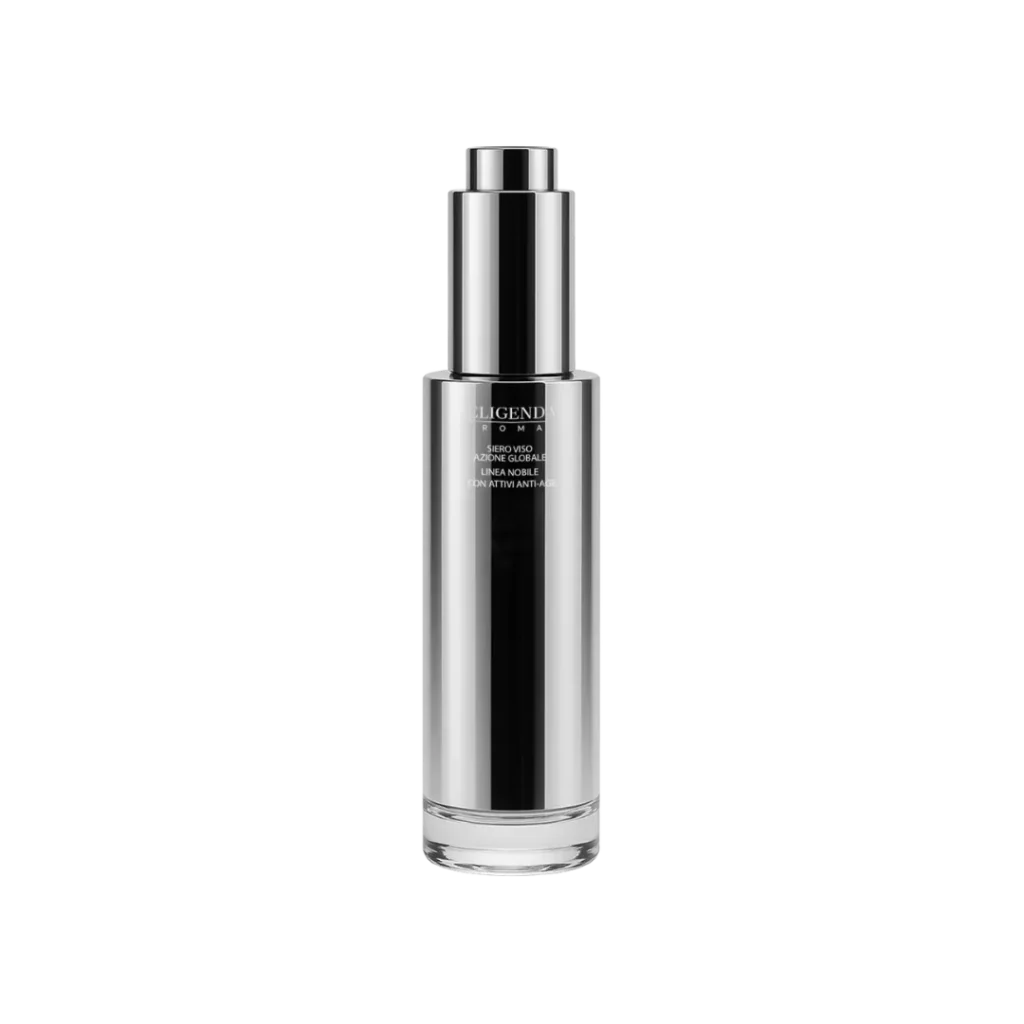
For Global Action Serum, a few drops are enough, applied with light strokes over the face, neck and décolletage after Restorative Cleansing Milk and Rejuvenating Facial Toner.
Damp or dry skin?
There is no single rule for every serum. Follow the label and avoid adding water to the product or diluting it in the bottle. Apply it to skin that is free of cleanser and make-up. Let the serum settle before adding the next product; there is no set waiting time for every formula.
Morning or evening?
It depends on the product. Our serum is used morning and evening. Other serums may specify different frequencies. Choose times that are easy to maintain and avoid layering treatments that irritate your skin.
Global Action Serum in the Eligenda routine
The 30 ml formula combines hyaluronic acid in three molecular weights and glycerine with a blend of biomimetic peptides. It also includes Myrothamnus flabellifolia, Kigelia africana and Quillaja extracts, carrot and a complex of caper, prickly pear and olive leaves.
It is designed for those seeking a daily treatment that combines hydration with cosmetic care for signs of ageing. After a few drops of serum, Global Action Cream completes the sequence with a richer texture.
Research on individual ingredients explains their use. Quantifying the serum’s results, however, requires a study of the finished formula used according to its directions.
How long does it take to see results?
Comfort and softness may be noticeable quickly. Assessing the appearance of fine lines takes longer and depends on what the product promises and documents.
The AAD notes that many cosmetics for signs of ageing need at least several weeks, sometimes months, before assessment. This is not a guaranteed deadline for every serum. You can compare photographs taken with the same lighting and expression, avoiding attributing differences caused by make-up or lighting to a product. AAD guidance on using anti-ageing products.
Stop using a product if it irritates your skin. If it is well tolerated but does not meet the original need, reconsider your choice rather than increasing the amount.
Common mistakes
- Choosing only the highest concentration. A percentage alone cannot tell you how effective or well tolerated the complete formula will be.
- Adding several serums at once. This makes it difficult to understand each one’s contribution or identify a reaction.
- Assuming a sticky serum works better. If it leaves residue, check the amount and how it combines with other products.
- Mixing everything in your palm. Apply products separately unless the instructions explicitly allow mixing.
- Using serum as sunscreen. An antioxidant cosmetic without a stated SPF does not provide that function.
Frequently asked questions about face serum
Should face serum be used every day?
Many serums are designed for daily use; others have different directions. Frequency depends on the formula and your skin’s response. Global Action Serum is intended for morning and evening application.
Can serum also be used around the eyes?
Only if the instructions allow it. ‘For the face’ does not automatically mean suitable near the eyes. Choose a product intended for that area.
At what age should you start?
There is no set starting age. Add a serum when it meets a need, rather than simply because you have reached a particular age.
What is the difference between a serum and a booster?
‘Booster’ is a commercial term used for concentrated or complementary products. It does not guarantee a higher concentration or mean it can be mixed with any cream. Check the directions for the individual product.
Can I use two serums together?
You can build a routine with several treatments, but start with one and assess whether the second meets a different need. Separating them between morning and evening can simplify application; it does not automatically resolve incompatibilities or irritation.
Sources and further reading
- Harvard Health, Skin serum: What it can and can’t do: serum characteristics and the importance of formulation.
- Cleveland Clinic, vitamin C and niacinamide: cosmetic uses and tolerability.
- AAD, how to try a new cosmetic and using anti-ageing products: introduction and assessment over time.