

Peptides in skincare: what they do and how to use them
By Emanuela Silvi, founder of Eligenda Roma. Updated .
Peptides are short chains of amino acids. In skincare, some are used in products designed to improve the appearance of fine lines and skin firmness. They are a varied group: the name of the peptide, the formula and the evidence behind it matter more than the word “peptides” on the packaging.
Our Global Action Serum, Global Action Cream and Delicate Eye Contour Cream contain a blend of biomimetic peptides. Choose between them according to the step you want to add and the area you want to treat.
In this guide
- What are peptides?
- What do peptides do in facial cosmetics?
- The main families of cosmetic peptides
- Do peptides really work? Reading the studies
- Recognising peptides in an INCI list
- Peptides, hyaluronic acid and collagen: what is the difference?
- Using peptides in your routine
- Peptides in Eligenda Roma treatments
- Sensitive skin and possible reactions
- How long does it take to see a change?
- Frequently asked questions about peptides
- Sources and further reading
What are peptides?
Amino acids are the building blocks of proteins. When joined in relatively short chains, they form peptides. Changing the sequence changes the molecule’s characteristics: two ingredients whose names both end in ‘peptide’ can have different properties.
Cosmetics use synthesised peptides, protein-derived preparations and complexes containing several components. The term biomimetic describes a design inspired by biological structures or signals. That inspiration does not guarantee that every molecule has the same effect on the skin.
A 2025 scientific review of peptides and skin ageing describes this variety. To understand whether a product may be useful, you need to know which peptide it contains and what results have been studied for that formula.
What do peptides do in facial cosmetics?
Peptide serums and creams are often chosen for fine lines, loss of firmness or uneven skin texture. Their effects depend on the peptide and the formula.
When trying a product, consider whether it feels comfortable and whether it addresses the concern you bought it for. A description of what an ingredient does in a laboratory cannot predict the result on your face.
Distinguish cell experiments from studies in people, and check which product was studied. ‘Collagen stimulation’ described in a laboratory, for example, does not by itself prove the effectiveness of every peptide cream.
The main families of cosmetic peptides
A common classification groups peptides by the mechanism studied. These families describe research areas; results still need to be verified for the individual product.
| Family | What it describes |
|---|---|
| Signal peptides | Sequences studied in relation to cell communication and components of the skin’s matrix |
| Carrier peptides | Peptides that bind elements such as copper |
| Peptides studied for effects on neurotransmission | Sequences studied for processes related to the appearance of expression lines |
| Enzyme-inhibiting peptides | Sequences studied for their interaction with particular enzymes |
Within the formula, the ingredient must remain stable and available under the intended conditions of use. These factors also affect whether a practical benefit can be achieved.
Do peptides really work? Reading the studies
Clinical studies exist for certain cosmetic peptides. One example is Robinson and colleagues’ work on palmitoyl pentapeptide: 93 women took part in a 12-week comparison of a cream containing pal-KTTKS and the same base without the peptide, applied to opposite halves of the face. The study found improvements in lines and wrinkles compared with the control. These findings relate to that preparation, not the blend used in Eligenda treatments. Original study, International Journal of Cosmetic Science.
When you read a percentage or look at a ‘before and after’ photograph, check the following:
- What was tested: an ingredient, a blend of raw materials or a finished product.
- What it was compared with: a base without the active ingredient provides different information from a comparison with the starting condition alone.
- How many people took part and for how long. A small study is useful, but its limitations differ from those of larger research.
- What was measured: participants’ perceptions, photographic assessment or an instrument-measured parameter.
- Whether the formula being sold matches the one studied. The ingredient name alone cannot establish this.
This information helps you distinguish a documented result from a general scientific reference.
Size alone does not establish penetration
A molecule’s ability to cross the skin depends on stability, chemical characteristics and the vehicle, as well as its size.
An experimental study of palmitoyl tripeptide-1 examined that peptide’s distribution in the stratum corneum under specific laboratory conditions. Its findings concern that peptide and those conditions; they do not show that all cosmetic peptides reach the dermis in everyday use.
Recognising peptides in an INCI list
The name often contains the root peptide. Prefixes such as tri-, tetra- and penta- refer to three, four and five amino acids respectively; a following number identifies a particular name. That number is neither a percentage nor a ranking of potency.
You may see names such as Palmitoyl Tripeptide-1, Palmitoyl Pentapeptide-4, Acetyl Hexapeptide-8 or Copper Tripeptide-1. These identify different ingredients with their own characteristics. A prefix such as palmitoyl describes a molecular modification, not a guarantee of greater effectiveness.
The trade names of blends may differ from the component names on the ingredient list. To check a product, start with the INCI list on its packaging.
Some peptides are studied at low concentrations, so a position near the end of the list is not enough to judge their usefulness. Ingredient order provides limited information about amounts; effectiveness requires formula-specific evidence. Our INCI guide explains these limits.
Peptides, hyaluronic acid and collagen: what is the difference?
These names often appear in the same product, but they describe different components.
Hyaluronic acid is used mainly for hydration. A cosmetic containing it may make some dryness-related lines less noticeable. That effect alone does not demonstrate activity from any peptides in the same formula.
Collagen and elastin applied to the surface contribute to a cosmetic’s film-forming and moisturising properties. They do not replace fibres in deeper tissues. Peptides are shorter chains whose functions depend on their sequence; calling them ‘collagen in a smaller format’ would be inaccurate.
A product can contain both peptides and moisturising ingredients. If your main concern is dryness, start with a routine that keeps your skin comfortable rather than adding several peptide products at once.
Using peptides in your routine
Choose the product type first
A fluid serum generally comes before cream; eye cream belongs in its intended area; and a cream can provide your routine’s moisturising step. These basic directions still apply to peptide products.
For the full sequence, see our skincare order guide. There is no need to add all three products simply to increase the number of peptide applications.
Follow the directions for frequency and amount
The three Eligenda treatments containing peptides are intended for morning and evening use. For another cosmetic, check its directions. Do not increase the amount to speed up results, or treat tingling as a necessary adjustment phase.
Consider the whole formula when combining products
Peptides can be formulated with humectants or emollients. When combining separate cosmetics, however, a universal rule based only on active-ingredient names is unreliable.
If you already use an exfoliant or prescribed treatment, consider your whole routine and its directions. Avoid mixing products in their containers and introduce one new product at a time; this makes it easier to identify the source of a benefit or discomfort.
Peptides in Eligenda Roma treatments
The same biomimetic peptide blend appears in Global Action Serum, Global Action Cream and Delicate Eye Contour Cream. It includes hydrolysed wheat proteins and components named palmitoyl sh-octapeptide-8 glutamine sp amide, decapeptide-22, oligopeptide-78 and zinc palmitoyl nonapeptide-14.
These formulas have different textures and application areas. Sharing a peptide blend does not make them interchangeable.
In the serum
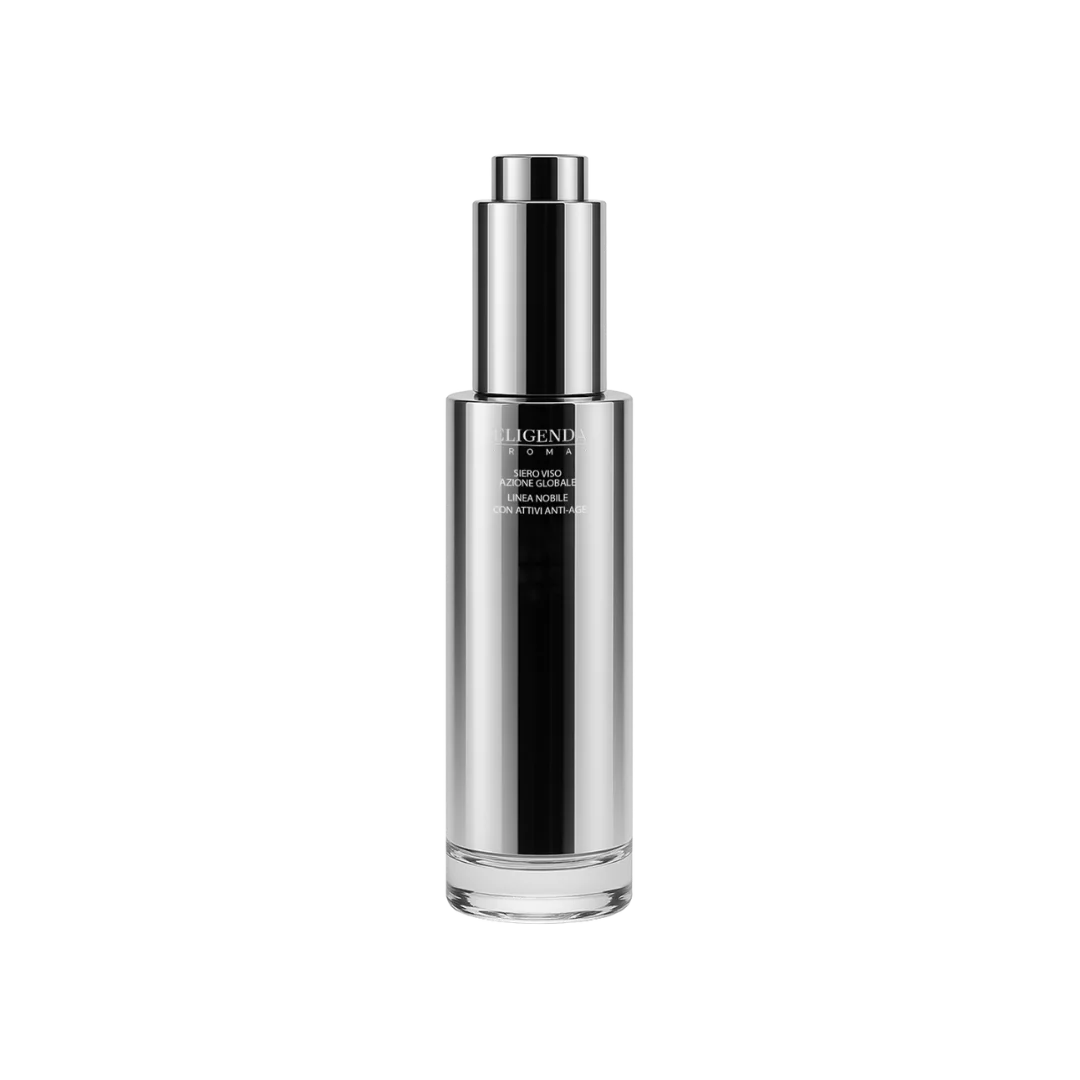
Global Action Serum, 30 ml, combines the blend with hyaluronic acid in three molecular weights, Myrothamnus flabellifolia, Kigelia and Quillaja extracts, carrot and other botanical ingredients. Apply a few drops with light strokes to the face, neck and décolletage morning and evening, after cleansing and toner.
In the cream
Global Action Cream, 50 ml, combines peptides with humectants, Pseudoalteromonas exopolysaccharide, vitamin E, oils and shea butter. The formula also contains mangosteen, quince and white lupin extracts, together with fermented chlorella proteins.
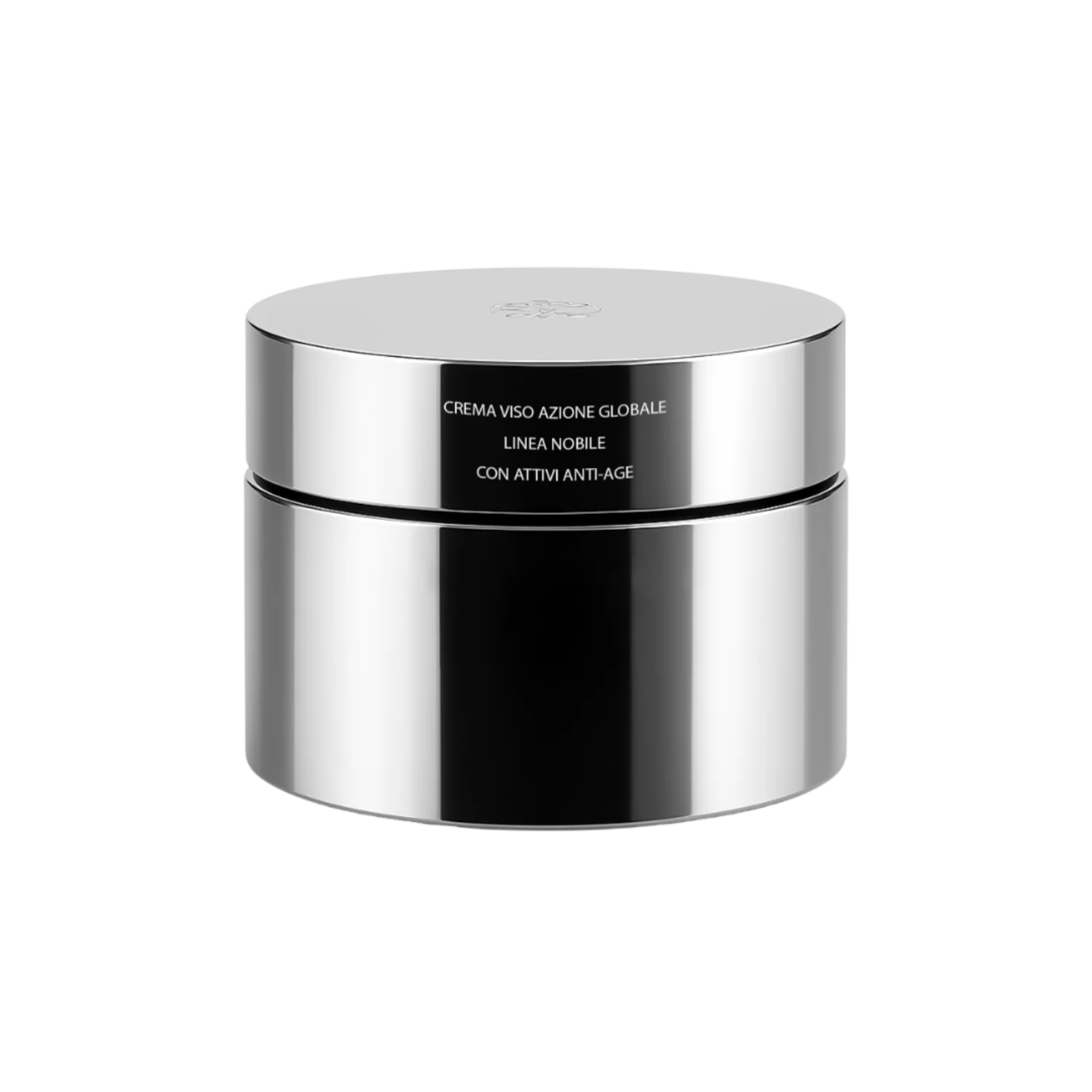
The cream completes the sequence after serum. Apply a small amount to the face, neck and décolletage. The supplied spatula helps you take out the product hygienically.
In the eye cream
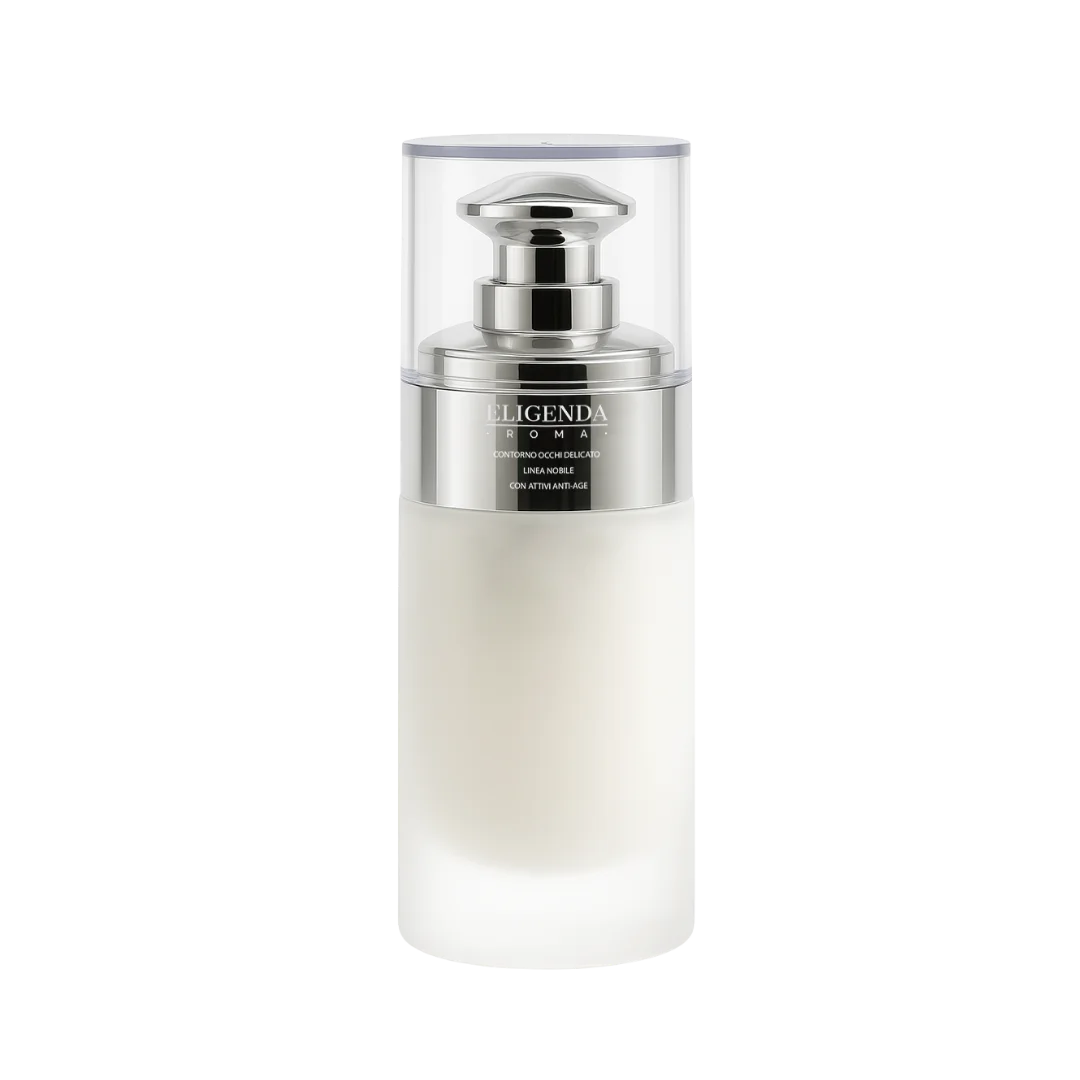
Delicate Eye Contour Cream, 15 ml, combines the blend with hyaluronic acid, collagen, elastin, caffeine and emollients. Apply a small amount morning and evening, spreading gently from the inner eye area outwards.
Studies of other peptides or test creams cannot establish a percentage improvement for these three products. Keep that distinction in mind when comparing a product description with the research linked in this guide.
Sensitive skin and possible reactions
Tolerability depends on the complete formula, how it is used and any known allergies. A recent scientific assessment of cosmetic peptide safety also calls for molecule- and exposure-specific evaluation, rather than a blanket guarantee for the category.
If your skin is reactive, introduce the product carefully and stop if discomfort persists. During pregnancy or breastfeeding, or if you have a skin condition, ask the professional caring for you to assess the cosmetic you intend to use.
How long does it take to see a change?
It depends on the product and the result being assessed. Some sensations, such as softness and comfort, may come from the moisturising base and appear quickly. Studies of visible fine lines may run for several weeks or months, with different protocols.
Four weeks is not a deadline that applies to every product. When assessing a routine, keep conditions comparable: the same light, area and facial expression. If you change several products together, it will be difficult to attribute any improvement to the peptide treatment alone.
Continue regular use if the product is well tolerated. Stop if irritation develops, and do not increase the amount to compensate for a lack of benefit.
Frequently asked questions about peptides
Is a peptide serum or cream better?
It depends on your routine. A serum adds a fluid treatment; a cream can combine that aim with moisturising comfort. The product category does not automatically tell you which formula is more effective.
Can they be used every day?
Yes, when the product is intended for daily use. Frequency and amount come from the formula’s directions, not the ingredient name alone.
Do more peptides mean a better product?
No. The number of sequences listed does not establish the quality of the result. Formulation, evidence and suitability for your needs matter.
Do peptides replace sunscreen?
No. A peptide treatment without a stated SPF is not a sunscreen. Cosmetic care for lines and protection from UV rays serve different purposes.
At what age should you start?
There is no required starting age. First consider your needs and existing routine. You do not need to add a product simply because it is marketed for a particular age group.
Sources and further reading
- Pintea and colleagues, Peptides: Emerging Candidates for the Prevention and Treatment of Skin Senescence, 2025: classification and variety of peptides.
- Robinson and colleagues, palmitoyl pentapeptide study, 2005: a controlled study of the specific experimental formula.
- Elucidating the molecular landscape of the stratum corneum, 2022: an experimental study of a peptide’s distribution in the skin.
- Bjerke and colleagues, A framework for the safety evaluation of peptides in cosmetics, 2026: a proposed safety-assessment approach, not testing of Eligenda products.