
How to achieve radiant-looking skin
By Emanuela Silvi, founder of Eligenda Roma.
A radiant complexion can depend on hydration, surface texture, skin colour and the light in which we see it. Radiance is not a single measurement and cannot, on its own, tell us how healthy skin is.
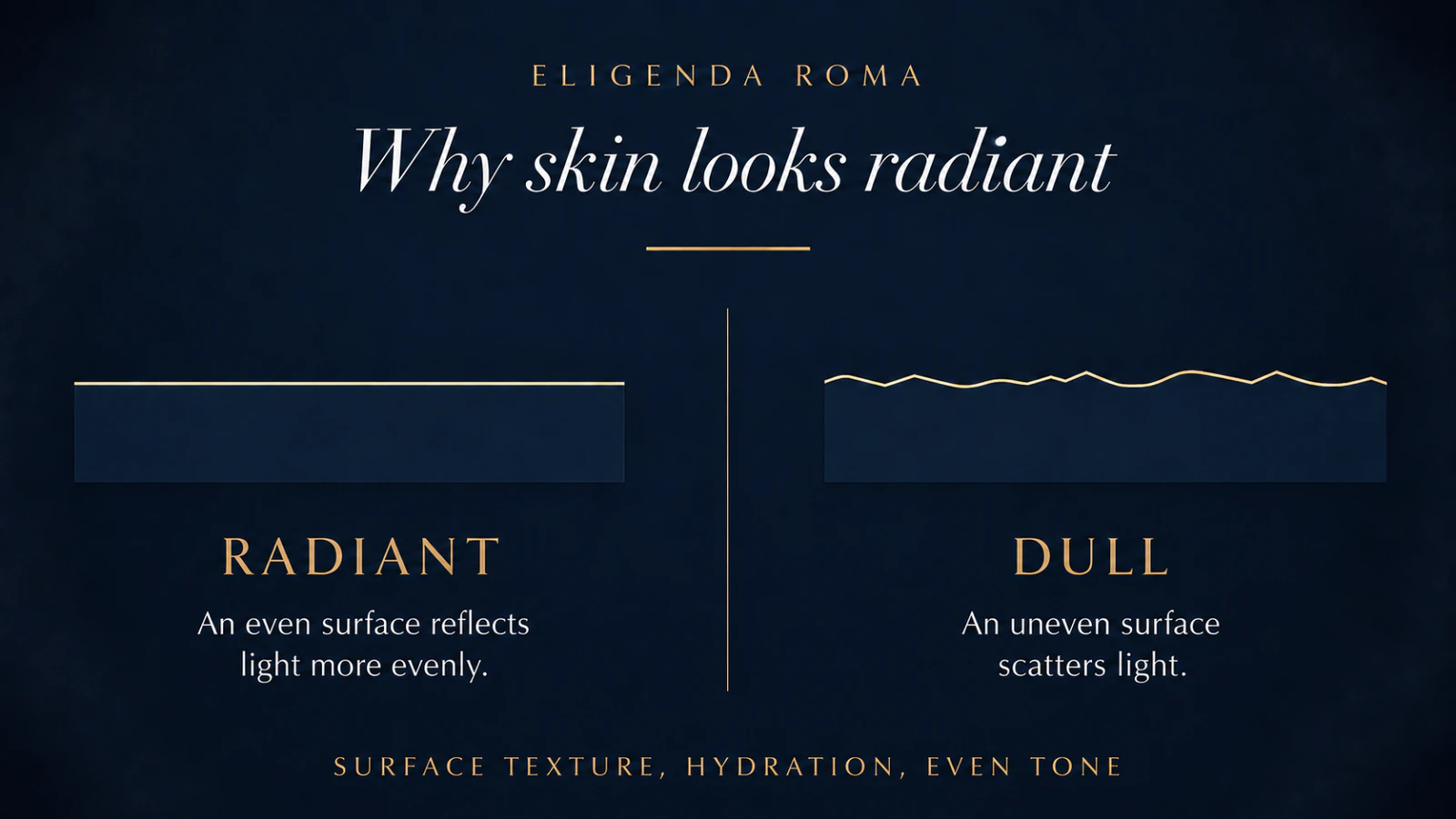
This guide helps distinguish radiance from shine and choose useful skincare steps without chasing results within a fixed number of days. The opening illustration is a simplified diagram of the surface; the interaction between light and skin is more complex.
In this guide
What is radiance?
The skin’s surface and deeper layers reflect, scatter and absorb light in different ways. ‘Radiance’ therefore describes an overall impression, not simply how much light is reflected.
The surface may look more or less even depending on dryness, flaking and the products applied. Hydration changes the optical behaviour of the stratum corneum: an experimental study of hydrated skin’s appearance found changes in light scattering and translucency, rather than a simple relationship in which more water means more reflection.
Skin tone, pigmentation and lighting complete the picture. A face can look different under side lighting and front lighting even when the skin itself has not changed.
Radiance and shine: how they differ
In skincare, radiant usually describes skin that looks even and comfortable. Shiny describes stronger reflections, often associated with sebum or products on the surface.
Both can occur together. Shine in the T-zone does not mean the rest of the face is well hydrated, nor does it prove the surface is necessarily uneven. Cleansing more vigorously to remove every reflection can increase discomfort. It is better to adapt your routine to different areas.
Why skin looks dull
A dull-looking complexion can have several explanations.
Dryness and flaking. These can change the surface’s texture and appearance. They do not demonstrate a stalled cell cycle: our guide to the skin’s life cycle explains the limits of turnover estimates.
Sun exposure. Over time, this can contribute to uneven pigmentation and other signs of photoageing.
Irritation. An overly intensive routine can leave redness, roughness or discomfort, even when it includes many products.
Habits and environment. Sleep, smoking, stress and dry air may affect skin appearance or comfort through different mechanisms. Read more about how stress affects the skin.
If a change is sudden, persistent or accompanied by other symptoms, have it assessed rather than simply adding an illuminating product.
Skincare steps that affect radiance
A useful routine starts with a few well-tolerated steps.
Cleanse gently. Remove make-up and residue without rubbing until your skin feels tight. Our face cleansing guide explains the method.
Moisturise. Humectants and emollients can make the surface feel more comfortable. Choose a texture to suit your skin without assuming you always need more layers.
Follow the directions. Our face routine guide explains how to arrange the steps and keep those that help you.
Consider exfoliation. It is optional, and frequency depends on the product and your tolerance. The AAD exfoliation guide notes that it is not suitable for everyone.
Protect against the sun. When exposed, choose a broad-spectrum sunscreen with at least SPF 30 and combine it with shade and suitable clothing.
Look after your daily habits. Regular sleep supports general wellbeing, but it does not allow us to predict a precise change in complexion.
Active ingredients used for radiance
Ingredients can contribute different functions to a formula.
Antioxidants. Vitamin C, vitamin E and botanical extracts are used for their antioxidant properties. Their presence in the INCI list alone does not demonstrate protection for the skin against sunlight or pollution.
Humectants. Glycerine and hyaluronic acid help retain water at the skin’s surface.
Ingredients studied for skin tone. Some formulas with niacinamide, vitamin C, arbutin or kojic acid are intended for uneven pigmentation. For example, a trial of 5% niacinamide observed changes in facial appearance after 12 weeks. That finding relates to the studied formula, not Eligenda products. For localised dark patches, see our facial dark spots guide.
Exfoliants. These can change the surface, but overuse may irritate the skin and worsen the appearance you wanted to improve.
Eligenda Roma treatments and radiance
Within Linea Nobile, the serum and cream are described as cosmetic care for hydration and the complexion’s appearance. The documents identify their ingredients; raw-material studies do not automatically establish the effect of the finished formula.
The description ‘for all skin types’ does not rule out individual reactions. Choose according to your needs, the directions and tolerability, without treating exfoliation as essential.
Global Action Serum
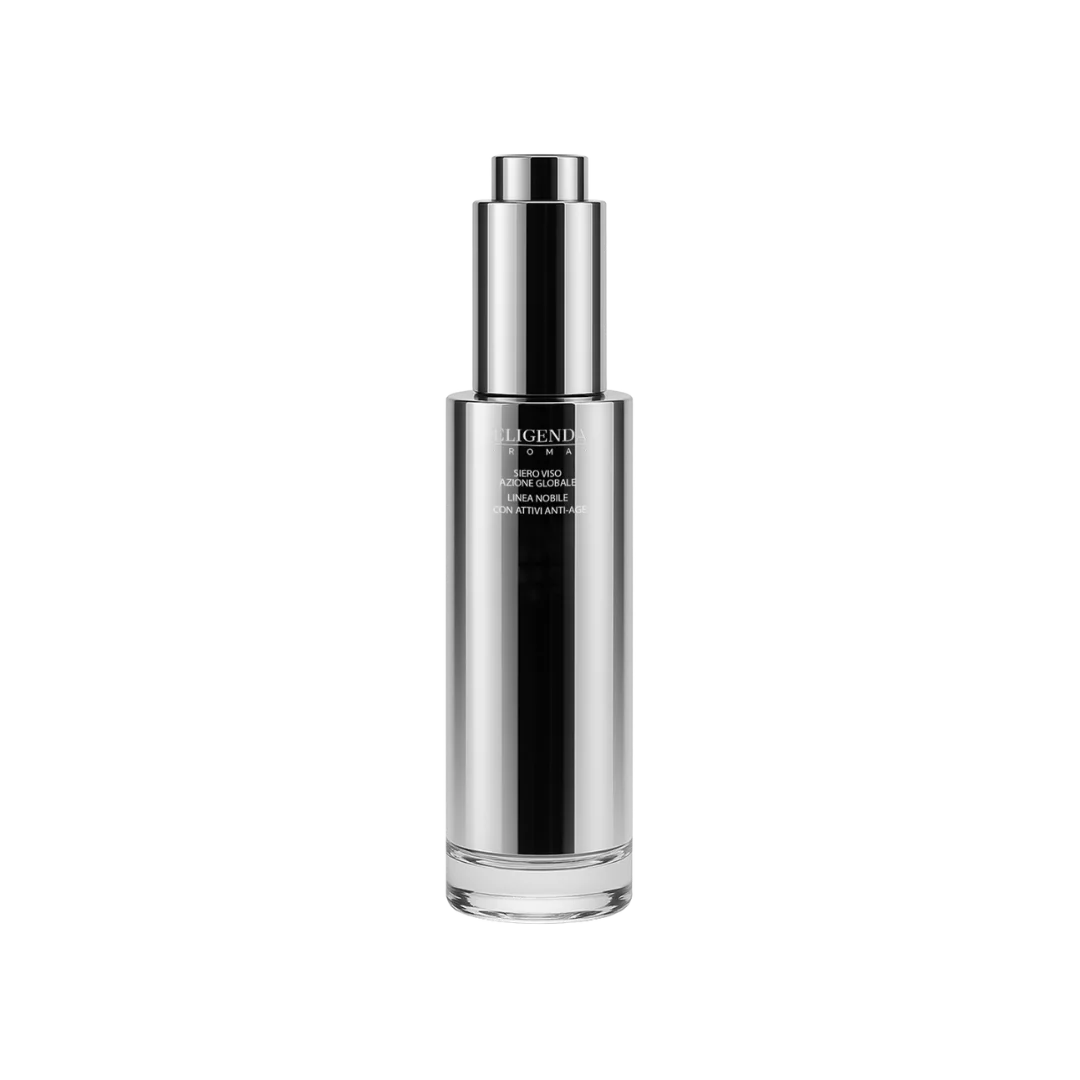
The brand presents Global Action Serum as a radiance serum. Its leaflet specifies a few drops on the face, neck and décolletage morning and evening, after cleansing and toner. It does not require the skin to remain wet.
Documented ingredients include carrot extract, sodium hyaluronate in three molecular weights, Myrothamnus flabellifolia and glycerine. These describe the formula without establishing, on their own, the duration of its effect, depth of action or reduction in environmental damage. Size: 30 ml.
Global Action Cream
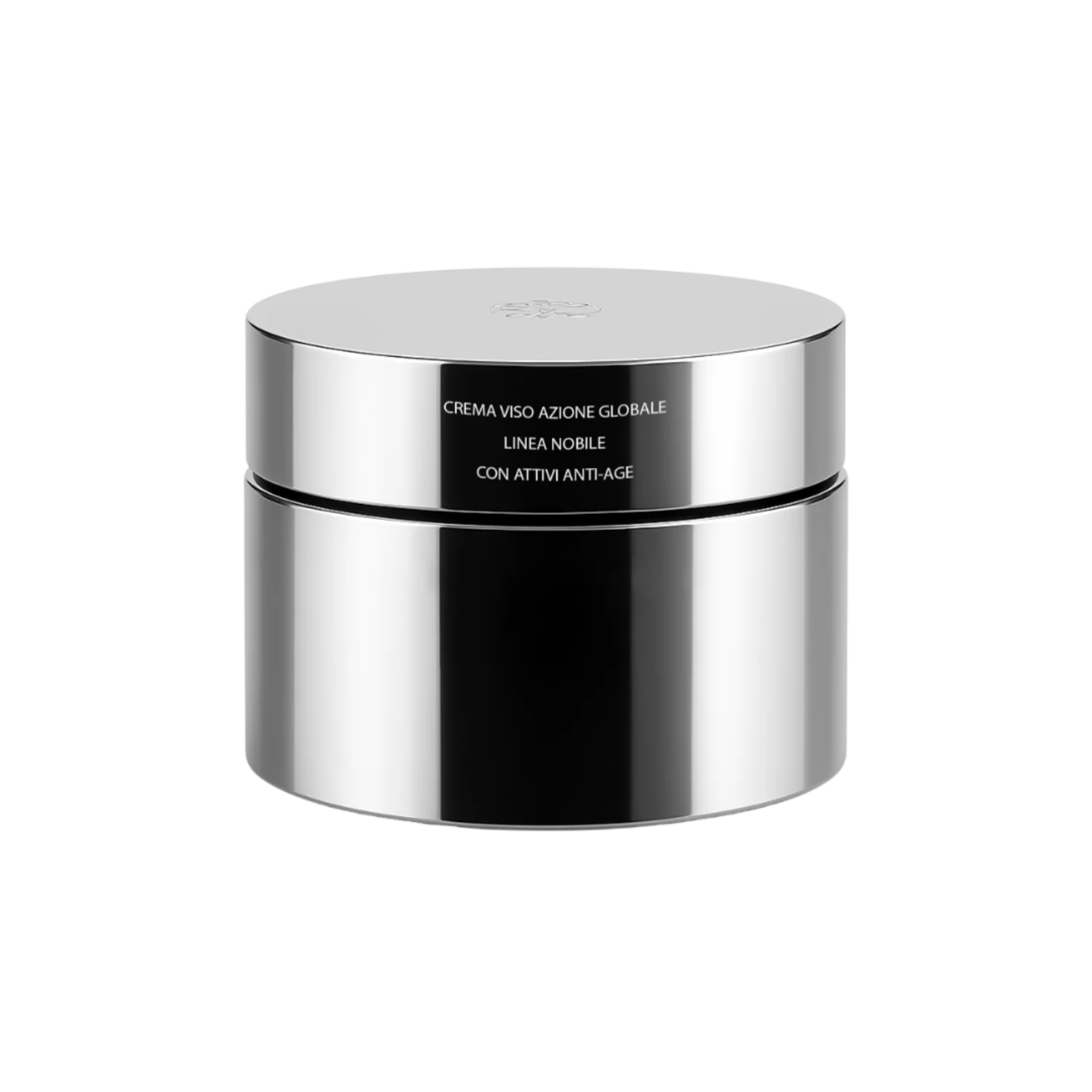
Global Action Cream completes the sequence with an emollient texture. The documentation lists sodium hyaluronate, glycerine, hydrolysed silk, vitamin E and a complex of orange, rice, caper and olive extracts.
The materials describe research on these active ingredients; they do not support a promised, measured lightening effect from the finished cream. Follow the leaflet and assess your skin’s response. Size: 50 ml.
In the range’s sequence, these are preceded by Restorative Cleansing Milk and Rejuvenating Facial Toner. Ingredients and directions are available in the official treatment information.
Habits that leave skin looking dull
Persisting when your skin objects. Burning, itching or redness are reasons to review your routine, not signs to ignore while waiting for more radiance.
Using sun protection only in summer. UV exposure matters in other seasons too.
Changing everything too often. Adding and removing many products makes it hard to tell what your skin tolerates. But there is no trial period you must complete at all costs if irritation develops.
Confusing an optical effect with a skin change. An illuminating product can immediately change how your face reflects light without demonstrating an improvement in the barrier.
Overlooking your neck. If the product directions allow it, include your neck when moisturising and protecting your skin.
How long does it take to see a change?
The timing depends on the cause, formula and your skin. Comfort and softness can change quickly; uneven tone and pigmentation need more specific assessment. It is not possible to promise results in ‘a few days’ or ‘two weeks’ for every routine.
Compare your skin in similar conditions: the same light, distance and framing, without make-up or filters. A photo can help you remember the starting point, but it does not measure hydration or replace a professional assessment.
Notice how your skin feels too. If a routine causes irritation, or the change that concerns you persists, reviewing it with a dermatologist is more useful than adding products.
Frequently asked questions
How can I get radiant skin quickly? A well-tolerated moisturising formula may soon improve comfort and the look of dryness lines. There is no guaranteed timescale for radiance, however: the cause, product and lighting all matter.
Why does my skin look dull even though I look after it? Dryness, irritation, pigmentation and lighting can change how your face looks. Having many products does not guarantee a suitable routine. If the problem persists or involves discomfort, have your skin assessed.
Does radiant skin depend on diet? A varied diet and adequate hydration support general wellbeing. No single food can guarantee a radiant complexion.
Do I need a specific radiance product? Not always. A well-tolerated routine may already meet your skin’s needs. An illuminating product may also provide an immediate optical effect, separate from a change in the skin’s surface.
How often can I exfoliate for radiant skin? It depends on the product, method and what your skin tolerates; some people do not need it. Do not exfoliate irritated skin, and reduce or stop use if redness or discomfort develops.
Can oily skin look dull? Yes. Sebum and hydration are different aspects: shiny areas can coexist with dryness or uneven tone. Overly intensive cleansing can increase discomfort.
Why does my face look more radiant after exercise? After activity, your face may temporarily change colour or shine, partly because of heat and sweat. This is not a measure of skincare effectiveness or skin health.
Does skin lose radiance with age? Hydration, surface texture and pigmentation can change with age. There is a dedicated guide to changes after 40. A suitable routine and sunscreen can help keep skin in good condition, without guaranteeing the same effect for everyone.
—
This article is for information and does not replace advice from a doctor or dermatologist. For specific skin conditions, consult a specialist.