
Glycerine for skin: benefits and how to use it
By Emanuela Silvi, founder of Eligenda Roma. Updated .
Glycerine helps attract and hold water in the skin’s outer layers. It is a common ingredient in moisturisers and cleansers, where it can help skin feel softer and more comfortable. You may also see it written as glycerin, including on ingredient lists.
In our Global Action Cream, plant-derived glycerine sits alongside hyaluronic acid, shea butter and plant oils. These ingredients have complementary roles in a moisturising formula. The dry-skin routine guide explains how cleansing and moisturising fit together.
In this guide
- What is glycerine?
- What does glycerine do for the skin?
- How it works with other ingredients
- Does glycerine dry out skin in dry air?
- Can you use pure glycerine on your face?
- Plant-derived and synthetic glycerine: what is the difference?
- Are glycerine and propylene glycol the same?
- Does glycerine clog pores?
- Glycerine for wrinkles: what to expect
- Glycerine or hyaluronic acid: which should you choose?
- Glycerine allergy and other reactions
- Including it in your routine with Eligenda Roma
- Frequently asked questions
- Sources and further reading
What is glycerine?
Glycerine, glycerin and glycerol refer to the same substance. On a cosmetic ingredient list, the name is Glycerin. It is water-soluble and acts as a humectant, meaning it attracts and retains water.
It appears in cleansers, lotions, serums and creams, working alongside other ingredients according to the product’s purpose.
Our cosmetic INCI guide explains how to read the ingredient list and understand ingredient roles.
What does glycerine do for the skin?
Hydration is glycerine’s best-established skincare benefit. How much difference you notice depends on the whole product, including the ingredients used alongside it.
A double-blind study compared a cream containing 20% glycerine with its base in 17 healthy volunteers. After ten days, the glycerine cream increased measured hydration. The same experiment found no significant improvements in transepidermal water loss or sensitivity to an irritating surfactant. Lodén and Wessman, 2001.
The result supports the moisturising benefit of that particular cream. It does not establish the same outcome for every glycerine product or an improvement in every measure of skin-barrier function.
Glycerine can therefore be one ingredient to look for in a dry-skin routine. Cleansing and the tolerability of other daily products remain important too.
How it works with other ingredients
A cream can combine water-retaining substances, emollients and ingredients that limit evaporation. One product can therefore serve several functions.
Another study, involving 51 volunteers with dry skin, compared an emollient preparation with several variants. Glycerol contributed to hydration, while the occlusive component helped reduce water loss. This offers a practical example of complementary functions. Study by Vaillant and colleagues.
When choosing a cream, consider texture, ease of use and overall comfort. Glycerine contributes to these alongside other ingredients; its presence alone cannot predict the result on your face.
Does glycerine dry out skin in dry air?
You may have read that glycerine draws water out of the skin when the air is dry. That explanation leaves out the rest of the formula: in a moisturiser, glycerine works alongside ingredients that soften the skin and help limit water loss.
The human studies cited above found improved hydration in the preparations examined, rather than dehydration. They did not, however, recreate every possible environment, concentration or skin condition.
If a glycerine cream keeps your skin comfortable in winter, you can continue using it with the heating on. If your face feels tight or burns, consider the product and the rest of your routine before attributing discomfort to one ingredient.
Can you use pure glycerine on your face?
For everyday use, choose a cleanser or moisturiser already formulated with glycerine. There is no need to buy the raw ingredient to include it in your routine.
Pure glycerine is viscous and may not feel pleasant to spread. You do not need to use it neat to benefit from its humectant function: cleansers and moisturising treatments already incorporate it into formulas.
Avoid adding it to an entire jar of cream or preparing dilutions to store without formulation expertise. Altering a formula can change its properties and preservation. A study concentration is neither a DIY recipe nor the ideal percentage for every face.
Plant-derived and synthetic glycerine: what is the difference?
‘Plant-derived’ describes the raw material’s origin. Glycerol retains the same chemical identity when obtained through another process. The CIR report considers glycerine from different origins and highlights the importance of raw-material quality. Full CIR report.
Origin may reflect personal preferences or sourcing choices. Tolerability depends on the finished product, how it is used and individual sensitivities.
We use plant-derived glycerine in all five Linea Nobile facial products, including the cleanser.
Are glycerine and propylene glycol the same?
They are different substances, although their names can cause confusion. In an INCI list, glycerine appears as Glycerin and propylene glycol as Propylene Glycol. Information or reactions relating to one do not automatically apply to the other.
This distinction matters particularly if you have a diagnosed allergy: follow the substance name given by your doctor and bring the ingredient lists for cosmetics you intend to use.
Does glycerine clog pores?
To decide whether a product suits blemish-prone skin, consider all its ingredients and how it is used. Glycerine’s presence alone cannot establish whether it will contribute to comedones.
An online claim that the ingredient has a ‘zero rating’ does not replace testing of the product. Water solubility, perceived texture and plant origin are not, individually, tests of comedogenicity.
If new blemishes appear, consider when you introduced the cosmetic and what else changed in your routine. For a persistent problem or inflamed lesions, a dermatologist can help distinguish possible causes.
Glycerine for wrinkles: what to expect
Well-hydrated skin may look softer, and some superficial dryness lines may be less noticeable.
The hydration studies cited do not demonstrate a lifting effect, removal of deep wrinkles or rebuilding of collagen. If a product promises a specific anti-wrinkle result, the evidence must address that result and the relevant formula.
Look for changes in softness, comfort and dryness. These are more useful ways to assess a moisturiser than expecting glycerine alone to erase wrinkles.
Glycerine or hyaluronic acid: which should you choose?
Both appear in moisturising formulas and can be present in the same product. Comparing them only by popularity or price does not help you choose the most suitable cream.
Hyaluronic acid comes in forms with different characteristics, explained in our guide to hyaluronic acid for the face. Here too, the effect on your face depends on how the product is formulated.
In Global Action Serum, plant-derived glycerine is paired with sodium hyaluronate in three molecular weights. You can therefore find both in one hydrating treatment.
Glycerine allergy and other reactions
Allergic reactions to glycerine are considered rare but have been documented. A case report published in 2016 concerned a reaction in a medical setting, with a route of exposure different from applying face cream. It documents a reaction under the conditions described, without allowing an estimate of its frequency among cosmetic users. Case report.
If a product causes itching, redness or burning, stop using it and keep the packaging. Do not automatically identify glycerine as the cause: a formula contains several substances, and reactions can have different causes.
If you have a confirmed allergy, follow your dermatologist’s advice. Seek medical help for a persistent or significant reaction. Even the wording dermatologically tested does not rule out individual sensitivity.
Including it in your routine with Eligenda Roma
All five Linea Nobile facial products contain plant-derived glycerine. Choose each product for its job in your routine, rather than adding extra steps simply to use more of one ingredient.
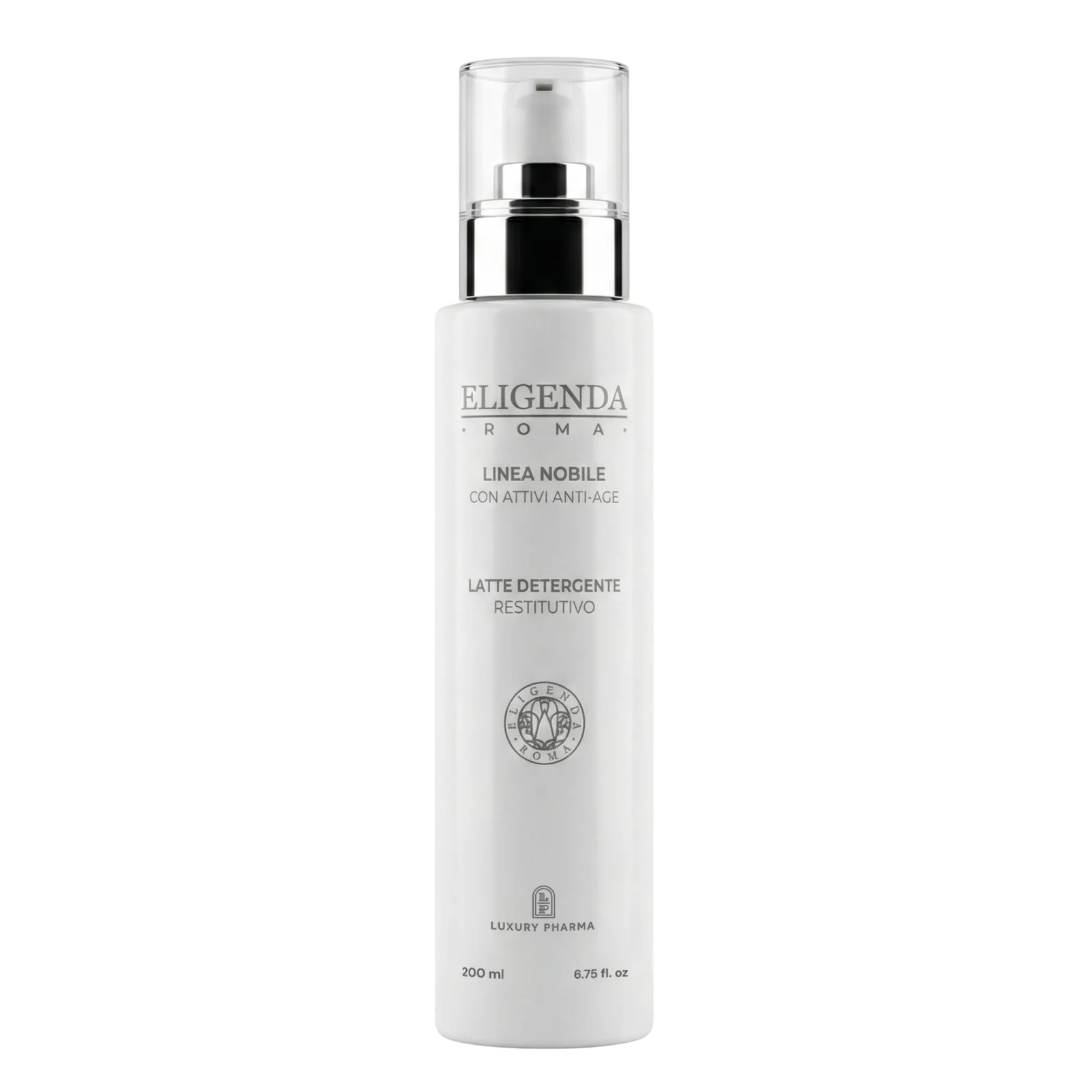
Restorative Cleansing Milk combines it with aloe, shea butter and other emollient components. Massage gently onto the face and neck, then rinse off with water.
Rejuvenating Facial Toner complements cleansing and softens the skin. Global Action Serum and Global Action Cream continue the sequence with morning and evening application; Delicate Eye Contour Cream is intended for the eye area.
The cleanser is rinsed off; the toner, serum and creams are used in the steps that follow. Our skincare order guide shows where each one fits.
Frequently asked questions
Is plant-derived glycerine bad for the skin?
The CIR assessment supports its safety in the uses and concentrations examined. Plant origin does not eliminate the possibility of an individual reaction; consider the whole formula and how your skin responds.
What does glycerine do on the face?
It mainly acts as a humectant, contributing to surface hydration. In a well-chosen formula, it can help maintain softness and comfort.
Can glycerine be used every day?
Many cosmetics containing it are intended for daily use. Follow the frequency specified for the product and observe your skin’s response.
What is the best percentage?
There is no ideal percentage for every formula. The other ingredients, application area and intended use also matter. The 20% cited in the study belongs to that experimental preparation; you do not need to seek the same concentration when choosing a cosmetic.
Does glycerine remove wrinkles?
It can contribute to hydration and the appearance of superficial dryness lines. The cited studies do not show that it removes deep wrinkles or permanently changes facial structure.
Can I add it to my existing cream?
It is better to use the cream as formulated. Adding raw ingredients to the container changes the preparation and may interfere with stability and preservation.
If a cosmetic irritates me, should I avoid all glycerine?
A reaction to a product does not, by itself, identify the ingredient responsible. Stop using the cosmetic and, if the problem persists or recurs, ask a dermatologist how to investigate the cause.
Sources and further reading
- Becker and colleagues, 2019: Safety Assessment of Glycerin as Used in Cosmetics.
- Cosmetic Ingredient Review: full report on glycerine.
- Lodén and Wessman, 2001: 20% glycerine cream, hydration and barrier function.
- Vaillant and colleagues: controlled study of the components of an emollient cream.
- Case report of a glycerine reaction, 2016, involving medical exposure different from cosmetic use.