
Double cleansing: what it is and when you need it
By Emanuela Silvi, founder of Eligenda Roma. Updated .
Double cleansing means washing your face in two steps, usually with a cleansing oil or balm followed by a gentle rinse-off cleanser. It can be useful for stubborn make-up or water-resistant sunscreen. If one cleanser removes what you are wearing and leaves your skin comfortable, a second wash may add little.
Here is how to decide whether you need two steps, how to use them gently and where cleansing milk fits. Toner comes after cleansing; it does not count as the second cleanser.

In this guide
At a glance
- Cleansing removes excess sebum, sweat, make-up and product residue from the skin’s surface.
- Adapt the frequency to your skin’s needs: generally morning and evening, and after heavy sweating.
- Double cleansing may help remove long-wearing make-up or some water-resistant sunscreens; SPF alone does not tell you how difficult a product is to remove.
- Choose a cleanser for its formula and tolerability, not just its format.
- Use a light touch and follow the application and rinsing directions.
- Toner is optional and does not replace cleanser.
Double cleansing: what it is and when to do it
Double cleansing involves two consecutive steps: usually a cleansing oil or balm followed by a gentle rinse-off cleanser. It can help remove long-wearing make-up and some water-resistant sunscreens. A high SPF does not, however, mean that a product is water resistant.
A study of sunscreen removal compared water, a foaming cleanser and a cleansing oil on specific formulas. Results depended on the sunscreen’s water resistance. They do not show that two washes are always necessary, and the study did not assess Eligenda Cleansing Milk.
How to double cleanse
- Remove eye make-up with a suitable product when needed.
- Apply the first cleanser as directed on its packaging. Many oils and balms are used on dry skin, but cleansing milk is already an emulsion and may have different directions.
- Add water or rinse according to the product’s directions.
- If residue remains, use a second gentle cleanser and rinse. If one step cleans effectively and your skin feels comfortable, you can stop there.
- Pat dry and apply moisturiser as needed.
Who needs it, and who does not?
Consider two steps particularly when make-up or sunscreen resists your usual cleanser. Pollution exposure or the SPF number alone does not make double cleansing necessary. An extra wash may increase discomfort on dry or reactive skin.
Visible make-up on a cotton pad suggests incomplete removal, but a clean pad does not measure the removal of every substance. Cleansing milk and toner do not automatically count as double cleansing: the milk is rinsed off according to its leaflet, while toner goes onto already cleansed skin. For the remaining steps, see our skincare order guide.
Does double cleansing remove blackheads?
A blackhead is an open comedone: the follicle is blocked with sebum and skin cells, and its opening looks dark. It is not simply dirt to scrub away.
Washing twice is not the same as treating comedones. Double cleansing mainly removes residue; any effect on acne depends on the formula and active ingredients, not the number of steps. The American Academy of Dermatology distinguishes daily cleansing from targeted acne treatments, which are also available in some cleansing formulas.
Squeezing a comedone or repeatedly using stiff brushes can irritate the area and leave marks. If blackheads are numerous or persistent, a dermatological assessment can help.
What does facial cleansing mean?
Facial cleansing means removing what settles on the skin during the day, along with substances the skin produces: excess sebum, sweat, loose surface skin cells, make-up and sunscreen residue, pollution particles and fine dust.
A useful check is how your face feels afterwards. Clean skin should feel comfortable, without the urge to keep rubbing away residue or immediately soothe a tight, burning feeling.
Our guide to professional facial cleansing describes the stages of a salon treatment and how it differs from daily cleansing.
What is the hydrolipidic film, and why protect it?
The skin’s surface is coated with lipids and other substances that contribute to its protection. Barrier function depends chiefly on the stratum corneum and its lipids; overly harsh cleansing can contribute to dryness and irritation. Tightness is a reason to review your product, cleansing frequency and technique. It does not demonstrate that your skin will produce more sebum to compensate.
Our Restorative Cleansing Milk is a gentle cleansing emulsion. Massage it over your face and neck, then rinse with water. Its creamy texture is part of the cleansing step, rather than a reason to leave it on like a moisturiser.
Why cleansing affects the rest of your routine
A properly cleansed surface lets you apply subsequent products without visible make-up residue. If your skin is irritated, even a product you normally tolerate may feel uncomfortable. Burning after serum or cream should not automatically be blamed on the cleanser, however: stop using what irritates your skin and seek advice if the problem persists.
How to cleanse your face: the steps
Morning cleansing
A brief, gentle cleanse may be enough in the morning, especially if residue remains from evening products. If your skin is very dry or reactive, consider a less intensive routine. Do not keep cleansing when your skin feels tight or burns.
Evening cleansing
In the evening, remove make-up, sunscreen and the day’s residue. Follow your cleanser’s label: some products go on dry skin, others on damp skin. Spread it with gentle movements, including the hairline and jawline, then rinse if directed. There is no fixed massage time to follow.
Water temperature and technique
Lukewarm water and your fingertips allow gentle washing. Avoid very hot water, vigorous rubbing and abrasive brushes; pat dry with a clean towel. These steps are consistent with the American Academy of Dermatology’s cleansing advice.
How to remove eye make-up
Choose a product specifically suitable for the eye area and follow its directions. Let the make-up soften before removing it, without pulling the eyelid. For waterproof mascara, use a remover intended for that type of make-up. If the product burns or enters your eyes, stop using it and rinse.
For eye-area care, read our guide to dark circles, puffiness and fine lines.
Types of face cleanser and how to choose
| Type | How it works | When to consider it |
|---|---|---|
| Cleansing milk | A cleansing emulsion; removal and rinsing depend on the formula’s directions | An option if you prefer a creamy texture; assess residue removal and tolerability |
| Micellar water | A solution containing surfactants that help remove residue and make-up | For convenient cleansing; follow the rinsing directions and assess comfort |
| Gel and mousse | Water-based cleansing formulas, generally rinsed off | Can suit oily or combination skin if the formula is gentle and well tolerated |
| Cleansing oil or balm | Helps remove stubborn residue; application and emulsification depend on the formula | A possible first step when one wash is not enough, depending on tolerability |
| Traditional bar soap | Generally has an alkaline pH; it should not be confused with a syndet cleansing bar | May be drying or irritating; choose a gentle formula for the face |
A creamy texture or plenty of foam cannot tell you how well a cleanser will suit your skin. If your face feels tight afterwards, consider the formula, water temperature, washing frequency and how much you rub.
If you choose cleansing milk, our guide to how to use it covers application, rinsing and the next steps.
How to cleanse according to your skin type
Oily skin
For oily skin, look for effective removal without burning or tightness. A gentle gel may suit you, but other textures can work too. Choosing by skin feel and the complete formula is more useful than looking for a single botanical ingredient.
Combination skin
Combination skin may have different needs across the T-zone and cheeks. A gentle cleanser over the whole face is often enough, without extra rubbing on shinier areas. Rejuvenating Facial Toner contains witch hazel, cucumber, chamomile and calendula among other ingredients. Using it after washing is optional and depends on tolerability.
Dry skin
For dry skin, keep cleansing gentle and avoid extra washes when they are not needed. Apply moisturiser after rinsing. Our Cleansing Milk contains shea butter, apricot butter and plant-derived glycerine; its rich texture offers one option to consider.
Sensitive skin
For sensitive skin, tolerability of the complete formula matters. Understanding what ‘dermatologically tested’ means helps: the wording does not rule out every possible reaction. Fragrance and botanical extracts can cause discomfort even when naturally derived. For dry, reactive skin, the AAD suggests gentle, fragrance-free products.
Mature skin
Skin may become drier with age, but there is no universal threshold after 40. If washing leaves it feeling tight, choose a gentler formula and a suitable frequency. Cleansing milk and other emollient cleansers are options to consider.
| Skin type | Possible formats | Basis for choosing |
|---|---|---|
| Oily | Gel, mousse or another gentle formula | Effective residue removal without irritation |
| Combination | Gentle gel or cleansing milk, depending on tolerability | Comfort across both the T-zone and cheeks |
| Dry | Cleansing milk or another gentle formula | Comfort after washing and moisturising as needed |
| Sensitive | Gentle, fragrance-free formula | Individual tolerability; favour fragrance-free formulas |
| Mature | Cleansing milk or another gentle formula | Gentle cleansing and moisturising after washing |
After cleansing: toner
Toner is optional after cleansing. It may be a pleasant part of your routine, but it is not needed to make serum effective or to ‘reopen’ the skin to treatments. Do not use it to compensate for an irritating cleanser.
Our Rejuvenating Facial Toner is alcohol-free. Apply it with a cotton pad to your face and neck after rinsing off the milk. Stop using any product that causes burning or persistent redness, even if its ingredients are plant-derived.
The most common face-cleansing mistakes
- Washing more often than necessary; gentle cleansing can, however, be helpful after heavy sweating.
- Using very hot water or rubbing vigorously.
- Leaving make-up and stubborn residue on the skin overnight.
- Confusing cleansing with scrubbing: exfoliation is not necessary for everyone or with every wash.
- Continuing with a product that burns because you think your skin needs to get used to it.
- Treating toner as essential or using it instead of cleanser.
- Choosing a product only because it produces lots of foam or leaves the skin feeling thoroughly stripped of oil.
Eligenda Roma’s approach to cleansing
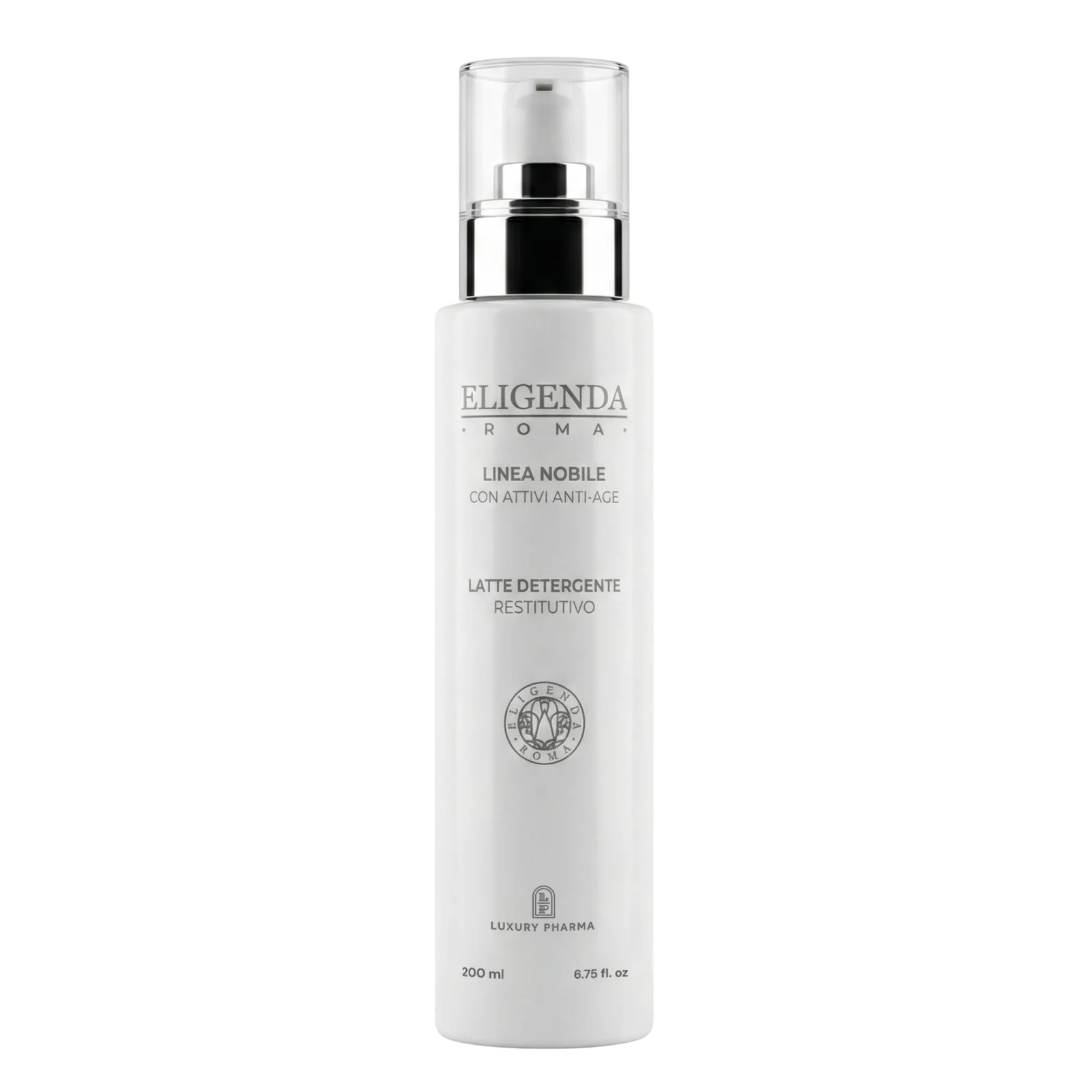
Our cleansing pair has two distinct roles: Restorative Cleansing Milk cleanses and is rinsed off, while Rejuvenating Facial Toner is applied afterwards. You can use the milk on its own; adding toner is a separate choice from double cleansing.
Restorative Cleansing Milk
Restorative Cleansing Milk comes in a 200 ml bottle. Apply it to your face and neck with your fingertips or a cotton pad, massage gently and rinse off with water.
The formula combines strawberry extract, aloe vera, shea and apricot butters, olive and sweet almond oils, and lavender and sage extracts.
Rejuvenating Facial Toner
Rejuvenating Facial Toner comes in a 200 ml bottle and combines chamomile, helichrysum and witch hazel waters with calendula and cucumber extracts and glycerine. Apply it with a cotton pad after cleansing.
The milk and toner are also included in 30 ml sizes in the Mini Kit Elegance Collection. Whichever size you use, follow the same application directions and check the label on your own bottle.
Frequently asked questions
What does facial cleansing mean? It means removing residue from the face’s surface, such as excess sebum, sweat, make-up and sunscreen. The aim is to clean without causing dryness or irritation.
How do you cleanse your face? Follow the cleanser’s directions for application to dry or damp skin. Use a light touch, rinse if directed and pat dry with a clean towel. Then apply moisturiser as needed; toner is optional.
What is the best way to cleanse your face? Use the gentlest method that removes what needs removing: lukewarm water, a cleanser suited to your skin, little pressure and a brief wash. The check is simple: your skin should not feel tight after rinsing.
What are the different types of face cleanser? The main formats are cleansing milk, micellar water, gels and mousses, cleansing oils and balms, and cleansing bars. Format alone does not determine which skin types they suit: the formula, residue to remove and how well your skin tolerates the product all matter. Always follow the directions.
How many times a day should you cleanse your face? Generally morning and evening, and after heavy sweating. Adapt the frequency and formula to your skin: if it feels tight or burns, avoid unnecessary washing and seek advice if the problem persists.
How should you cleanse combination skin? A gentle cleanser across the whole face is often enough, without rubbing the T-zone for longer. Check comfort on the cheeks too, as they may be drier.
How often should you double cleanse? Only when one step does not properly remove make-up or stubborn residue. A high SPF does not automatically mean a sunscreen is water resistant. Double cleansing is not a daily requirement and may be excessive for reactive skin.
Is toner really necessary? No. Toner can be a pleasant step after washing, but it does not replace cleanser or moisturiser, and subsequent products do not need it to work.
This article is for information and does not replace advice from a doctor or dermatologist. For dermatitis, acne or persistent skin reactions, consult a specialist.