

Combination skin: characteristics, the T-zone and your routine
By Emanuela Silvi, founder of Eligenda Roma.
Combination skin has shinier areas, often the forehead, nose and chin, alongside normal or dry areas, particularly the cheeks. Sebum production varies across the face and may also change with the seasons. Observe each area and adjust the amount of product to how your skin feels.
In this guide
What is combination skin?
Combination skin has both oily and dry areas on the same face.
- Shiny T-zone: the forehead, nose and chin produce more sebum and tend to become shiny during the day.
- Normal or dry cheeks: the sides of the face are matt and may sometimes feel tight or flaky.
- More visible pores in the centre: pores are noticeable on the nose and forehead, and much less so on the cheeks.
- Localised blemishes: blackheads and small spots may appear in oilier areas, although their distribution varies.
For help making sense of shine and dryness, you will find practical observations in the facial skin analysis guide. These are cosmetic pointers, not diagnostic tests. Here we look at adapting your routine.
Why is the T-zone oilier than the cheeks?
Sebum is not distributed evenly. A study of regional and seasonal variations in sebum measured higher levels on the forehead, nose and chin than on the cheeks. This describes a tendency, not an identical rule for every face.
Shine and dryness need to be considered separately: the amount of sebum alone does not tell you how hydrated an area is or how well it tolerates a cleanser. The environment, habits and applied products can also affect how skin feels.
For more on the relationship with cleansing, see our guide to skin pH. Its value alone does not identify skin type.
Different areas, different needs
A light texture may feel comfortable on the T-zone, while the cheeks may need more moisturiser. You do not have to apply the same amount across your whole face.
If the centre stays shiny and the cheeks feel tight, review cleansing first: an overly harsh product can irritate oily areas too. Then adapt the amount and texture of your cream to each area.
How to care for combination skin
Combination skin needs a formula that hydrates without feeling heavy, applied in amounts that suit each area.
Adjusting the amount of the same product
One cream may be enough if your skin tolerates it well: apply an appropriate amount to the cheeks and less to the T-zone. If one area stays dry or another feels overloaded, adjust the amount; in some cases, different textures may help.
Layering in two light steps
If you use both serum and cream, apply small amounts and assess how comfortable your skin feels. Serum is optional; you can apply more cream to the cheeks and less to the centre. The sequence applies to all skin types and is explained in the correct order for a skincare routine.
Do not treat the whole face as oily because of the T-zone
A shiny T-zone does not mean your whole face has the same needs. Avoid applying a product to your cheeks if it dries them out or makes them sting. Oily skin also benefits from gentle cleansing: tightness is not a result to aim for.
Cleansing: the step that sets the tone
Cleansing combination skin affects every step that follows, and we cover it separately in our facial cleansing guide. The key here is a gentle cleanser and lukewarm water. Generally, wash your face up to twice a day and after heavy sweating, without scrubbing.
If you use a milk cleanser, the cleansing milk guide explains application and rinsing.
Mistakes that can make combination skin less comfortable
- Washing repeatedly to remove shine: this can irritate the skin without meeting its needs.
- Using an astringent that stings or dries the skin: discomfort is a reason to reconsider the product, even if it affects only the T-zone.
- Skipping moisturiser because your skin is shiny: sebum and water are different things; choose a texture that feels comfortable.
- Changing everything at once: introducing one new product at a time helps you see what your skin tolerates.
- Ignoring seasonal changes: observe your skin and adjust amounts or textures when needed, rather than expecting it to behave the same way all year.
These suggestions are consistent with dermatological advice on managing shine.
The Eligenda Roma routine for combination skin
The catalogue presents the five Linea Nobile products as suitable for all skin types. This does not guarantee that every formula suits every person: for combination skin, tolerability, quantity and how the skin feels afterwards matter most.
Restorative Cleansing Milk, 200 ml
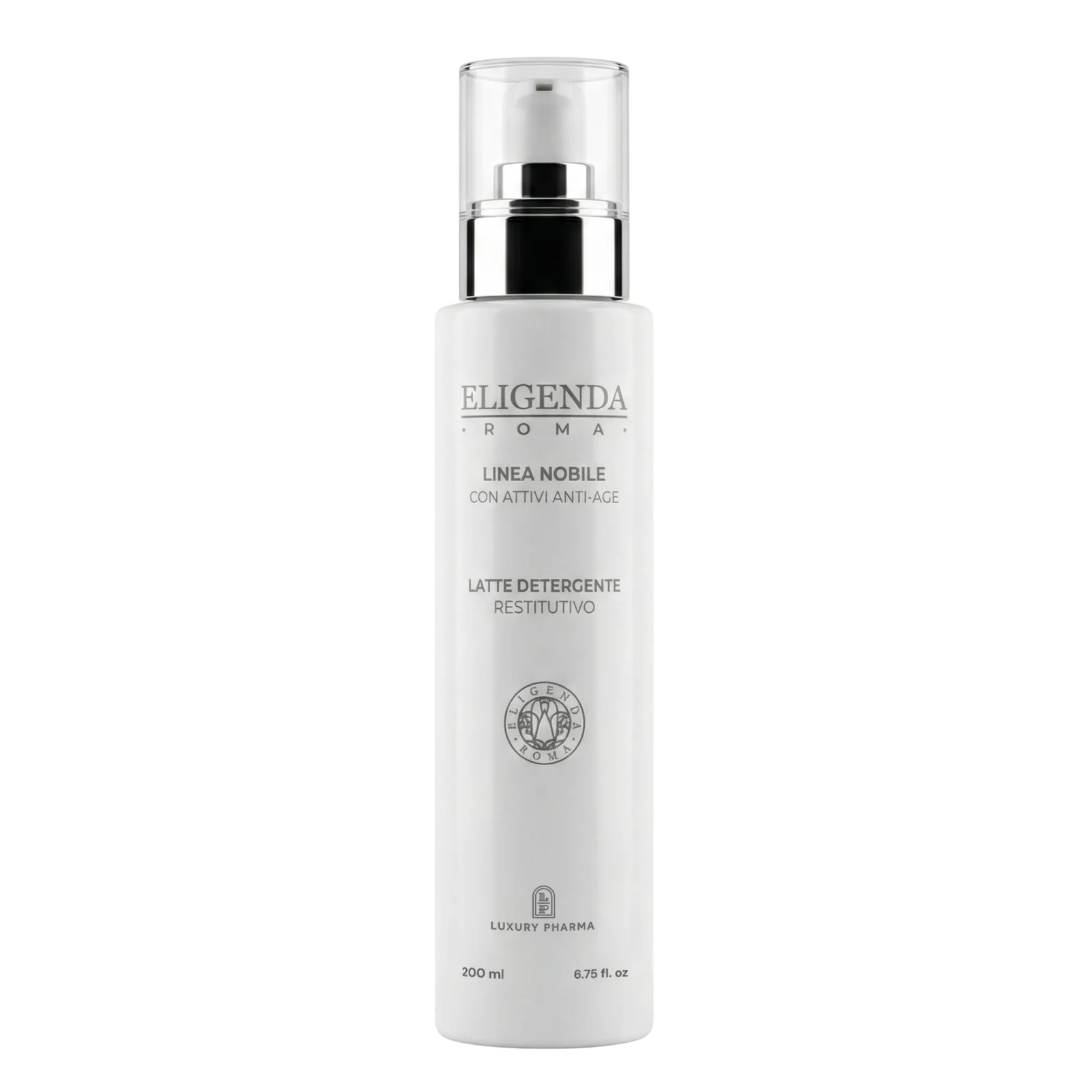
The leaflet describes Restorative Cleansing Milk as an emulsion to apply gently and rinse off, designed to remove make-up and residue. With combination skin, pay attention to how your face feels after washing: clean, without burning or tightness.
Sage extract is among the ingredients described. The properties attributed to the individual extract in the leaflet do not demonstrate that the finished milk normalises sebum production or has an antiseptic effect on the skin. Its role in the routine remains cleansing.
Rejuvenating Facial Toner, 200 ml
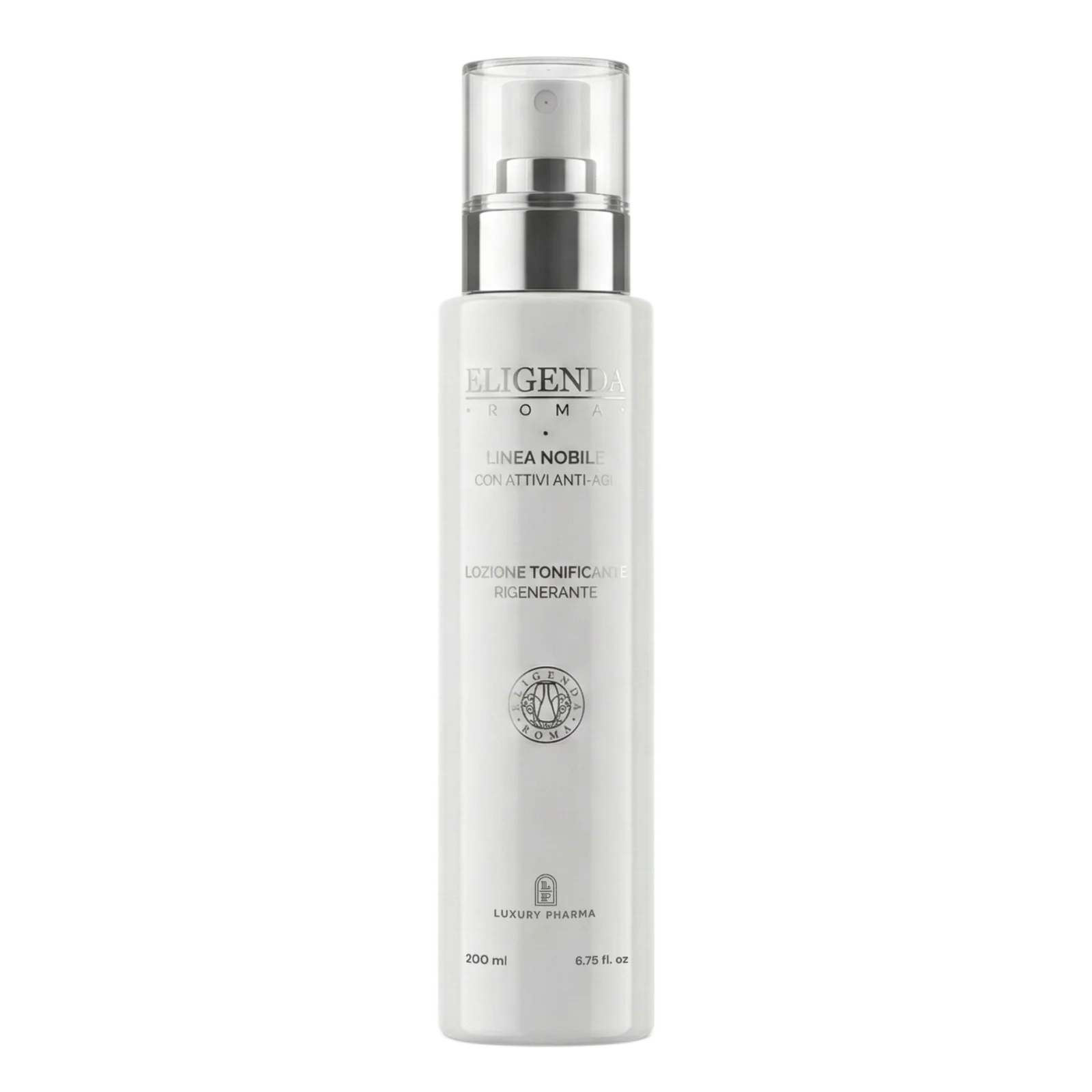
The leaflet describes Rejuvenating Facial Toner as an alcohol-free complement to cleansing, with glycerine, botanical waters and cucumber extract. It can be an additional step if your skin tolerates it well.
Witch hazel water is among the listed ingredients. Its presence does not demonstrate a lasting reduction in pore size: pores do not open and close like valves. If the toner leaves your skin feeling tight, reconsider using it.
Then serum and cream
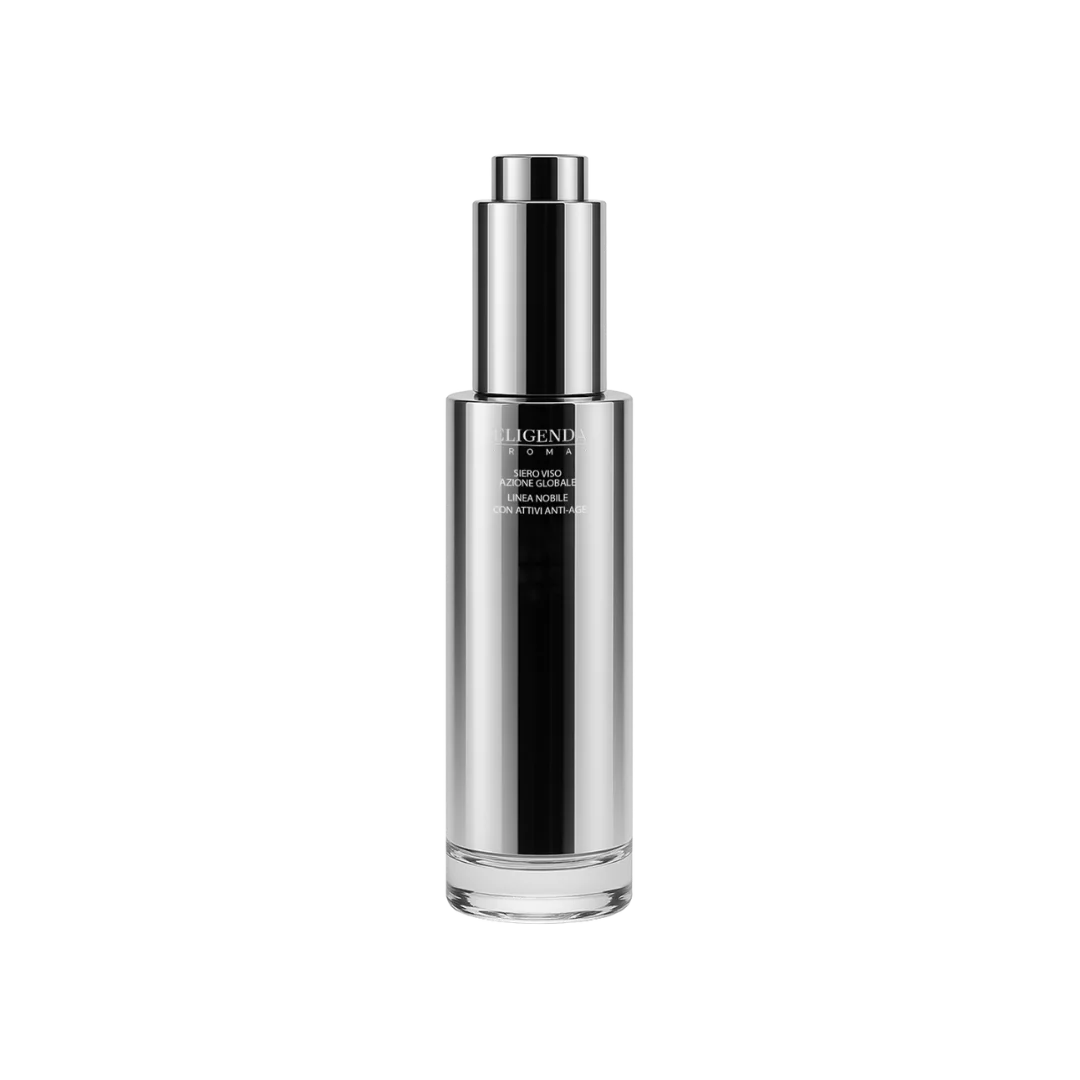
Global Action Serum is described as fluid and quickly absorbed. If you use it, apply a few drops and assess comfort.
Global Action Cream completes the sequence: you can apply more to the cheeks and less to the centre.
The product leaflets give this sequence: cleansing milk, toner, serum and cream. Keep the steps that are useful to you.
Active ingredients for combination skin
For combination skin, the aim is a hydrating formula with a texture that feels pleasant in both areas. A humectant can contribute to hydration, but the final feel depends on the whole formula, other products applied and the amount used.
The Eligenda Roma catalogue describes a Pseudoalteromonas exopolysaccharide in Global Action Cream and summarises a hydration study comparing a formulation containing the ingredient with a placebo.
The supplied documentation is neither a clinical trial of the finished Eligenda cream nor a study specifically on combination skin. It therefore cannot support attributing a percentage improvement to the cream or predicting an individual's response.
At a glance
Combination skin has different needs in the centre of the face and on the cheeks. A gentle routine and amounts adjusted to each area can improve comfort; sometimes one formula is enough, while at other times different textures are needed. Choose Eligenda products according to their composition, directions and tolerability, without treating ingredient-study results as proven efficacy of the finished product.
Frequently asked questions
What is combination facial skin?
Combination skin has shinier areas, often the forehead, nose and chin, alongside normal or dry areas. It is a cosmetic description: sebum production and how the skin feels can vary from one area to another.
Why is the T-zone oilier than the cheeks?
In many people, sebum is more abundant on the forehead, nose and chin than on the cheeks. The differences vary between individuals and seasons; shine alone does not measure hydration.
Do you need different products for the T-zone and cheeks?
Not necessarily. Adjusting the amount of a well-tolerated cream may be enough. If that does not keep both areas comfortable, different textures may help.
Which Eligenda Roma products are suitable for combination skin?
The catalogue presents the five Linea Nobile products as suitable for all skin types. The milk and toner play a role in cleansing; serum and cream can be considered according to your needs. This description does not guarantee individual tolerability or an effect on sebum production.
What are the most common mistakes with combination skin?
Washing too often, using products that dry or sting, leaving dry areas without moisturiser and introducing too many products at once can make your routine harder for your skin to tolerate.
Can combination skin also be dehydrated?
Yes. Sebum alone does not tell you how hydrated the skin’s surface is. A moisturiser with a comfortable texture may help even where skin looks shiny.
Does combination skin change with the seasons?
It can. One study of seasonal variations measured more sebum in summer, but individual needs should be observed rather than applying the same rule to everyone.
What is the T-zone?
It is the central area of the face comprising the forehead, nose and chin. The name refers to its T shape.