
What does toner do? Benefits and how to use it
By Emanuela Silvi, founder of Eligenda Roma. Updated .
Toner is a light lotion used after cleansing. Depending on its ingredients, it can add hydration, soften the skin or provide an exfoliating step. You do not need one in every routine, and different toners can do quite different jobs.
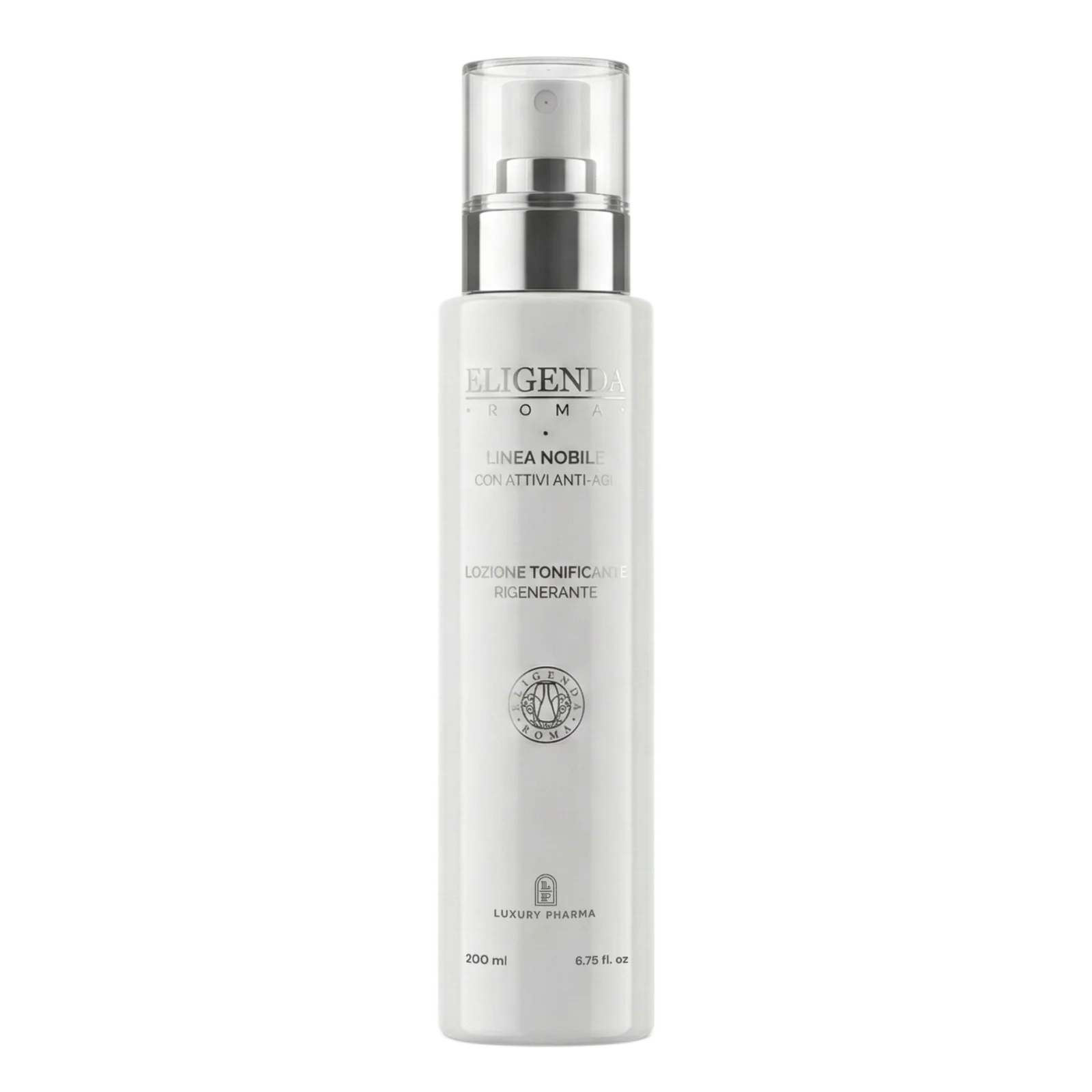
Our Rejuvenating Facial Toner is an alcohol-free lotion with botanical waters, extracts and glycerine. Apply it to your face and neck with a cotton pad after cleansing. It is designed to leave skin feeling fresh, soft and hydrated.
In this guide
- What is face toner?
- What does toner do for your skin?
- Do you need toner to rebalance skin pH?
- How to use face toner
- Toner, micellar water, essence and serum: the differences
- Choosing a toner for your skin
- Alcohol, botanical waters and extracts: what to look for
- Eligenda Rejuvenating Facial Toner
- Mistakes to avoid
- Frequently asked questions about face toner
- Sources and further reading
What is face toner?
It is usually a mainly water-based lotion with a light texture. It may look like water, but the formula can contain humectants, extracts, exfoliating ingredients or other substances with specific functions.
A hydrating toner and an exfoliating toner may look similar in the bottle, but they can have different ingredients and instructions. Check what the product is designed to do before deciding how often to use it.
To choose, read the stated purpose, INCI list and directions. The Cleveland Clinic describes the variety of formulas and uses available today.
What does toner do for your skin?
Adds hydration and comfort
Humectants help attract and retain water. Glycerine is one example you may find in a hydrating toner, alongside other ingredients chosen for comfort and texture.
If your skin feels tight after washing, first check whether your cleanser suits it. Toner may add comfort, but it is unlikely to compensate for overly harsh cleansing.
Complements cleansing
Some lotions help remove small amounts of residue left on the surface. But if a cotton pad still picks up a lot of foundation or mascara, revisit the cleansing step. Toner should not require repeated vigorous wiping to finish removing make-up.
Our face cleansing guide explains cleanser choice and removal of the products applied during the day.
Different formulas, different effects
A toner may be intended to promote more even-looking texture or a fresh appearance. Some contain exfoliants, while others focus on hydration. Effects therefore vary from one lotion to another.
The claim to ‘minimise the appearance of pores’ concerns how visible they are: cosmetics do not open or close pores.
Do you need toner to rebalance skin pH?
Skin pH matters to skin balance, but toner is not always needed to maintain it. Cleansers and lotions have different formulas; not every wash requires a subsequent ‘correction’ with an acidic product.
A toner’s effect on pH needs formula-specific evidence. A botanical extract, a fresh feeling or the word ‘rebalancing’ is not enough to establish it.
Our toner adds hydration and softness after cleansing. Choose it for how it feels on your skin, rather than assuming that every cleanse needs a separate pH-balancing step.
How to use face toner
The usual order is cleanser, toner, optional serum, cream. Finish with sunscreen in the morning. Product-specific directions take priority over the general sequence.
To use Rejuvenating Facial Toner:
- Cleanse your face and neck and rinse off the cleansing milk.
- Pour the toner onto a cotton pad.
- Sweep it gently over your face and neck without repeated rubbing.
- Continue with your next treatment; the toner does not require rinsing.
Avoid contact with the eyes and do not use the toner as a dedicated eye make-up remover. Pressing harder on the pad or leaving it on as a compress is not needed for a greater effect.
Should you use your hands or a cotton pad?
It depends on the product. Some toners are applied with the hands or a spray; Eligenda’s Toner specifies a cotton pad. Follow the method intended for the product you are using.
How much toner do you need?
Enough to dampen the cotton pad and spread the product easily. There is no need to soak it until it drips. How long a bottle lasts depends on frequency of use, the area covered and the amount applied.
How long should you wait before serum?
Allow enough time to spread the product. If the directions do not specify a wait, there is no need to time a fixed number of minutes. Simply avoid layering large amounts onto a surface that is still very wet.
See the complete skincare order to include eye cream, face cream and sunscreen.
Toner, micellar water, essence and serum: the differences
A liquid texture can be misleading. The main distinction between these products is their purpose.
| Product | Main function | Where it fits |
|---|---|---|
| Micellar water | Cleanses and removes make-up and residue | During cleansing, according to the directions |
| Toner | Adds an optional treatment after washing | After cleanser |
| Essence | A term used for lightweight, often hydrating formulas | According to the directions; its role may overlap with toner |
| Serum | Treatment chosen for a specific concern | Generally after toner and before cream |
Micellar water is not toner. It is a cleanser: cleansing molecules form micelles that help remove dirt and make-up. Follow the label’s rinsing directions and consider your skin’s response. The Cleveland Clinic explains the difference and notes that many micellar waters do not require rinsing.
You do not need both toner and essence either. If they serve the same function, consider whether using them together actually improves your skin’s comfort.
Choosing a toner for your skin
Dry skin
Look for a formula focused on hydration and comfort. Toner does not automatically replace cream: if the surface remains dry or tight, consider the whole routine, from cleansing to the final treatment.
Combination or oily skin
A light texture can feel pleasant, but the aim is not to remove oil until your skin feels tight. An astringent or exfoliating lotion does a different job from a hydrating toner. Choose according to your skin’s needs, without seeking harsh action to eliminate shine.
Sensitive skin
Check the complete INCI list and any substances you know you do not tolerate. Fragrance and botanical extracts deserve the same attention as other ingredients: a plant origin does not rule out an individual reaction.
Introduce one new product at a time and stop if burning or redness develops. Trying a product on a small area can be useful before wider application, but it does not replace allergy testing. The AAD’s guidance on new cosmetics explains a cautious approach.
Mature skin
A lightweight step can improve comfort, although age alone does not make toner essential. Add it if you enjoy the texture and its benefit is distinct from what your existing products provide.
Alcohol, botanical waters and extracts: what to look for
Our Rejuvenating Facial Toner is alcohol-free. That is useful information when comparing formulas, but the full ingredient list still matters, particularly if you know you react to certain ingredients.
Names containing the word alcohol refer to different substances. The fatty alcohols used in creams and emulsions have different characteristics from ethanol. Our INCI guide helps you understand these names.
Botanical waters, extracts and essential oils are different preparations. Our guide to hydrosols and essential oils explains how they differ. Witch hazel water, for example, should not automatically be equated with every extract of the same plant: form and composition matter. Our witch hazel guide explores this distinction.
Eligenda Rejuvenating Facial Toner
Our 200 ml toner complements cleansing with a formula combining chamomile, helichrysum and witch hazel waters, calendula and cucumber extracts, and glycerine. It is designed to leave skin feeling fresh, soft and hydrated, with a smoother appearance.
Apply it with a cotton pad after rinsing off Restorative Cleansing Milk, then continue with serum if you use one.
Choose it if you enjoy a light, refreshing step after cleansing. As with any cosmetic, pay attention to how your own skin responds; a product’s intended skin type cannot rule out an individual reaction.
Mistakes to avoid
Using it instead of cleanser. In the evening, especially after make-up and sunscreen, use a product intended for cleansing.
Rubbing to ‘purify more thoroughly’. Pressure and repeated rubbing can irritate the skin. Keep your touch light.
Layering several toners with different functions without a clear purpose. A hydrating lotion and an exfoliating product do not necessarily have the same recommended frequency.
Treating tingling as a benefit. Discomfort does not demonstrate that toner is rebalancing or purifying the skin.
Continuing to use a product that has changed. If you notice unusual changes in smell, colour or texture, stop using it and contact the brand. Do not assume every change is normal because the formula contains botanical ingredients.
Frequently asked questions about face toner
Is toner necessary every day?
No. It is optional. Frequency depends on the formula, directions and benefit you notice; not all toners call for twice-daily use.
Should you rinse off toner?
Usually not, but check your toner’s directions. Rejuvenating Facial Toner is applied after the Cleansing Milk and left on the skin before the rest of your routine.
Does it replace moisturiser?
Not necessarily. A light lotion and a cream can contribute differently to comfort. If your skin remains dry, do not simply apply more toner: consider the next treatment step.
Can you use it during pregnancy?
That depends on the complete formula, not the category ‘toner’ or the botanical origin of the ingredients. For personal concerns during pregnancy or breastfeeding, ask the professional caring for you.
Should it be kept in the fridge?
Not unless specifically directed. Follow the storage conditions on the packaging, avoid heat and direct light, and do not assume refrigeration improves effectiveness.
How soon can I tell whether it is useful?
You can tell quite quickly whether a toner feels pleasant and comfortable to use. Other results need different timescales, judged against the product’s documented evidence. If you notice no benefit, you can return to a shorter routine.
Sources and further reading
- Cleveland Clinic, Do You Need a Face Toner?: features, application and the range of formulas.
- Cleveland Clinic, a simple routine: toner as an optional step.
- Cleveland Clinic, micellar water: how it differs from toner and how to use it.
- AAD, how to try a new cosmetic.