
Centella asiatica for the face: properties and contraindications
By Emanuela Silvi, founder of Eligenda Roma.
Centella asiatica is a herbaceous plant used as a cosmetic extract for its contribution to hydration and the appearance of skin firmness. To assess it, distinguish marketing promises from what has actually been studied.
Here you will find the extract's composition, research findings and limitations, European regulatory guidance and precautions for use.
In this guide
What is centella asiatica?
It is a small perennial herb that grows in humid regions of tropical Asia, including India, Sri Lanka and Indonesia, and in Madagascar. Its full botanical name is Centella asiatica (L.) Urb., and it is also traditionally known as gotu kola.
Its botanical family and allergy precautions
Centella belongs to the Apiaceae family, alongside carrot, celery, parsley and fennel. This botanical relationship is mentioned in the precautions of the European medicinal monograph; for a cosmetic, the complete formula and individual allergies must also be considered.
Its name on the label
In the ingredient list, it appears as Centella Asiatica Extract, or Centella Asiatica Leaf Extract when only leaves are used for extraction. For help understanding the rest of the list, we have written a guide to reading the label.
You may also see cica on packaging for products based on this extract. It is a commercial term rather than a regulated category, so it does not tell you how much extract is present or which part of the plant was used.
If you encounter an unfamiliar ingredient name, look up its function in the INCI analyser.
Madecassoside and asiaticoside: two centella components
Among centella's most studied components are four triterpenes, found in two pairs:
- asiaticoside and madecassoside, the forms bound to a sugar
- asiatic acid and madecassic acid, the corresponding free forms
Asiaticoside and madecassoside are therefore the glycosides of the two acids. The distinction matters because the proportions of the two pairs change with growing conditions and extraction method. The INCI list alone does not give those proportions.
In our Delicate Eye Contour Cream, centella asiatica extract is one of the formula's botanical actives. The profile of the four molecules depends on the starting material, so a result obtained with a study's extract cannot be transferred to another formula, including ours.
What has actually been measured
To understand what we know, it helps to start with a specific study and the formula used.
A double-blind randomised trial published by Haftek and colleagues in 2008 involved 20 women with photoaged skin. The treatment contained 5% vitamin C and 0.1% madecassoside, one of centella's components.
After six months, the authors found improvements in some clinical parameters, hydration and elasticity. The finding concerns that combination: it cannot attribute the entire result to madecassoside or predict the effect of another extract or cosmetic.
Limitations to consider
The study described is small and assesses two substances together. Comparing it with a cosmetic would require knowing the concentration, extract composition, vehicle and directions for use.
The word 'centella' in an INCI list is therefore not enough to promise a particular reduction in wrinkles. For Eligenda products too, ingredient research informs formulation; it is not a measurement of the finished formula's results.
What the European regulator says
The EMA monograph adopted on 30 March 2022 concerns traditional herbal medicinal preparations containing centella to support the healing of minor wounds.
The indication is based on traditional use and concerns specific preparations for skin application. It does not recognise anti-wrinkle efficacy of centella cosmetics or suggest applying cosmetic cream to wounds.
Why it is marketed as 'repairing'
In cica products, 'repairing' often describes skin comfort or support for its surface barrier. Read that meaning alongside the available evidence and intended use.
Hydrating the skin and keeping it in good condition are cosmetic purposes. Treating a wound or disease calls for assessment and appropriate treatment. Keep this distinction in mind when reading packaging claims.
What centella asiatica does not do
- It is not a UV filter. None of the cited studies measures protection against ultraviolet radiation. That requires filters, discussed in how to protect your skin in summer.
- It does not eliminate dark circles. These have different causes, distinguished in our guide to dark circles, puffiness and wrinkles.
- There is no fixed time to results. A study’s timeframe applies to the formula tested, not to every cosmetic containing centella.
- It does not replace moisturising. An extract works within a formula alongside humectants such as glycerine and water-retaining lipids.
Contraindications and tolerability
Contact allergy is possible: a 2024 clinical report describes two patients reacting to centella extract and fragrance allergens. These cases document the risk but cannot establish its frequency.
For the medicinal preparations assessed, the EMA lists hypersensitivity to centella and other Apiaceae as a contraindication and gives specific precautions for minors, pregnancy and breastfeeding. These apply to those medicines and should not automatically be transferred to every cosmetic. Extracts from other families, such as calendula, also require attention to individual allergies.
For a new cosmetic, follow its directions and try it on a small area first. Dermatological guidance on trying a product recommends observation over several days; a negative trial does not rule out every reaction or replace medical patch testing. Stop use if itching, burning or swelling occurs.
How to use it on the face
- Follow the product's directions. Amount and frequency depend on the formula, not the ingredient name.
- After cleansing, according to the instructions. Toner is optional; other steps follow the product directions, as explained in the skincare order guide.
- For the eye area, choose a formula intended for it. Follow the product's application amounts and directions. For gentle techniques, see the guide to dark circles, puffiness and wrinkles, which explains them step by step.
- There is no need to layer several centella products. Repeating the same ingredient across several steps does not guarantee a greater result.
Centella asiatica in the Eligenda Roma range
Among the five Linea Nobile facial treatments for a home routine, the official documents list centella extract in Delicate Eye Contour Cream. Evidence on other centella formulas does not measure this product's effect.
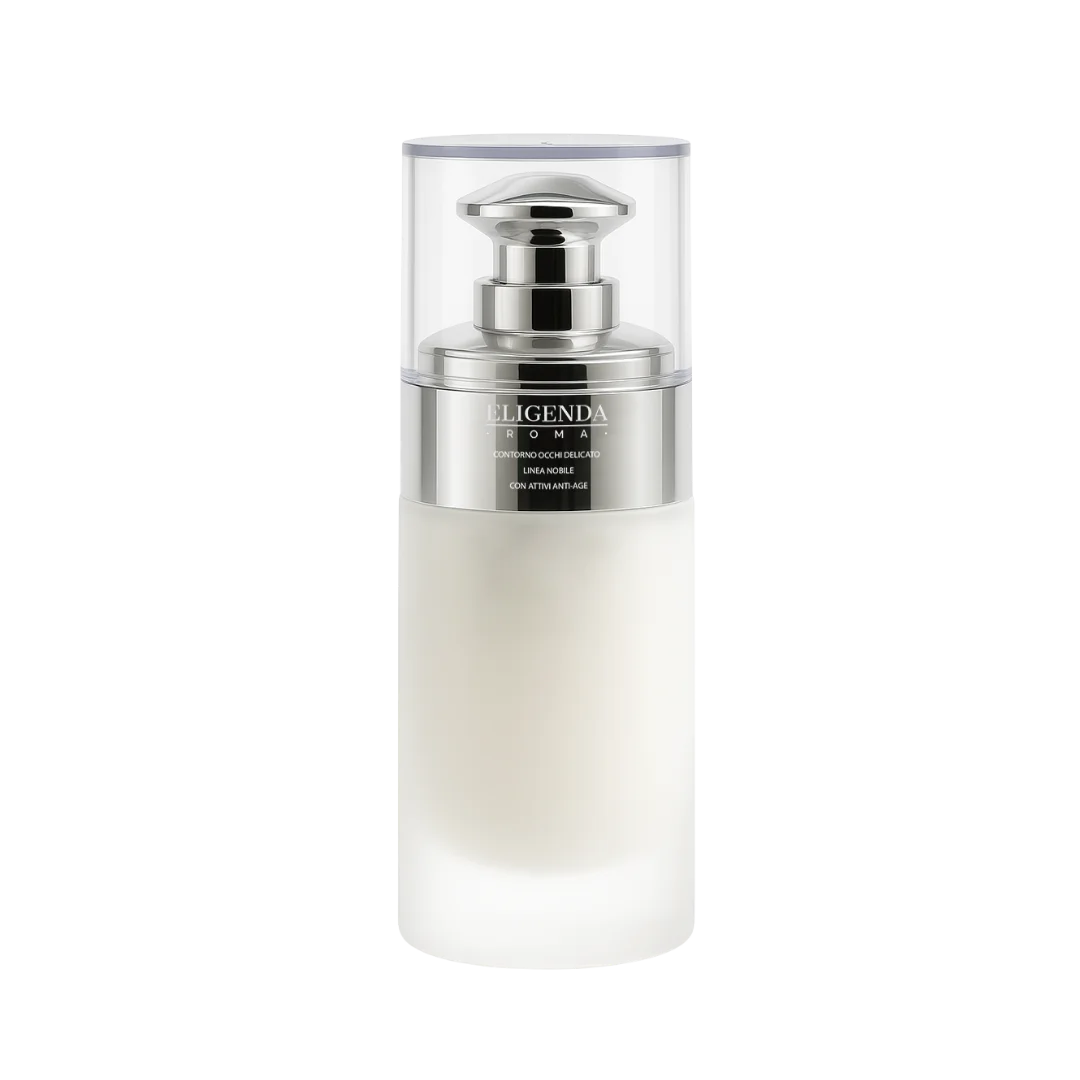
Delicate Eye Contour Cream
In this eye-area formula, centella extract accompanies sodium hyaluronate at three molecular weights, caffeine, collagen and elastin, sweet almond oil, shea butter, witch hazel water and jojoba oil. Apply a small amount of Delicate Eye Contour Cream morning and evening, working from the inner towards the outer corner. It comes in a 15 ml size. Follow the leaflet for application. See also our guide to dark circles, puffiness and wrinkles.
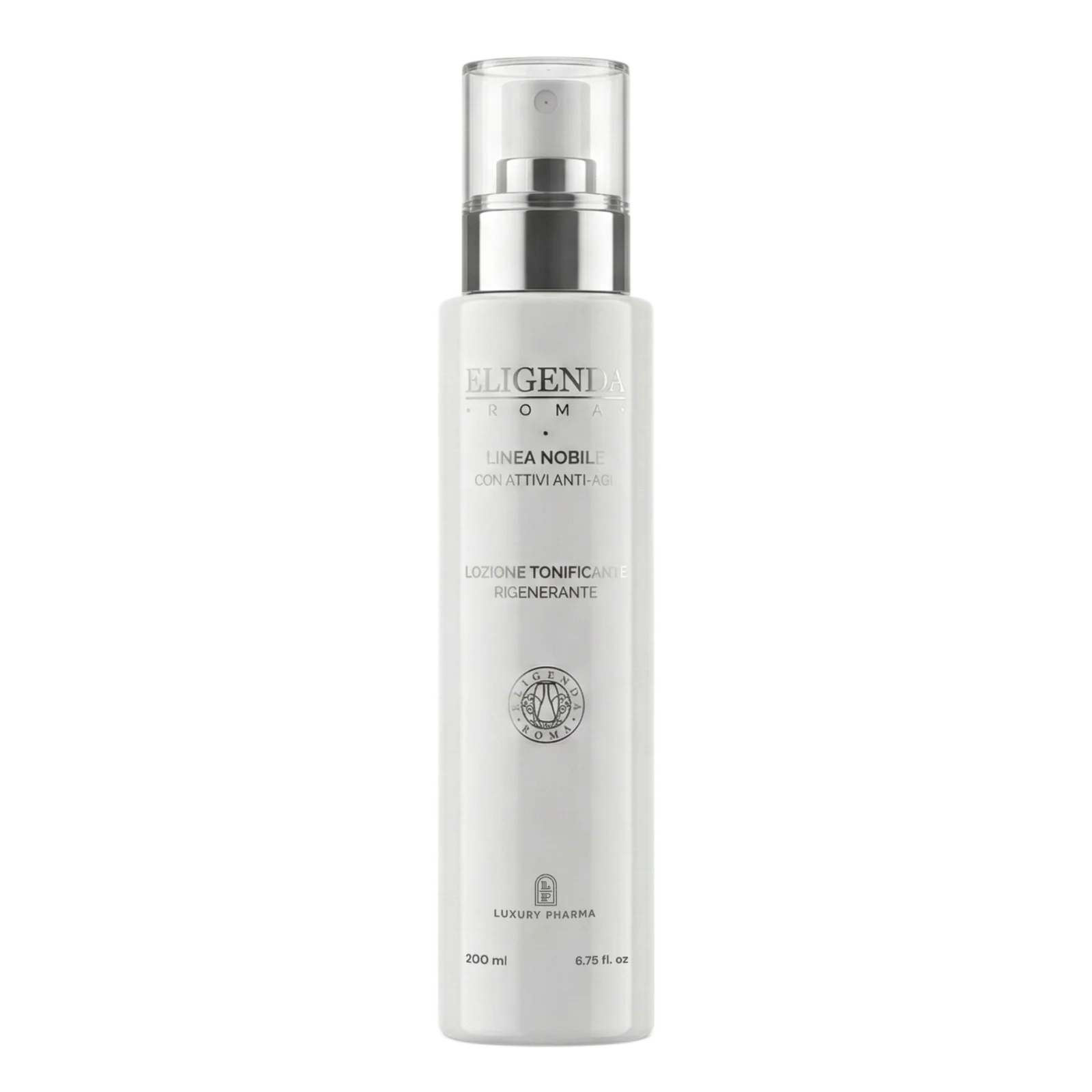
Rejuvenating Facial Toner
Rejuvenating Facial Toner does not contain centella. Its leaflet lists chamomile, helichrysum and witch hazel waters, plus calendula extract. It is an optional step after cleansing: decide whether to include it according to how your skin responds to the complete formula. For more detail, read what witch hazel does for skin and what research says about calendula.
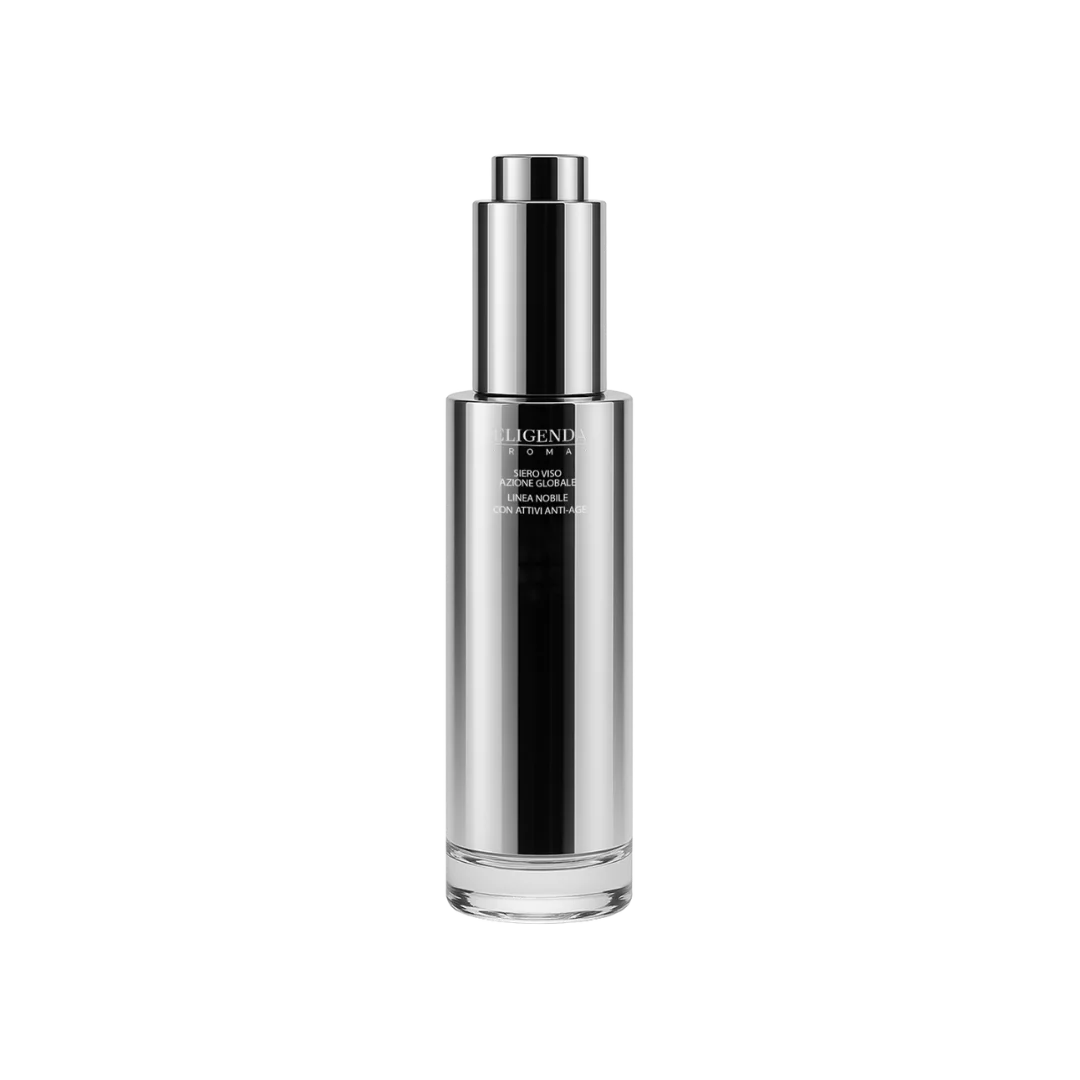
Global Action Serum
If your goal concerns firmness across the whole face rather than just around the eyes, serum is the step intended for that wider area, applied after toner and before cream. We discuss this in what a face serum does.
At a glance
Centella is a botanical extract that can be included in formulas for hydration and comfort. Research on some of its components is interesting, but needs to be read alongside concentrations, accompanying ingredients and study limitations. The European medicinal monograph concerns a different field. For skincare, assess the complete product and its tolerability without attributing results from other formulations to every cream.
Frequently asked questions
What does centella asiatica do for the face?
It is used in formulas for hydration and comfort. The effect depends on the extract and complete product: it cannot be predicted merely from centella's presence in the INCI list.
Is centella asiatica effective against wrinkles?
Studies exist on specific formulations. The trial described in this guide assessed madecassoside together with vitamin C: the observed improvements do not demonstrate that every centella cosmetic has the same effect.
What are the contraindications for centella asiatica on the face?
Do not use a product containing substances you are allergic to. Cases of centella contact allergy are documented; fragrance and other ingredients must also be considered. The EMA monograph's precautions concern specific medicinal preparations, not all cosmetics.
What is centella asiatica in a cosmetic?
It is an ingredient obtained from Centella asiatica, a plant in the Apiaceae family. It may appear as Centella Asiatica Extract or Centella Asiatica Leaf Extract. The commercial term cica does not, by itself, indicate concentration, standardisation or efficacy.
What are centella asiatica's active molecules?
Among the most studied components are asiaticoside, madecassoside, asiatic acid and madecassic acid. Their proportions depend on the raw material and extraction; the INCI name does not describe the extract's full profile.
When were results assessed in the centella study?
In the trial described here, assessment took place after six months using a combination of madecassoside and vitamin C. That is the study's duration, not a prediction for all centella cosmetics.
Is centella asiatica suitable for sensitive skin?
It depends on the formula and individual tolerance. Try the product on a small area before wider use and stop if it causes a reaction. A home trial does not rule out allergy or replace dermatological testing.
Which Eligenda Roma product contains centella asiatica?
Among the five Linea Nobile facial treatments for a home routine, the extract is documented in Delicate Eye Contour Cream, alongside sodium hyaluronate, caffeine, collagen, elastin and emollient components. Follow the product's application instructions.