

Calendula cream: what it does and what the research actually says
A calendula cream can comfort dry, delicate skin or skin prone to occasional redness. Calendula is used in cosmetics for its soothing function; the softness and hydration you feel after application also depend on the cream's other ingredients.
When choosing, consider the type of extract, texture and intended use: these are the main differences between products that may initially look similar. Tolerability matters too, particularly if you have a known allergy to this plant or other members of the Asteraceae family.
Calendula can also have a place in a light formula. In our Rejuvenating Facial Toner, we combine it with botanical waters and glycerine to complete cleansing and leave the face fresh and soft. This offers a way to include it in your routine without adding another cream.
In this guide
- What is calendula?
- What the flower contains
- What calendula cream can do for the face
- What the European Medicines Agency recognises
- Cream, infused oil, extract and tincture: understanding the options
- Choosing a formula for your skin
- Contraindications and precautions
- Adding it to your daily routine
- Frequently asked questions
- Sources and further reading
What is calendula?
Calendula officinalis is a yellow- or orange-flowered plant in the Asteraceae family, alongside chamomile and arnica. The flower is the part most commonly used in skin preparations.
The name Calendulae flos, found in scientific and herbal documents, refers specifically to the flowers. Different preparations are made from this raw material, depending on the extraction method and liquid used.
How to recognise it in an INCI list
On the label, you may find Calendula Officinalis Flower Extract and other names indicating the plant part or preparation used. The extract may be listed alongside its solvent or carrier oil.
The Latin name identifies the ingredient. To assess a cream's texture and tolerability, you also need to consider its other components. Understanding the rules of the INCI list helps you read the formula as a whole.
What the flower contains
Calendula contains several groups of compounds, including triterpenes, flavonoids, polysaccharides, carotenoids and phytosterols. They do not all transfer equally into every preparation: some substances are more readily extracted in water, others in different solvents or an oil phase.
An aqueous extract, an oil macerate and a carbon-dioxide extract therefore have different profiles, even though they come from the same plant.
These differences also matter when reading studies: results obtained with an extract in a cream apply to that preparation and the conditions in which it was used.
What calendula cream can do for the face
Comfort for tight-feeling skin
A cream suited to your needs can help when skin looks dry or feels rough or tight. Calendula contributes to the formula's soothing function; the humectants and emollients alongside it contribute to hydration and softness.
If discomfort occurs mainly after washing, also consider your cleanser, water temperature and rubbing with a towel. Even a pleasant cream needs to be paired with gentle cleansing.
Delicate skin and occasional redness
Calendula often appears in products for delicate skin. Tolerability still needs to be assessed for the individual product, even when it is described as natural.
Occasional redness after cold weather or vigorous cleansing differs from redness that persists, burns or comes with lesions. In the latter case, it is better to establish the cause with a dermatologist than to try a succession of soothing cosmetics.
Hydration: what studies show
In a 2011 study involving 21 volunteers, a cream containing calendula extract was compared with its base for eight weeks. Some instrumental measurements of skin properties improved, while others showed no significant differences.
A more recent small randomised study examined a cream containing 1% of a specific CO2 extract in 20 volunteers after experimentally induced forearm irritation. It found hydration benefits at some assessment points, with no significant difference in redness between groups.
The samples are small, and the results concern the extracts and creams studied. They do not demonstrate the efficacy of our toner or establish the same effects for every calendula cream.
What the European Medicines Agency recognises
The EMA distinguishes the traditional use of calendula medicines from cosmetic claims. Its conclusions concern particular medicinal preparations used for minor skin inflammation and to support the healing of small wounds, based on a long history of use.
Recognition of traditional use has specific limits: it does not clinically prove every use of the plant and does not apply to cosmetic creams. These are intended for everyday skincare; a wound, burn or dermatitis requires treatment appropriate to the situation.
When you read 'wound-healing calendula' or 'calendula cream for dermatitis', check which product is being discussed. The botanical name may be identical while the intended use and instructions differ.
Cream, infused oil, extract and tincture: understanding the options
Calendula cream. An emulsion combining water and oil phases. It may contain an extract, an infused oil or several preparations. Its texture can be light or rich: 'cream' does not indicate a standard calendula concentration.
Calendula-infused oil. Made by leaving the flowers in contact with a plant oil, which extracts mainly oil-soluble components. The result also retains the characteristics of the carrier oil. How pleasant it feels on the face depends on the quantity and your skin's needs.
Aqueous or glycerine extract. Contains plant components drawn out by the solvent used. It can be incorporated into a lotion, gel or cream. An extract alone does not determine the finished product’s texture.
Tincture. A preparation made with an alcohol-containing mixture. Check its intended use and instructions before applying it. A herbal tincture should not automatically be treated as a ready-to-use facial toner.
Balm or ointment. Usually indicates a richer, more protective base that may feel comfortable on certain dry areas. It does not necessarily contain more calendula than a cream: specific information is needed to establish that.
The most useful choice is one you enjoy using consistently. If a texture leaves your face too shiny, you can look for a different one without concluding that calendula itself is unsuitable.
Choosing a formula for your skin
Dry skin
A cream containing humectants and emollients may address tightness better than a lotion alone. If it contains calendula, still consider whether the texture and other ingredients meet your hydration needs.
To organise the steps, start with the facial routine for dry skin. Aim for gentle cleansing and comfortable hydration, without adding products simply because they contain the same extract.
Combination or blemish-prone skin
A lighter formula may feel more pleasant, particularly in the centre of the face. Even with calendula, a rich cream may not suit blemish-prone skin.
Assess how your skin responds over time and consider the whole routine. If spots persist or you have acne, seek dermatological advice rather than relying on calendula to treat it.
Sensitive skin
Choose products intended for the area you want to treat and introduce one new product at a time. If you have already identified ingredients you cannot tolerate, check that they are absent rather than relying on the words 'for sensitive skin'.
The number of ingredients or botanical extracts says little about tolerability. Reactions you have already observed on your own skin are a more useful starting point.
Contraindications and precautions
The main precaution concerns allergy to calendula or plants in the Asteraceae family. The EMA lists this contraindication for calendula medicines and notes the possibility of skin sensitisation. If you have a known allergy, seek advice before using a cosmetic containing calendula.
A seasonal allergy is not the same as a contact allergy to calendula. To decide which ingredients to avoid, you need to know which substance causes the reaction and discuss any uncertainty with an allergist.
A limited trial on a small area may help you observe how your skin tolerates a new cosmetic, but it does not rule out allergy. If you have already reacted to the product or plant, avoid trying it again at home.
Stop applying it if burning, itching or increasing redness develops. On damaged skin, around the eyes or on children, use only products explicitly suited to that purpose and follow their instructions.
Adding it to your daily routine
A calendula cream is usually applied after cleansing and any water-based treatments. Use enough to leave the skin comfortable, without reapplying simply because the product has absorbed.
A toner or lotion comes before serum and cream. Choose the product whose texture and directions suit your routine; there is no need for calendula in every step.
In our Rejuvenating Facial Toner, calendula extract is combined with chamomile, helichrysum and witch hazel waters, cucumber extract and glycerine. The formula completes cleansing, removing any remaining residue and leaving skin feeling fresh and soft.
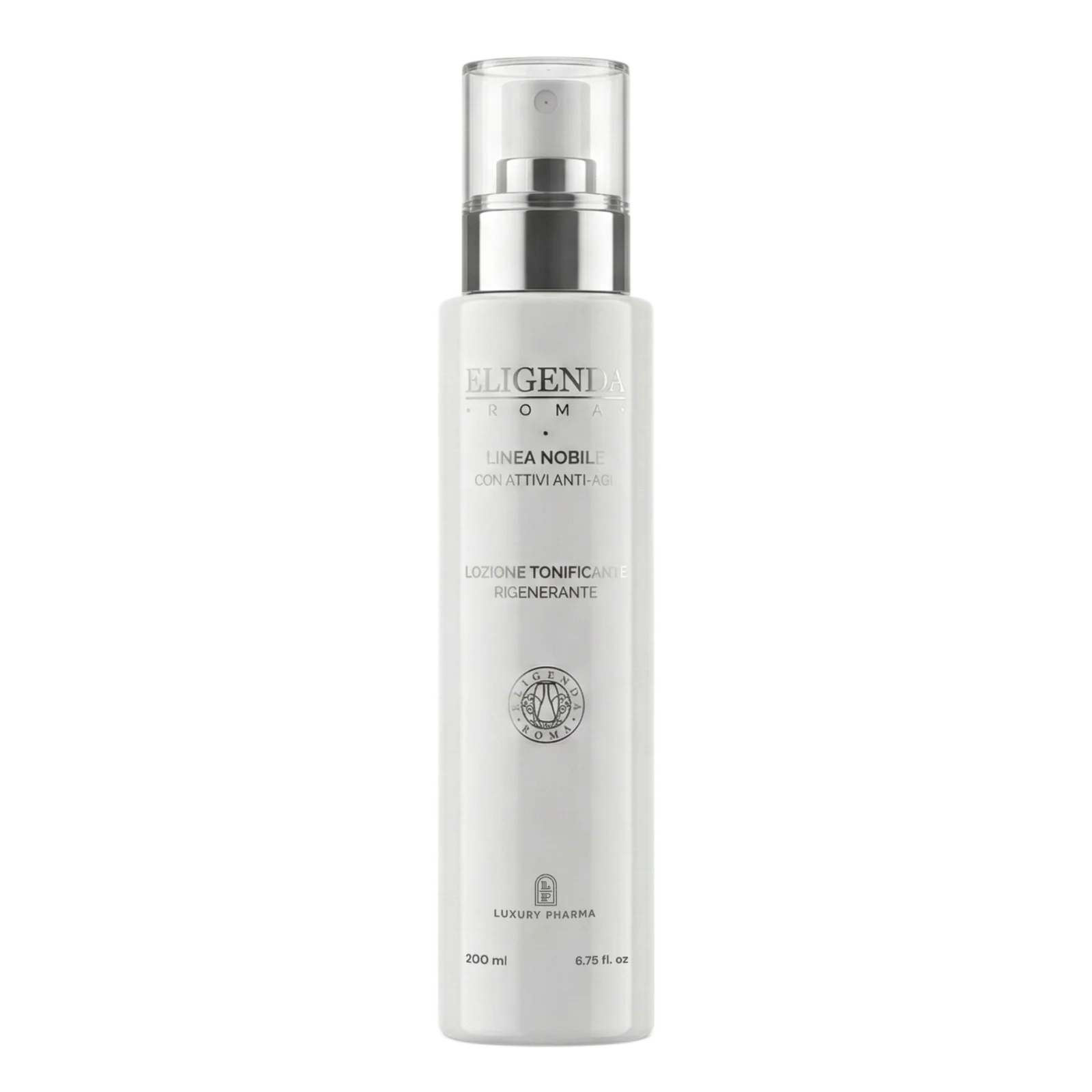
Apply to the face and neck with a cotton pad after rinsing off Restorative Cleansing Milk and before serum. Sweep the pad gently without rubbing.
The formula contains both calendula and chamomile. Anyone with a known allergy to these plants must take this into account, even when the product is described as gentle.
To understand this step, see the guide to what facial toner does; for the full sequence, consult the skincare routine order.
By Emanuela Silvi, founder of Eligenda Roma.
Frequently asked questions
What is calendula cream used for?
It can contribute to the comfort of dry or delicate skin. Calendula has a soothing function in the formula, while hydration and softness also depend on the base and other ingredients.
Can you use calendula cream on your face every day?
Yes, if the product is intended for the face and daily use. Follow the instructions and observe your skin's response. An ointment, tincture and face cream may have different directions.
Is calendula suitable for spots and acne?
It may be included in a comfortable cosmetic for blemish-prone skin, but should not be chosen as an acne treatment. Assess the cosmetic as a whole and seek dermatological advice if spots persist.
Does calendula help with wrinkles?
Good hydration can make some dryness lines less noticeable. Studies on specific preparations do not justify promising that any calendula cream will reduce wrinkles. For this goal, assess the treatment as a whole.
Are calendula cream and infused oil equivalent?
No. Infused oil is an oil-based preparation; cream is an emulsion that can contain calendula in different forms. Texture, other ingredients and directions differ.
Who should take care with calendula?
Particularly anyone with a known allergy to the plant or other Asteraceae, and anyone who has already reacted to a product containing it. A formula described as natural or gentle does not remove this precaution.
Where is calendula found in the Eligenda Roma range?
In Rejuvenating Facial Toner, alongside botanical waters, cucumber extract and glycerine. Use it after cleansing, before serum.
Sources and further reading
- European Medicines Agency: public summary on calendula flower.
- Akhtar and colleagues, 2011: calendula-extract cream and the skin's mechanical properties.
- Šušak Crnčević and colleagues, published online in 2026: controlled comparison of an emollient cream with and without a specific calendula extract.