

Witch hazel for skin: benefits, uses and what to check
Witch hazel appears in toners, creams and other skincare products, but the name does not describe a single ingredient. Witch hazel water, leaf extracts and alcohol-based preparations have different compositions. That distinction matters when choosing a product for your face.
Start with the preparation and the complete ingredient list. An alcohol-containing lotion may feel very different from a hydrating toner, especially on dry or sensitive skin.
Our Rejuvenating Facial Toner uses witch hazel water with chamomile and helichrysum waters, calendula and cucumber extracts, and glycerine. The alcohol-free formula is designed to leave skin soft and refreshed after cleansing.
In this guide
- What is witch hazel?
- Why witch hazel water differs from the extracts
- What witch hazel does in facial cosmetics
- Hydrosol, extract and tincture: the differences
- Does witch hazel contain alcohol?
- What the research and medicinal guidance can tell us
- Is witch hazel suitable for your skin?
- How to use a witch hazel toner
- Where witch hazel appears in the Eligenda Roma range
- Frequently asked questions
- Sources and further reading
What is witch hazel?
Hamamelis virginiana, commonly called witch hazel, is a shrub native to North America. Different preparations use its leaves, bark or twigs, which helps explain why two witch hazel products may differ.
The part of the plant used and the way it is processed determine the composition of the resulting ingredient.
How to recognise it in an INCI list
The most useful names to recognise are:
- Hamamelis Virginiana Water, identifying a water obtained by distillation.
- Hamamelis Virginiana Leaf Extract, an extract of the leaves.
- Hamamelis Virginiana Bark Extract, an extract of the bark.
These entries identify the preparation used, but do not state its concentration or predict tolerability. To understand the ingredients alongside witch hazel, see the guide to cosmetic INCI lists.
Why witch hazel water differs from the extracts
Tannins are characteristic components of the leaves and bark. The EMA assessment report gives ranges of 3–10% in leaves and 8–12% in bark. These figures concern plant material, not percentages to attribute to a toner.
These substances have an affinity for proteins and contribute to the astringency of extracts containing them. The plant also contains other compounds, including flavonoids and volatile components.
Distillation, however, selects a different fraction: the distillate contains negligible amounts of tannins, as the same report explains. The action of bark tannins therefore cannot be attributed to witch hazel water.
For example, a toner containing witch hazel water and glycerine cannot be judged by research on a tannin-rich bark extract. Compare the preparations, not just the plant name on the front of the bottle.
What witch hazel does in facial cosmetics
A fresh feeling after cleansing
Witch hazel water is used in light lotions applied after facial cleansing. How they feel on the skin also depends on the humectants, other extracts and application method.
After toner, skin should feel fresh without unpleasant tightness. Strong tightness does not indicate a deeper cleansing of pores.
The appearance of pores and shiny skin
Some witch hazel products may temporarily make pores look less noticeable. This is a change in appearance, not a permanent change to the pores themselves.
If the centre of your face tends to become shiny, aim for a routine that leaves skin clean and comfortable. Repeatedly stripping away oil or applying toner many times a day may cause discomfort without addressing the cause of blemishes.
Comfort for delicate skin
Witch hazel also appears in soothing products. For delicate skin, however, tolerability of every ingredient matters, alongside the type of preparation used.
A small study of lotions containing witch hazel distillates observed different results between formulas in an experimental model of UV-induced redness. The findings apply to the lotions studied and do not demonstrate that any witch hazel water prevents redness or provides sun protection.
Hydrosol, extract and tincture: the differences
Witch hazel water or hydrosol
Obtained by distillation, it has a different composition from tannin-rich extracts. It can be included in toner, cream and other cosmetics. For a wider comparison, see our guide to hydrosols and essential oils.
The word 'water', however, does not guarantee that the finished product is alcohol-free. Check the full formula and manufacturer information to establish this.
Leaf or bark extract
Prepared by bringing plant material into contact with a solvent that extracts some of its components. The plant part, solvent and concentration influence the result.
The word Extract identifies an extract but does not tell you its concentration or how well your skin will tolerate it. The amount used and the other ingredients in the cosmetic also matter.
Tincture
A preparation in an alcohol-containing mixture. It should not be confused with a ready-to-use facial cosmetic or added to a cream or diluted at home without specific directions.
For your daily routine, choose a ready-to-use cosmetic intended for the face.
Does witch hazel contain alcohol?
Some preparations do, others do not. One documented example is Witch Hazel USP: the specification published by manufacturer American Distilling describes a mixture of 86% distillate and 14% ethyl alcohol.
That figure applies to that preparation: the alcohol content of other hydrosols or toners must be checked individually.
Look for Alcohol or Alcohol Denat. in the INCI list and consider the information on the packaging. The name witch hazel alone does not establish a product's ethanol percentage.
If your skin is dry or easily irritated, you may wish to consider an alcohol-free cosmetic. Still check the other ingredients and observe your skin's response: the absence of alcohol alone does not guarantee tolerability.
If a toner burns, stop using it. Several ingredients could be responsible; if the reaction persists or recurs, seek advice before trying a similar product.
What the research and medicinal guidance can tell us
The EMA monographs on witch hazel concern defined medicinal preparations. They cover traditional uses for minor skin inflammation and dryness, alongside other specific applications.
These indications are based on the traditional use of medicinal preparations. They do not clinically confirm every cosmetic use of witch hazel or constitute approval of facial toners or skincare ranges. When choosing a cosmetic, consider its composition and stated intended use.
Is witch hazel suitable for your skin?
Combination skin or visible pores
A well-tolerated lotion can fit into your routine if you enjoy how it feels after cleansing. It is optional and should not replace cream when your face needs moisturising.
If your cheeks feel dry while your forehead is shiny, applying a more astringent product everywhere may be uncomfortable. Our combination-skin guide explains how to account for those different needs.
Dry or sensitive skin
Notice how your skin feels after application. Tightness, tingling or the need to layer on other products to relieve discomfort may mean the product does not suit your skin at that time.
Introduce one new cosmetic at a time and follow its instructions. Reducing the number of steps during irritation can help you understand what your skin tolerates without layering many different extracts.
Allergies and contact reactions
Reactions to plant ingredients are possible too. A trial on a small area may reveal an obvious intolerance, but it does not rule out allergy and is not a diagnostic test.
If you have a confirmed witch hazel allergy, even switching from an extract to a hydrosol requires assessment. If itching, flaking or persistent redness occurs, stop using the product and seek advice.
How to use a witch hazel toner
Apply after cleansing and rinsing your face, following the directions. If a cotton pad is recommended, sweep it gently without repeatedly rubbing the same area in search of a cleaner feeling.
Follow with serum and cream according to your skin's needs. Witch hazel in a toner does not change the roles of other products in the routine.
If the cotton pad regularly remains heavily marked with make-up despite correct use, review your initial cleansing step. Choose a cleanser suited to your make-up instead of compensating with repeated applications of lotion.
For its place in the sequence, see the guide to using facial toner.
Where witch hazel appears in the Eligenda Roma range
Rejuvenating Facial Toner
Our toner contains witch hazel water, alongside chamomile and helichrysum waters, calendula and cucumber extracts, and glycerine. It helps complete cleansing, leaving skin soft and refreshed.
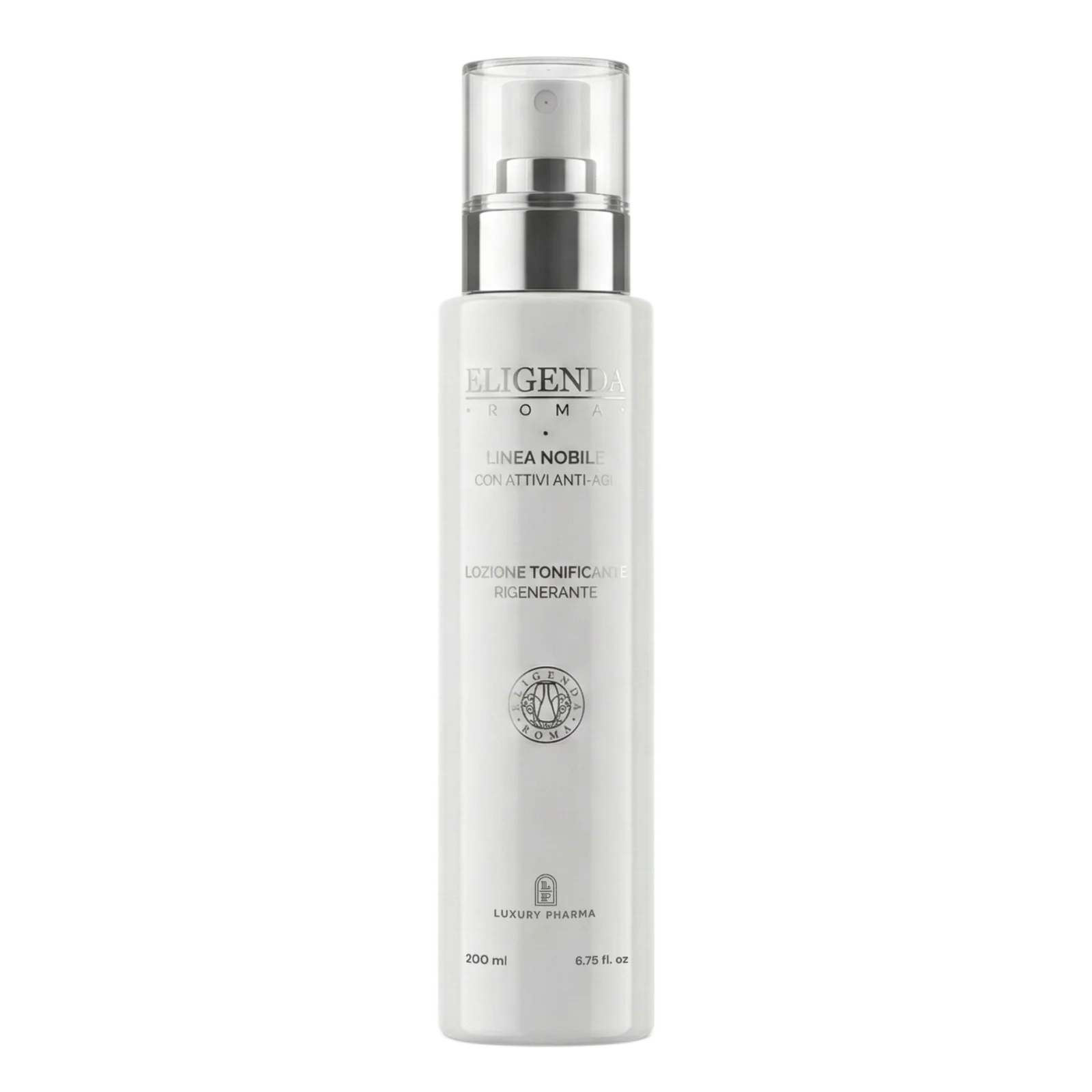
Apply to the face and neck with a cotton pad after rinsing off Restorative Cleansing Milk and before serum. Consider it if you want a light step after cleansing.
Delicate Eye Contour Cream
Witch hazel water is also present in our Delicate Eye Contour Cream, alongside the other ingredients in its formula for the eye area.
Use a dedicated eye-area product rather than substituting a toner with the same ingredient. Apply a small amount with gentle movements from the inner towards the outer corner, avoiding direct contact with the eyes.
By Emanuela Silvi, founder of Eligenda Roma. Updated .
Frequently asked questions
What does witch hazel water do for the face?
It is used in lotions and other cosmetics for skincare and comfort. As a distillate, its composition differs from tannin-rich leaf or bark extracts. The product's effect depends on the whole formula.
Does witch hazel tighten pores?
Some products may temporarily improve the appearance of pores or the feeling of firmness. Promising permanent closure is inaccurate. Very tight-feeling skin after toner is not a result to aim for.
Is witch hazel hydrosol always alcohol-free?
No. Check the label and manufacturer information: some distillate preparations contain added alcohol, while other formulas do not.
Is witch hazel bad for dry skin?
It depends on the preparation and how your skin responds. A product that makes tightness or burning worse is not suitable at that time. Choose a formula that feels comfortable and keep dry skin moisturised.
Can you use it every day?
A cosmetic intended for daily use can be used as directed if well tolerated. There is no need to increase frequency or quantity to obtain a stronger astringent effect.
Does witch hazel treat spots?
A toner can complement a routine for blemish-prone skin, but should not be considered an acne treatment. If spots persist, dermatological assessment can help you choose appropriate treatment.
Can you use witch hazel around the eyes?
Only in a product intended for that area, following its instructions. Do not apply an ordinary toner or tincture near the eyes just because it contains the same ingredient as an eye cream.
Sources and further reading
- EMA: assessment report on Hamamelis virginiana leaves, bark and distillates.
- EMA: documents and monograph on distilled witch hazel preparations.
- American Distilling: specification for Witch Hazel USP.
- 2002 clinical study of lotions containing witch hazel distillates and experimentally induced redness.