
Sweet almond oil for the face: what it does and why refined and virgin oils differ
Sweet almond oil helps soften facial skin and limit water loss from its surface. It may be useful when skin feels dry or rough, particularly within a well-formulated cream. If your skin is prone to spots, reacts easily to cosmetics or you have an almond allergy, choose the product carefully.
When deciding how to use it, the first distinction is between pure oil and a cosmetic containing it. Processing also matters: virgin and refined oils have different characteristics that the ingredient name alone cannot reveal.
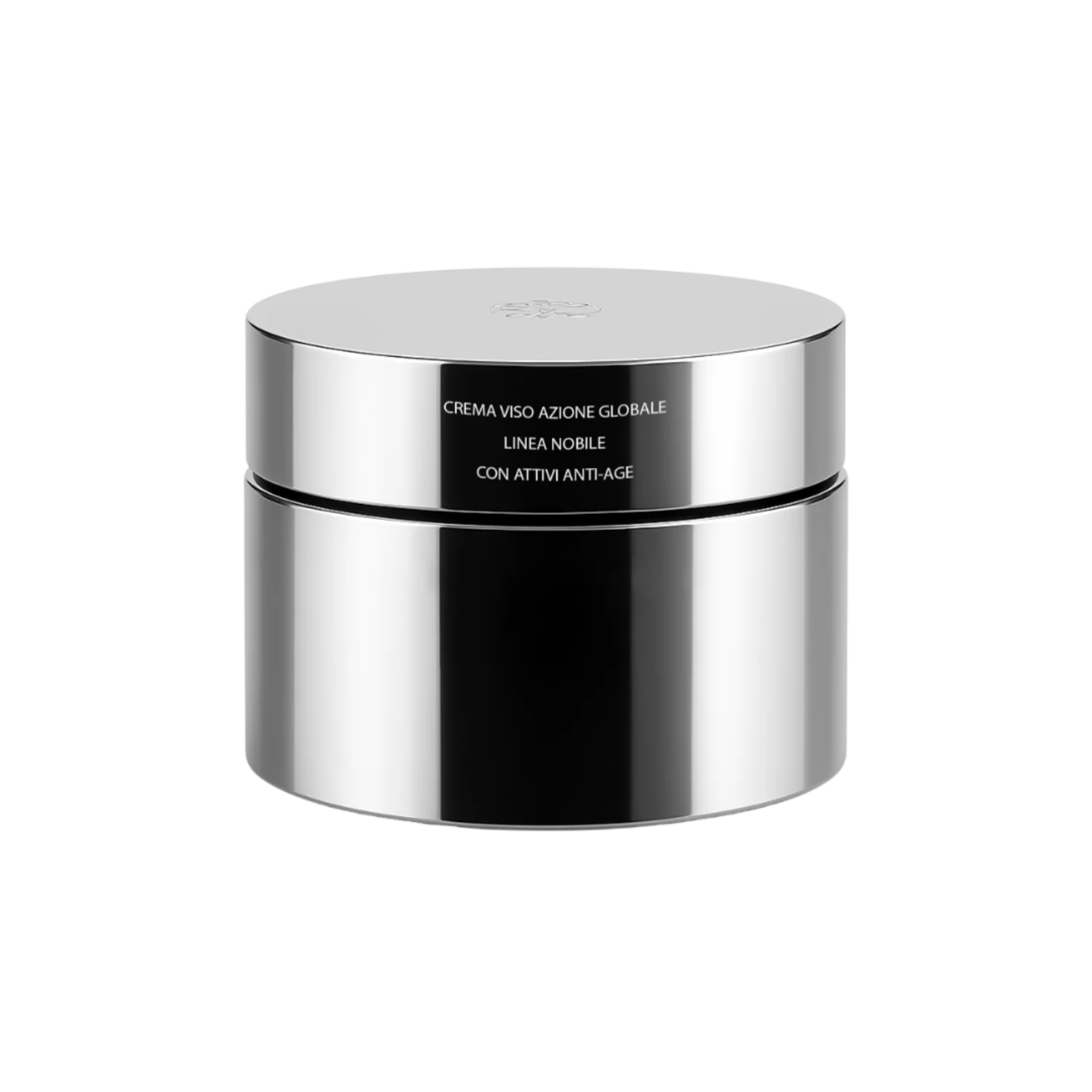
In our Global Action Cream, sweet almond oil sits alongside shea butter, glycerine and hyaluronic acid: a combination designed to hydrate and soften the face without requiring an additional oil.
In this guide
- What it is and how to recognise it in an INCI list
- What sweet almond oil does for the face
- Refined and virgin almond oil: what is the difference?
- Almond allergy: the most important precaution
- Can it cause spots? Understanding comedogenicity
- Pure oil or a cream containing almond oil?
- How to use it on the face
- How to store it
- Frequently asked questions
- Sources and further reading
What it is and how to recognise it in an INCI list
Almond oil is obtained from the seeds of the almond tree. In cosmetics, you will usually recognise it as Prunus Amygdalus Dulcis Oil, sometimes accompanied by Sweet Almond Oil.
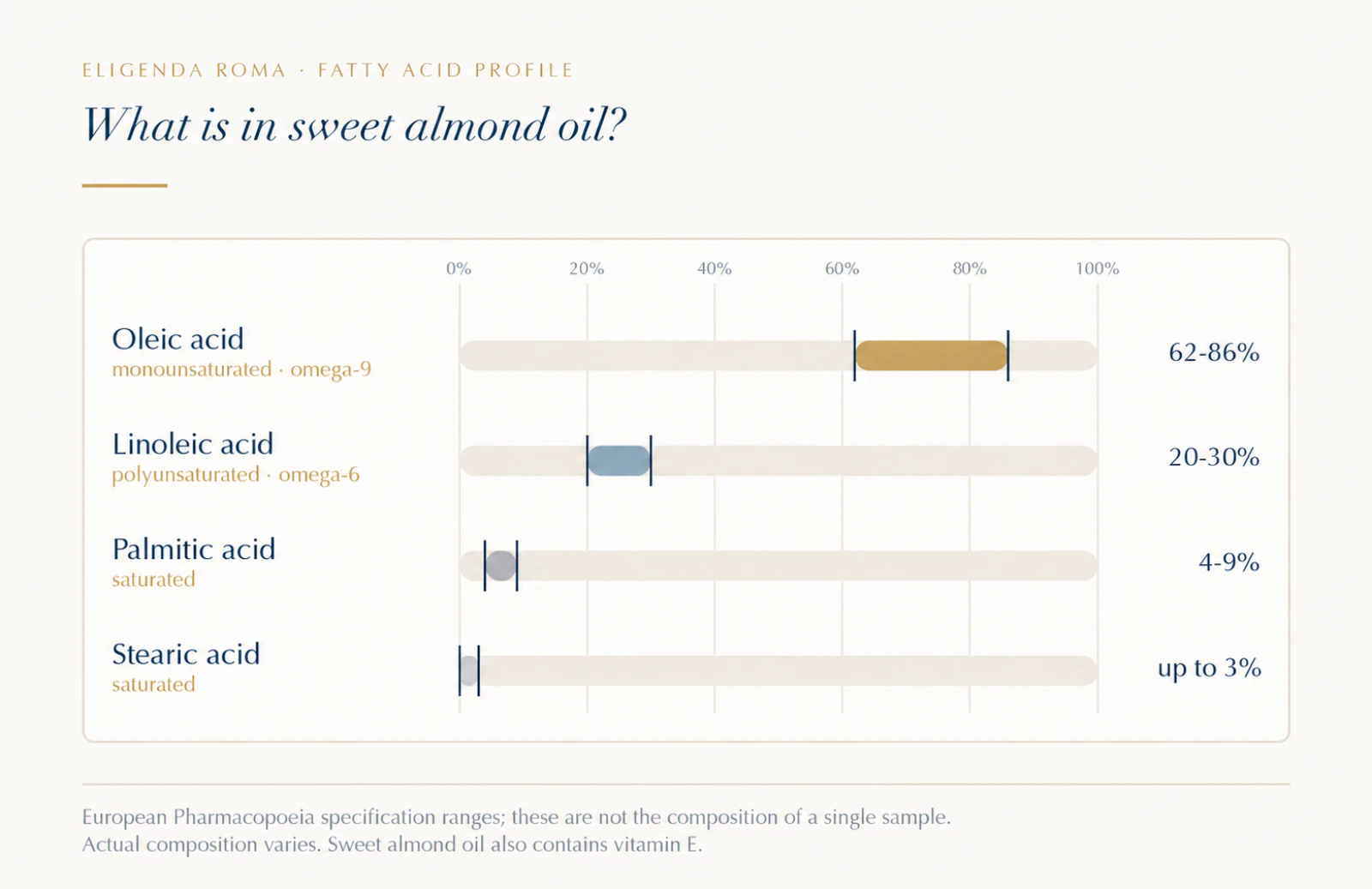
It is a plant oil made mainly of triglycerides. Its fatty-acid profile is rich in oleic acid and also includes linoleic, palmitic and stearic acids. This composition helps it spread easily and leave skin feeling soft.
A 2022 study of commercially available almond oils reports the ranges in the European Pharmacopoeia edition used by the authors: oleic acid 62–86%, linoleic acid 20–30%, palmitic acid 4–9% and stearic acid up to 3%. These are reference ranges for the raw material, not percentages to assign to every bottle or a cream containing it.
The ingredient list lets you identify its presence, but does not reveal every characteristic of the oil used. For help with botanical names and functions, see our guide to reading an INCI list.
What sweet almond oil does for the face
Softening dry or rough skin
Its main function is emollient: the oil makes the surface softer and more pleasant to the touch. It may be useful on dry cheeks, rough areas or when skin feels tight after overly vigorous cleansing.
Consider this benefit alongside the rest of your routine. If your cleanser leaves your face very tight every day, adding oil afterwards may provide comfort, but it is also worth reviewing how you wash.
Helping retain moisture
The oil's lipids help reduce evaporation of water from the surface and keep skin soft. Oil alone, however, does not supply water.
In a small study of the skin penetration of different oils involving six healthy volunteers, the plant oils examined, including almond oil, were distributed mainly in the superficial layers and produced a partially occlusive effect. This is consistent with emollient use, without implying the rebuilding of deeper tissues.
For dry skin that needs both water and lipids, a cream may be more practical than oil alone: it combines humectants and emollients in one application.
Improving comfort, including for mature skin
With good hydration, superficial lines associated with dryness may look less noticeable. On mature skin, almond oil mainly contributes softness; assessing a cream's effect on wrinkles also requires considering its other ingredients and your skin's needs.
Refined and virgin almond oil: what is the difference?
Virgin and refined oils come from the same botanical raw material, but undergo different processing. In the 2022 paper cited above, virgin oil is described as mechanically pressed, while refined oil goes through additional purification stages.
Processing can alter the smell, colour and minor components. The emollient function depends mainly on lipids; other characteristics of the raw material require the manufacturer's specifications.
Cold pressing alone does not make an oil more suitable for the face. Storage, intended cosmetic use and individual tolerability also matter. Refined oil retains its usefulness as an emollient.
The same INCI name may appear in both cases. If the distinction matters to you, you need additional information from the manufacturer; it cannot be inferred from the order of ingredients or packaging colour.
Almond allergy: the most important precaution
Anyone with a diagnosed almond allergy should not take the word 'refined' as sufficient assurance to try an oil on their skin.
Research on allergenic proteins in tree-nut oils found that different processing methods can leave different amounts of residual proteins. This explains why processing matters, without establishing whether a particular product is safe for an allergic individual.
In this situation, show the ingredient list to your allergist and ask the manufacturer for any relevant information about the raw material. Testing a small area of your arm does not rule out allergy or replace that assessment.
For those without known allergies, introducing a new product gradually helps reveal how well it is tolerated. Stop using it if itching, redness or burning occurs. Tingling does not mean the oil is working better.
Can it cause spots? Understanding comedogenicity
There is no single answer for everyone. The tendency to develop blemishes depends on your skin, the complete product, the amount applied and other cosmetics in the routine.
Online comedogenicity ratings for individual ingredients cannot, on their own, predict how a cream will behave on your face. Generous amounts of pure oil and a small proportion of the same oil in an emulsion are different situations.
With combination skin, dry cheeks and an easily shiny central area may need different care: a richer cream can feel pleasant on dry areas and unnecessary elsewhere.
If you are prone to comedones or acne, avoid introducing oil, a rich cream and other new products simultaneously. Adding one cosmetic at a time makes it easier to tell whether it helps. For more on this choice, see the combination facial skin guide.
Pure oil or a cream containing almond oil?
Pure oil can be a simple option when you want extra emollience on a limited area. You still need to find a comfortable amount and fit it into a routine that meets your skin's other needs.
A cream combines water and oil in an emulsion. It can pair oil with water-retaining ingredients such as glycerine and hyaluronic acid, in a texture that is easier to apply evenly across the face.
Three practical questions can guide the choice:
- Does your current cream already leave your skin soft? You probably do not need to add an oil.
- Do you feel dry only in certain places? Consider targeted application without making your whole routine richer.
- Do you need hydration and softness every day? A cream may make care simpler and more consistent.
A higher oil percentage alone does not make a cosmetic more pleasant or effective: assess how the complete product works for you.
How to use it on the face
If you choose pure oil
Use a product intended for cosmetic use and follow the packaging directions. Start with a minimal amount, distributing it with clean hands over areas that need it, without prolonged massage on already sensitive skin.
If you use a water-based serum and cream, you can reserve a small amount of oil for the final step. Applying plenty of oil before everything else makes textures harder to manage and may feel heavy.
Evening is often the easiest time to see how it suits you. In the morning, consider make-up and sunscreen too: avoid mixing oil directly into sunscreen, which should be applied according to its own instructions.
There is no number of drops that suits every face. If an unpleasant film remains for a long time, reduce the amount or consider another formula. More does not guarantee a better result.
If it is already in your cream
Follow the product's directions. Oil in your cream does not require you to add more oil.
In Global Action Cream, sweet almond oil forms part of a treatment applied to the face, neck and décolletage morning and evening, after cleansing, toner and serum. Take the product with the supplied spatula and spread gently.
If you want to review the whole sequence, the facial routine for dry skin guide helps you choose useful steps without accumulating products.
For make-up removal and the eye area
An oil can dissolve oily components of make-up, but pure oil is not necessarily a complete cleanser or suitable for the eyes. For daily cleansing, it is simpler to follow the directions for a formula designed for that purpose.
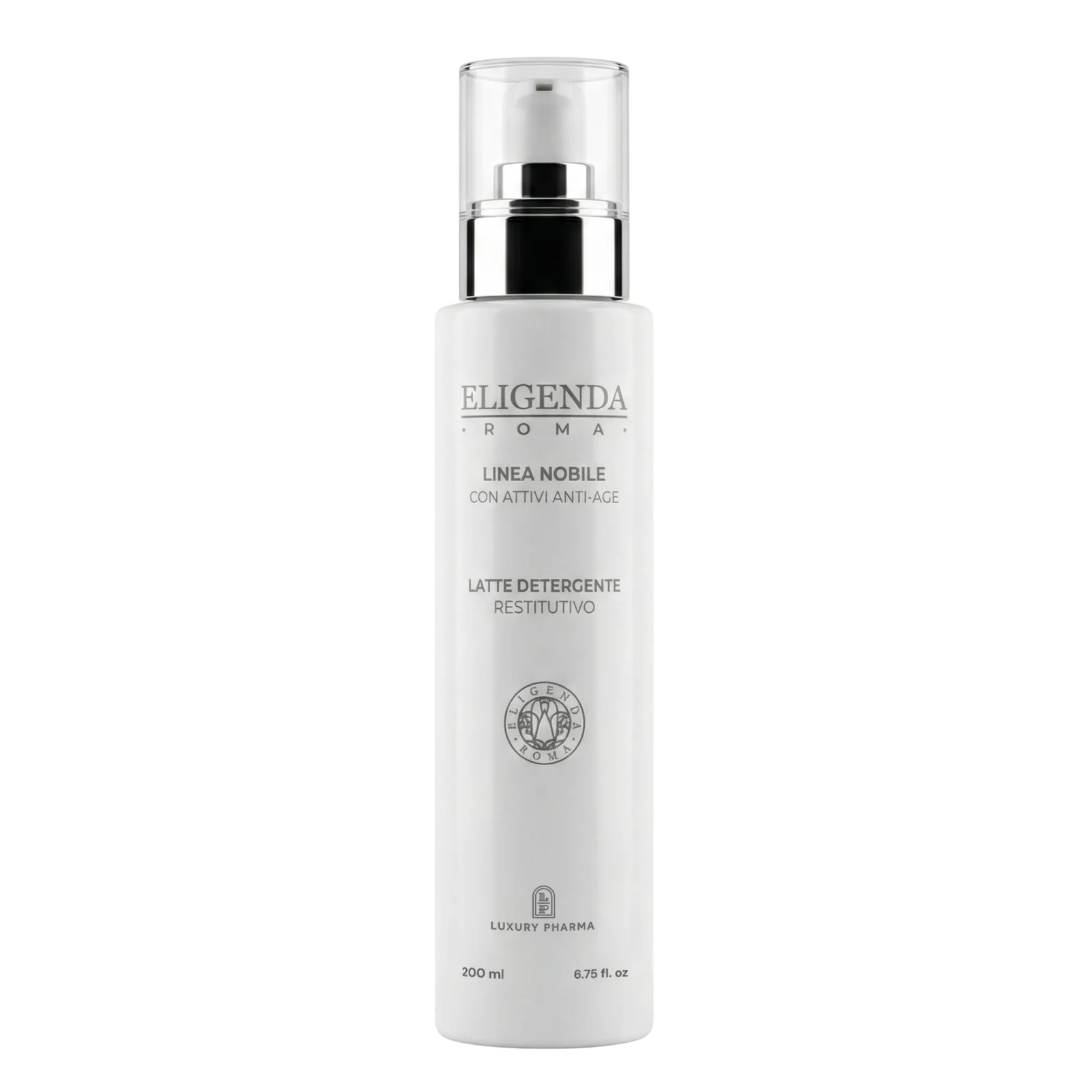
In Restorative Cleansing Milk, sweet almond oil accompanies aloe, shea butter and other emollients. Massage the milk gently over the face and neck, then rinse with water.
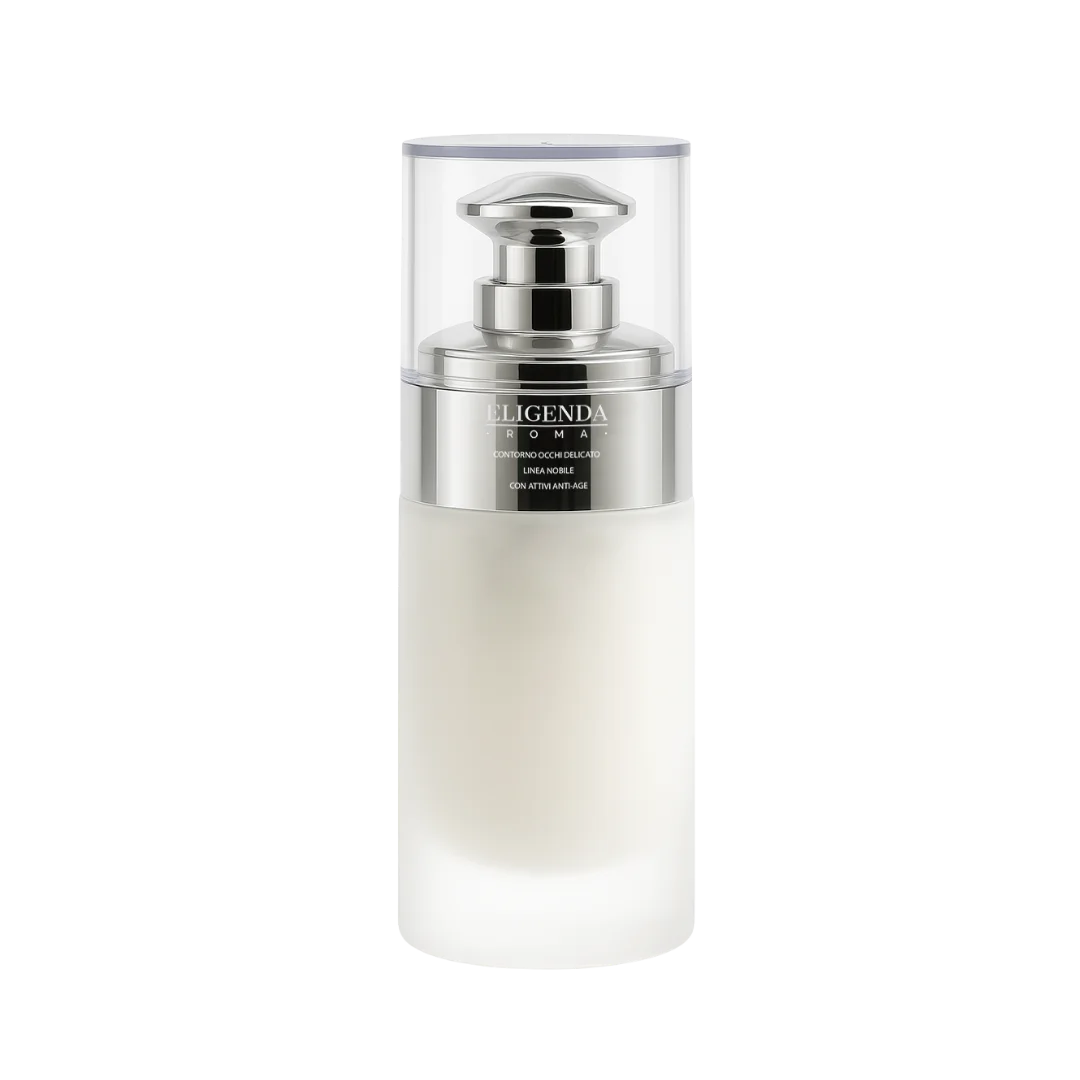
Choose a product designed for the eye area. Our Delicate Eye Contour Cream contains sweet almond oil within a formula developed for this area. Follow the cream’s directions rather than replacing it with pure oil.
How to store it
Close the packaging securely and follow the storage directions and period of use after opening. Avoid leaving a bottle of oil in sunlight or near heat sources.
Smell and colour may vary between raw materials, particularly virgin oils. A marked change from when you first opened the product deserves attention, however: if the smell has become rancid or the contents appear altered, stop using it. Adding fragrance or other ingredients at home does not solve the problem.
By Emanuela Silvi, founder of Eligenda Roma.
Frequently asked questions
Does sweet almond oil hydrate the face?
It helps retain water and softens the surface. For a complete routine, it can be combined with humectants already present in many creams. If your cream already leaves skin soft and free from tightness, there is no need to add an oil.
Can you use it every day?
Yes, if the product is intended for daily use and your skin tolerates it well. Adapt the amount and frequency to your skin's response: a dry area may need it more often than one prone to shine.
Can you leave it on your face overnight?
A cosmetic oil or leave-on cream can remain on the skin according to its instructions. Cleansing Milk, however, must be rinsed off. An individual ingredient does not determine how the product should be used.
Does sweet almond oil eliminate wrinkles?
Its main role is to soften the skin. Better hydration may make fine dryness lines less noticeable, but oil alone cannot be promised to eliminate wrinkles.
Is refined or cold-pressed oil better?
It depends on raw-material quality, the formula and intended use. Neither description alone guarantees better tolerability. Almond allergy requires a specific assessment, even for refined oil.
Is sweet almond oil suitable for oily skin?
It may be part of a formula suited to your needs, but pure oil is not essential. If you have blemishes, introduce one product at a time and observe the effect over time, rather than relying solely on ingredient comedogenicity scores.
Are sweet almond oil and bitter almond oil interchangeable?
For your face, choose a cosmetic with a clear identity and intended use. Do not substitute an essential oil, food flavouring or bitter almond preparation: similar names do not mean the same product.