
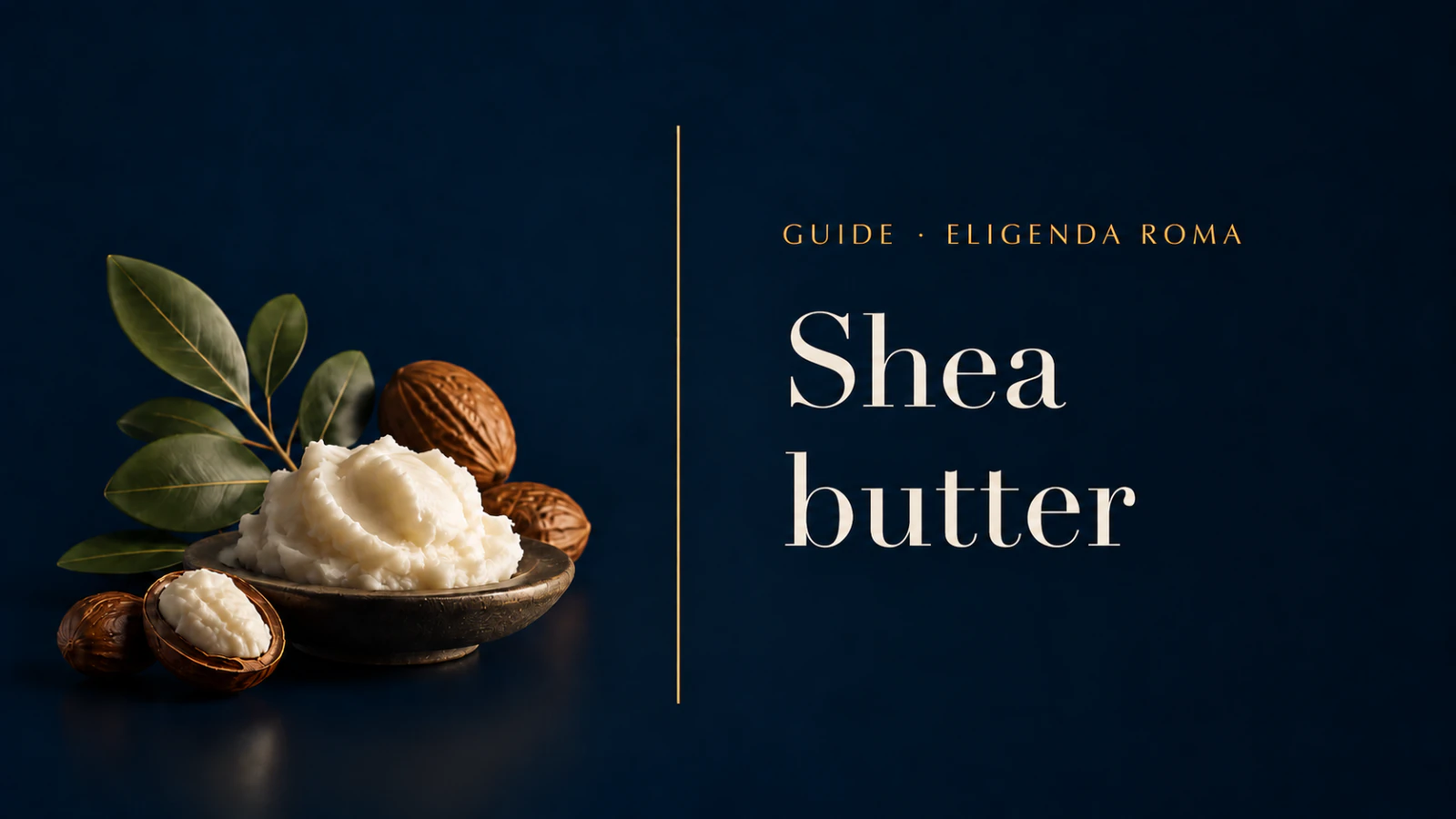
Shea butter for the face: what it does and how its origin makes a difference
Shea butter softens facial skin and helps retain moisture through the lipid film it leaves on the surface. It can be useful when the face looks dry or feels rough or tight. To use it well, distinguish pure butter from a cream containing it: texture, quantity and application differ.
The raw material deserves attention too. Shea butter's composition can vary with its origin and processing, and two pure butters may differ in softness without either necessarily being better.
In our Global Action Cream, shea butter accompanies plant oils, glycerine and hyaluronic acid. The formula brings emollient and hydrating components together in a daily treatment, without requiring added pure butter.
In this guide
- What is shea butter?
- What it contains: fatty acids and the unsaponifiable fraction
- Why two shea butters can differ
- What shea butter does for facial skin
- Does shea butter protect against the sun?
- Unrefined or refined shea butter
- Is shea butter comedogenic?
- Contraindications and tolerability
- How to use shea butter on the face
- Eligenda Roma products containing shea butter
- Frequently asked questions
- Sources and further reading
What is shea butter?
It comes from the seeds of the shea tree, which grows across the savannah belt of sub-Saharan Africa. Its botanical name is Vitellaria paradoxa, while in cosmetics you will often see the synonym Butyrospermum parkii.
It is a solid or semi-solid fat that softens with the warmth of your hands. This gives it a richer feel than a liquid oil.
How to recognise it in an INCI list
Look for Butyrospermum Parkii Butter, sometimes accompanied by Shea Butter. Shea derivatives and fractions also exist under different names and should not be considered identical to whole butter.
Its presence in the INCI list confirms the ingredient, but does not reveal its origin, processing or exact quantity. Those details require specific manufacturer information.
What it contains: fatty acids and the unsaponifiable fraction
Most of shea butter consists of triglycerides. Among their fatty acids, stearic and oleic acids predominate: their balance contributes to the consistency and how the butter spreads on skin.
Alongside the main component is the unsaponifiable fraction, the portion that does not turn into soap during the chemical process of saponification. In shea butter, this can be substantial and includes triterpene alcohols among other compounds.
Triterpene alcohols are a different family of molecules from ethyl alcohol. They include alpha-amyrin, beta-amyrin, lupeol and butyrospermol.
The unsaponifiable fraction helps characterise the raw material. To assess the efficacy of a cream containing it, consider the product as a whole.
Why two shea butters can differ
A study of 36 samples from seven African countries documented wide variation. In the fats analysed, the authors measured:
- stearic acid from 28 to 56%;
- oleic acid from 34 to 61%;
- an unsaponifiable fraction from 2 to 12% of the fat;
- triterpene alcohols from 22 to 72% of the unsaponifiable fraction alone.
The last percentage refers to the unsaponifiable fraction alone, rather than the whole butter, so it cannot be compared directly with the other figures.
Even two pure butters can therefore have different consistencies. Processing and storage add further differences to those associated with origin and composition.
Consistency alone says little about quality. Look for a clear cosmetic purpose, properly identified packaging and storage instructions: the words 'African' or 'natural' do not provide this information.
In a cream, consistency also depends on more than shea butter. Water, other lipids, emulsifiers and overall proportions can produce a texture very different from the pure raw material.
What shea butter does for facial skin
Softening dry areas
Its emollient function is its most direct cosmetic use. Shea butter helps make the surface less rough and may ease dryness, for example on the cheeks or areas exposed to cold.
Adapt the texture to your current needs: you may prefer something richer in winter and lighter in another season, without changing every step of your routine.
Helping retain water
Pure butter is a fat: it does not supply a water phase. Its lipid film helps limit water loss from the surface and maintain a soft feel.
A cream combining humectants such as glycerine with lipids can meet the need for both hydration and emollience.
If skin still feels tight despite applying plenty of butter, adding more may not be the answer. Review your cleanser and the balance of your dry-skin routine.
Improving comfort for mature skin
On mature skin, shea butter can contribute to greater softness and a smoother appearance of superficial lines associated with dryness.
To assess its effect on wrinkles, consider the treatment as a whole, consistency of use and skin characteristics. Shea butter's presence alone cannot predict the result.
Does shea butter protect against the sun?
Shea butter should not be used as sunscreen. You cannot assign a reliable SPF to your jar or to a cream containing it.
Some research has examined its role in products already formulated with UV filters. For example, a 2020 paper on a sunscreen stick system assessed shea butter alongside other formula components. A finding for that product does not demonstrate that pure butter offers the same protection.
In your morning routine, use sunscreen with a stated protection level, following its application amounts and directions. Do not mix pure butter into it to make it richer: this would change the formula that was assessed.
If you want greater comfort, choose a routine compatible with your sunscreen and check that products spread well without prolonged rubbing or build-up. Shea butter in face cream does not replace this step.
Unrefined or refined shea butter
Unrefined butter generally retains a more distinctive smell and a colour ranging from ivory to beige. Refining can reduce smell, colour and some minor components, depending on the process.
The words 'unrefined' and 'refined' do not establish how much of the unsaponifiable fraction remains or which product is better. Quality depends on the raw material's characteristics and storage.
For pure butter, smell and consistency strongly influence the experience. In an emulsion, the formulator also chooses the shea type according to stability and the desired feel.
If a product suits you, there is no need to replace it simply because another is labelled 'unrefined'. If choosing for the first time, consider its intended use, directions and texture.
Is shea butter comedogenic?
The ingredient name alone cannot provide an answer that applies to every face. Online ratings cannot predict with certainty how a cosmetic will behave on your skin.
How it is used matters too. A generous layer of pure butter, a light cream containing a small proportion and a rinse-off cleanser are different products.
If you have combination skin, consider each area separately: the cheeks may benefit from a richer texture than the centre of the face. If you are prone to comedones or spots, introduce one product at a time and observe your skin’s response.
Watch your skin's response over time: a rich texture can be well tolerated, but there is no reason to persist if a product causes discomfort. For persistent acne, seek a specific assessment rather than relying on comedogenicity tables.
Contraindications and tolerability
The Cosmetic Ingredient Review assessment published in 2024 examined thirteen shea-derived ingredients and concluded that they were safe under the conditions of use considered when formulated to be non-sensitising. This assessment applies to the ingredients and conditions examined; individual reactions remain possible.
If you have already had an allergy or reaction to a cosmetic containing shea butter, do not try it again simply because it is described as natural. Identifying the cause requires considering the entire formula.
Introduce a new product gradually so you can see how your skin responds. Trying it on a small area at home does not rule out allergy or replace a diagnostic test.
Stop using the product if itching, burning or increasing redness develops. On damaged skin or with a persistent problem, seek advice before continuing to add cosmetics.
How to use shea butter on the face
Pure butter: a small amount, applied where needed
Choose butter intended for cosmetic use and follow the packaging directions. Take a minimal amount with clean hands or a clean tool and soften it between your fingertips.
Spread it gently over the areas that need it. If the layer feels heavy, avoid prolonged massage and reduce the amount next time.
You can use it after moisturising as a targeted addition. Evening is often convenient for assessing the result, but there is no rule restricting it to night-time use.
Do not add water, plant juices or other ingredients directly to the jar. A homemade mixture changes the product's characteristics and preservation without guaranteeing a more effective formula.
Shea butter in a cream or cleanser
When shea butter is part of a cosmetic, follow that product's instructions. Its texture and application amount differ from pure butter, and there is no need to warm it between your hands.
A cleanser containing shea butter must be rinsed off if its directions require it. A cream, by contrast, stays on the skin. Having the same ingredient does not make the two steps equivalent.
Eligenda Roma products containing shea butter
Shea butter appears in three treatments in our range, with different roles in the routine.
In Restorative Cleansing Milk, it accompanies aloe, sweet almond oil and other emollients. The formula gently cleanses and removes make-up. Massage over the face and neck with your fingertips or a cotton pad, then rinse with water. Learn more on the Restorative Cleansing Milk page.
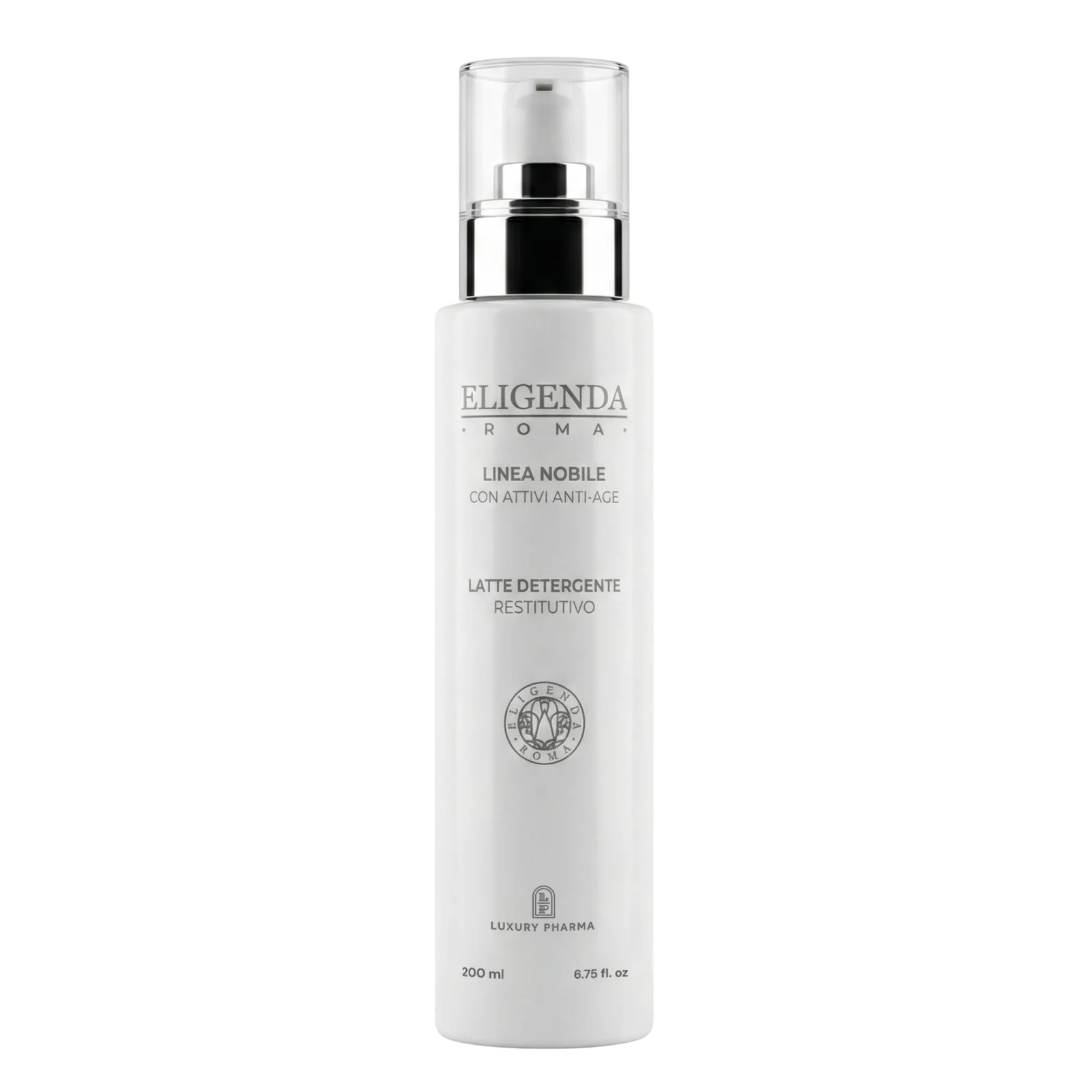
In Global Action Cream, it combines with plant oils, glycerine, hyaluronic acid at three molecular weights and other active ingredients. Apply morning and evening to the face, neck and décolletage after cleansing, toner and serum, using the supplied spatula to take the cream.
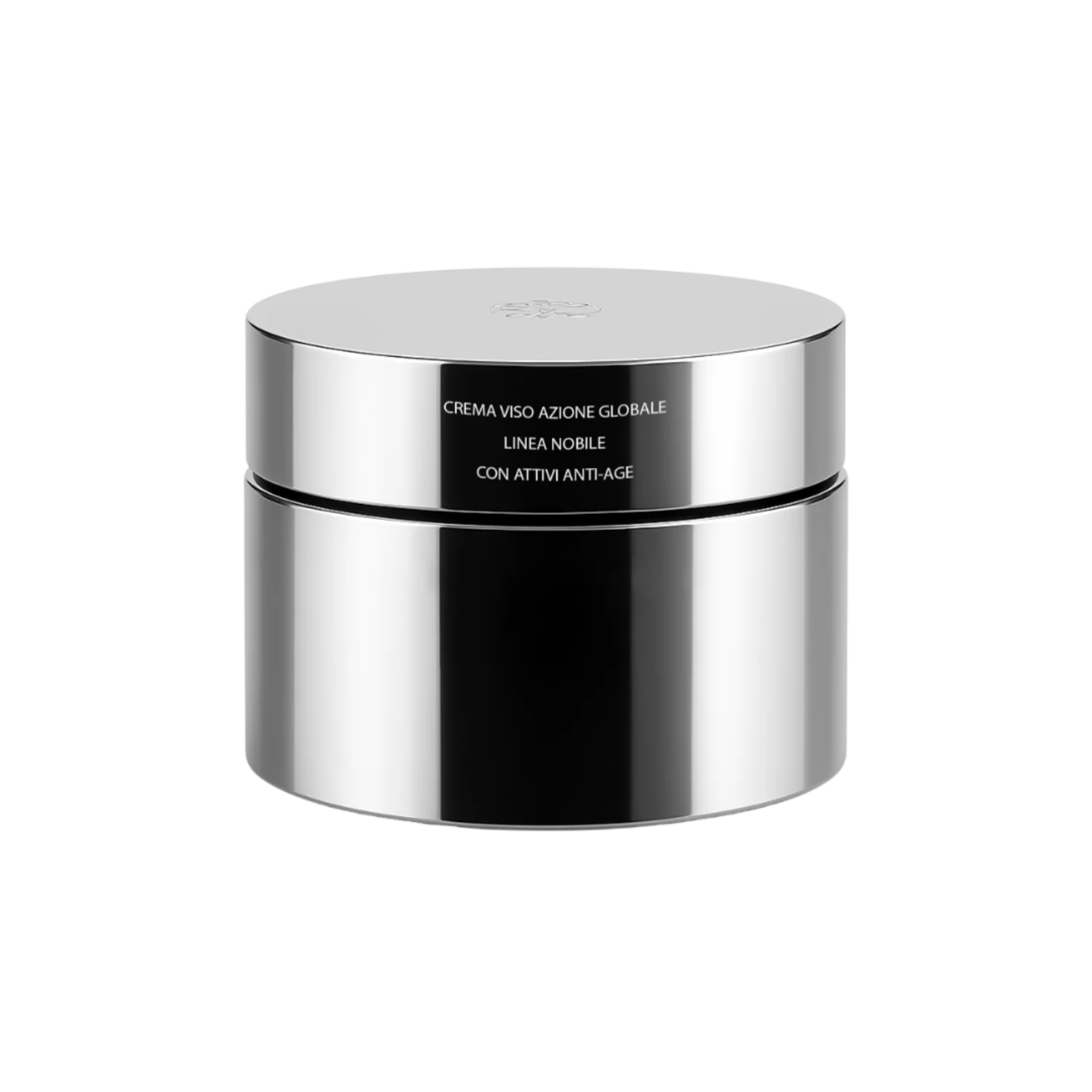
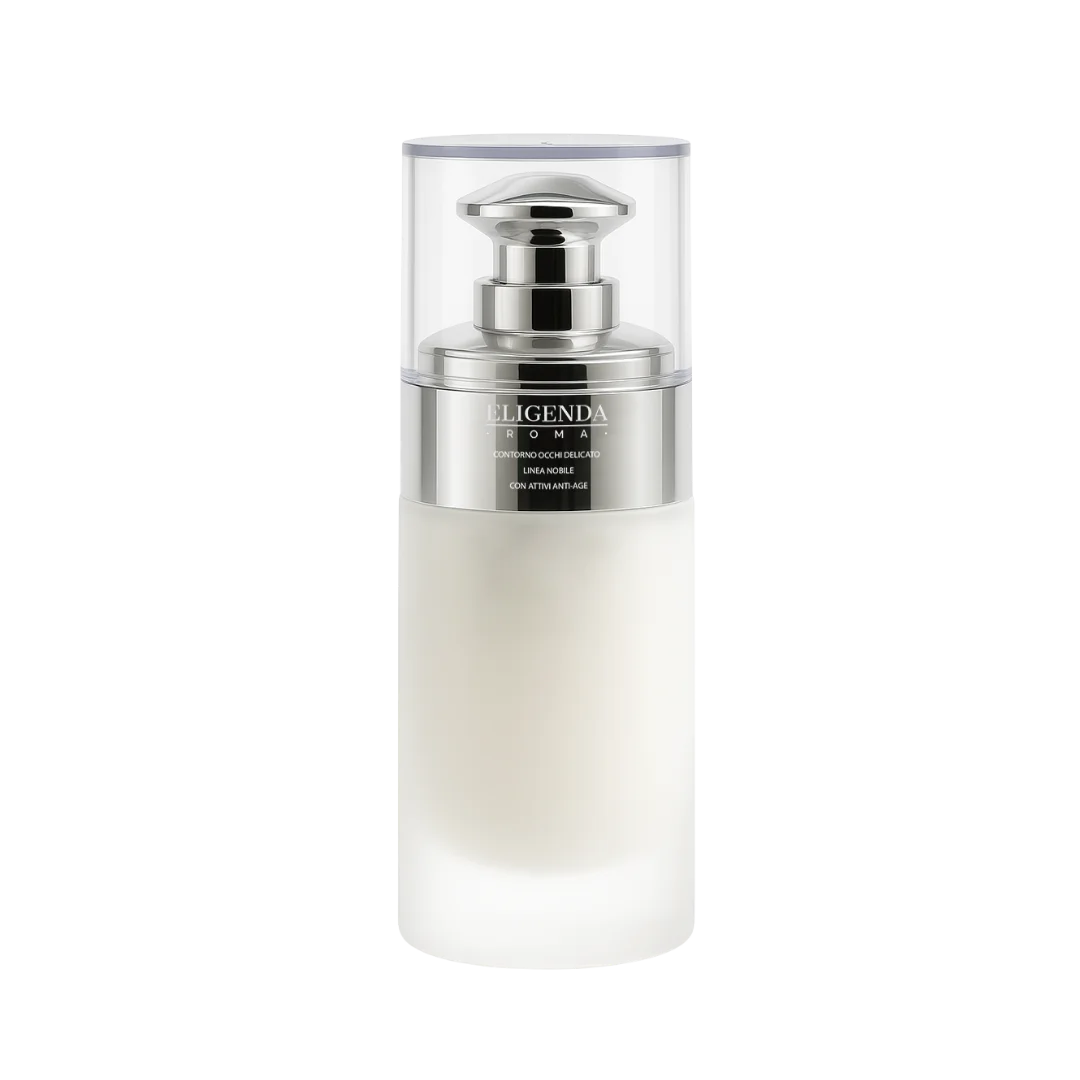
In Delicate Eye Contour Cream, shea butter helps soften the skin within a formula designed for the eye area. Follow the instructions for a dedicated product rather than trying to adapt pure butter for use near the eyes.
If you are comparing emollients, the guide to sweet almond oil for the face explains the characteristics of a liquid oil that can accompany shea butter in a formula.
By Emanuela Silvi, founder of Eligenda Roma.
Frequently asked questions
Can you use shea butter on your face every day?
It can be used daily if the product allows it and your skin tolerates it well. In a cream, the amount is already balanced within the formula; with pure butter, start with a minimal, targeted application.
Is it better on dry or damp skin?
Pure butter can be used after moisturising on drier areas. There is no need to wet the jar or mix it with water. For a cream, follow its directions.
Can I leave it on my face overnight?
Yes, if it is a well-tolerated leave-on cosmetic. Use just enough to leave skin soft without a persistent film.
Does shea butter eliminate wrinkles or dark spots?
Its main contribution is softer skin and helping retain moisture. It is inaccurate to promise that pure butter will eliminate wrinkles or dark spots.
Can I use it instead of sunscreen?
No. Do not assign a sun protection factor to shea butter. For sun exposure, use a product with stated protection and follow its application directions.
Is shea butter suitable for the eye area?
It can be included in a dedicated formula such as our Delicate Eye Contour Cream. Its presence in that product does not make every pure shea butter suitable for the same area.
Why do two containers of pure butter have different consistencies?
Composition can vary with origin and processing; temperature and storage also affect consistency. If you notice a marked change in smell or deterioration in an opened product, stop using it and check the manufacturer's advice.