
You smooth on your moisturiser, add sunscreen and notice little rolls beneath your fingers. If this keeps happening, the useful question is where the rolling starts: with one product on its own, or only after another layer?
Check the amount and application directions, let wet layers settle and change one optional step at a time. Keep sunscreen at its directed amount. You can investigate a layering problem without replacing your whole routine.
In this guide
What is skincare pilling?
Pilling is the name for the small crumbs or rolls that form as a product gathers on the skin during or after application. They can resemble flakes of skin, although appearance alone cannot tell you exactly what the residue contains.
Check your skin before applying anything. Flaking that is already present, particularly with soreness, itching or persistent redness, deserves separate attention. Our dry-skin guide discusses dryness.
Pilling, flaking or make-up separation?
These words describe different observations. Pilling forms little rolls as you spread or touch a product. Flaking is visible scaling of the skin, which may already be present before application. Make-up separation can look like uneven pigment, patches or droplets, without forming rolls at all.
They can happen together. Note what you see on clean skin and what appears only after a particular step. That observation is more useful than assuming every visible flake is either dead skin or an unabsorbed product.
Why do products roll off?
There is no single explanation for every combination. A 2024 study of 528 women found that pilling varied with the formulations tested, layering and participants’ skin characteristics. Some experienced it with sunscreen alone, others only with an underlying product. Rubbing was associated with more pilling events in the test.
The study was funded by Clarins and recruited women who had already experienced pilling. It does not establish how common the problem is in everyone, identify a universal culprit ingredient or prove that a particular routine prevents it. Eligenda products were not evaluated.
Manufacturers also point to excessive amounts and layers that do not sit well together. The Ordinary’s application guidance recommends following product quantities and allowing layers to settle. Check your own labels for quantities rather than borrowing the doses suggested for another brand.
Find the step where it starts
At your next application, note what happens after each step. “Serum smooth; moisturiser smooth; rolls appeared while applying sunscreen” is enough. That helps you narrow down which combination to check.
| What you notice | What to check next |
|---|---|
| One cosmetic pills on clean skin | Its directions, the amount used and whether you keep working over it after spreading. |
| It starts only after a second product | Record the two products and their order before changing anything. |
| Only your morning routine pills | Compare the steps with your evening routine, including sunscreen and make-up. |
| Flakes are visible before skincare | Consider the condition of your skin separately from product residue. |
If you contact a brand for advice, send the exact product names and, if possible, a photo. Mention whether the same pairing worked before and whether you have opened a new bottle or noticed a change in formula.
Four common situations to work through
Your serum pills before you apply anything else
Read its own quantity and application instructions first. Note whether the rolls appear as you spread it, after it has dried or only when you touch the area later. Do not add extra pumps simply because the first layer does not feel completely absorbed.
If it consistently rolls when used on its own as directed, ask the brand about that product, including whether the appearance suggests a storage or formula issue. Keep the batch details. A familiar ingredient name alone cannot explain why this particular bottle behaves differently.
Moisturiser rolls over your serum
Write down the pairing and order. At the next application, try leaving out the optional serum while keeping the moisturiser and your usual method the same. If the rolling stops, that points towards a layering issue worth investigating; it does not prove the serum is defective or unsuitable in every routine.
Do not use this comparison to stop a prescribed treatment. Ask the prescriber how it should sit with your other products.
Sunscreen pills over otherwise smooth skincare
Keep the sunscreen amount fixed. Review the optional steps beneath it: for example, whether you added a second hydrating serum or a facial oil that morning. Testing a simpler base can help narrow the problem without sacrificing the directed sun protection.
Record whether rolling happens during the first application or during reapplication later in the day. Tell the manufacturer which situation you are trying to resolve.
Rolling begins when you apply foundation
Check whether your skincare and sunscreen looked even before make-up. Note your primer, foundation and application tool. If you added a new primer, begin by comparing with your familiar routine without that optional step, while keeping sunscreen as directed.
Repeatedly blending over a patch can make it difficult to see where the problem began. A short record such as “smooth after SPF; rolling started with primer” is more helpful than treating every step as equally suspect.
Adjust one thing at a time
Start with the label’s amount and order. Give a wet layer a chance to settle before adding another, and avoid repeatedly rubbing an area once the product is evenly spread. There is no established waiting time that fixes every formula.
If you use several optional serums, try a simpler combination and observe the result. Keep prescribed treatments as directed; ask your prescriber before changing them. Our routine-order guide can help you place the cosmetic steps.
Keep the other steps consistent while you try each adjustment. If you change the cleanser, serum, cream and application technique at once, you will have little idea which change helped.
Looking for “silicone” on an ingredient list will not, by itself, identify the cause. The complete formulas and the way you use them matter more than a blanket rule about one ingredient group.
A worked example: investigate one combination
Suppose your morning routine is cleanser, two optional serums, moisturiser, sunscreen and foundation. Everything looks even until the sunscreen stage. Here is a practical way to compare the steps; the example does not represent a tested product combination.
- Record the baseline. List the actual products, their order and the step where rolling first appears. Check whether each is being used as directed.
- Choose one comparison. At your next application, omit one optional serum. Keep the rest, including sunscreen quantity, consistent.
- Describe the result. Did the rolling stop, decrease or stay the same? A change in the result is a useful clue, although one application cannot confirm the cause.
- Avoid drawing too much from one use. Record differences such as applying more make-up or changing a tool. Ask the relevant brand about a persistent pairing problem before buying several replacements.
The aim is to identify a usable combination. An application log is not a test of absorption, ingredient efficacy or sun protection. You cannot measure those simply by comparing how smooth your face looks.
What if your sunscreen pills?
Do not solve the appearance problem by using less sunscreen than directed. The American Academy of Dermatology’s guidance stresses adequate coverage and reapplication outdoors, including after swimming or sweating.
Visible pilling cannot tell you the SPF remaining on your skin. The pilling study did not measure sun protection. If your sunscreen is visibly rolling away, do not assume that brushing off the crumbs or covering them with foundation restores an even protective layer. Follow its application instructions and ask the manufacturer about persistent problems with that combination.
Can you rescue it immediately?
If only a cosmetic layer is rolling, stop adding more of it while you assess what needs correcting. Further layers can hide which product was involved. If you remove make-up and sunscreen to start again, restore the sunscreen according to its directions before exposure.
There is no visual trick that confirms an intact SPF layer. Keep shade and protective clothing in mind while resolving the application problem. For the next application, adjust optional cosmetics rather than cutting the sunscreen amount.
An example from the Eligenda routine
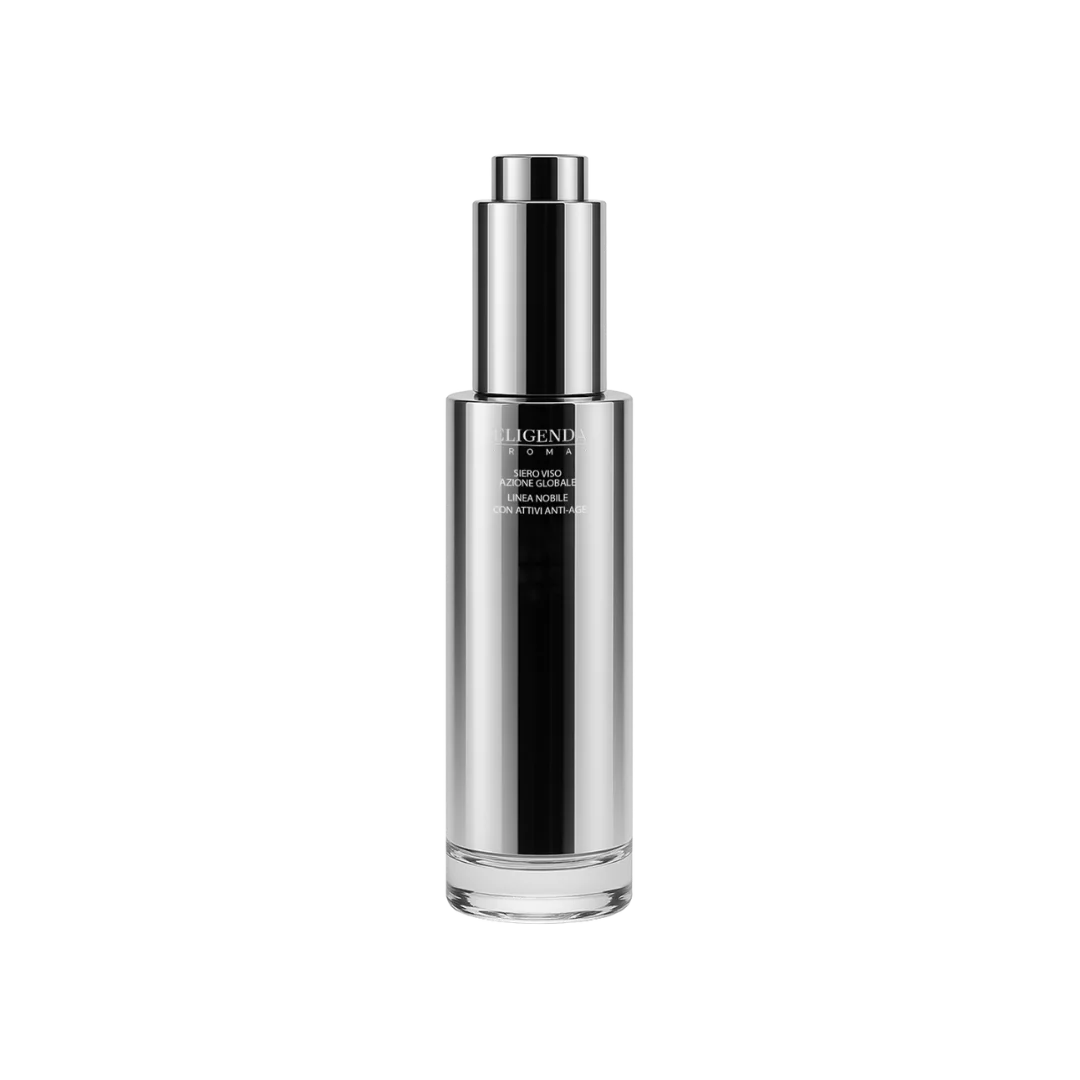
The directions for Eligenda Global Action Serum specify a few drops, gently applied to the face, neck and décolletage morning and evening. Use it after Restorative Cleansing Milk and Rejuvenating Facial Toner, then follow with Global Action Cream.
These are the product’s application directions, rather than a guarantee of compatibility with every sunscreen or make-up formula. For more detail on the application step, see how to use face serum.
Questions about skincare pilling
Is pilling the same as skin peeling?
No. Pilling describes rolls of product residue; skin can also flake independently. Check whether flakes are present before your routine.
Does pilling mean a product has expired?
Not necessarily. Pilling alone cannot tell you whether a product has expired. Check its expiry or period-after-opening instructions; see our cosmetic expiry guide.
Should I exfoliate whenever skincare pills?
No. Pilling alone is not a reason to add an exfoliant, especially if your skin already feels irritated.
How long should I wait between layers?
Follow any specific product directions. Try allowing a wet layer to settle before the next step; there is no single waiting time that suits every formula.
Are water-based and silicone-based products always incompatible?
No simple rule based on those labels can predict every pairing. Check the complete products and how they behave together rather than assuming that one ingredient group is the cause.
Should I reduce my sunscreen amount?
No. Keep the amount and coverage required by its directions. Investigate the underlying cosmetic layers instead.
Does pilling mean none of the skincare worked?
No such conclusion can be drawn from appearance alone. The residue does not measure how much of each ingredient remained or what effect the product had.
When should I seek professional advice?
If there is persistent redness, soreness, itching or peeling apart from product residue, ask a qualified healthcare professional to assess it.
Sources and further reading
- Lua and colleagues, Understanding the causes of skincare product pilling, Skin Research and Technology (2024): original formulation and application study.
- The Ordinary, How to Prevent and Solve for Product Pilling: manufacturer application guidance.
- American Academy of Dermatology, How to apply sunscreen: sun-protection guidance.